
NewStori...First & Foremost A Quality News Outlet!
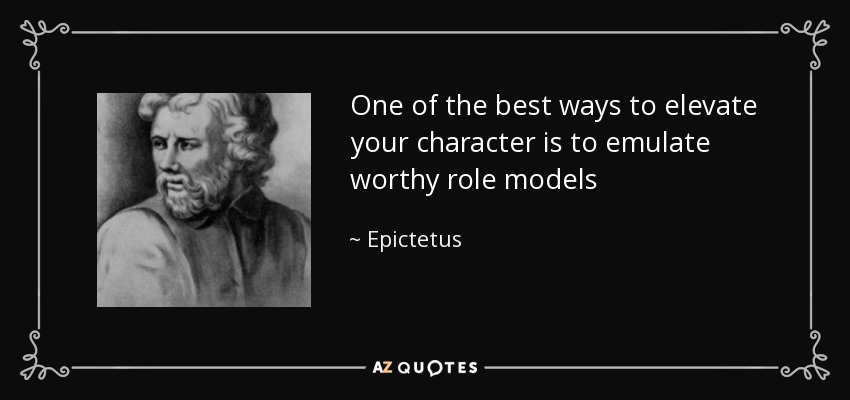
From childhood, we are taught—sometimes explicitly, often silently—to look up to those who have achieved greatness. We admire the business mogul who built an empire from a garage, the investor who multiplied modest savings into billions, the athlete who shattered records, the scholar who changed the intellectual landscape, and even the cultural icon whose style shaped generations. Emulation becomes one of the earliest and most powerful tools of human development.
We study, imitate, model, and mirror. It is how we learn to speak, to think, to dream.
But while emulation can be a powerful catalyst, it can also become a cage.
The journey of personal growth often begins by walking in someone else’s footsteps—but it must not end there.
The Power of Emulation
Imitation is not weakness; it is wiring. Humans are social learners. Before innovation comes observation. Before originality comes absorption.
In business, countless entrepreneurs have studied the playbooks of leaders like Bill Gates, analyzing how he built Microsoft into a global powerhouse. In investing, many have patterned their strategies after Warren Buffett, adopting value-investing principles and long-term discipline. In sports, young basketball players once mirrored the footwork and fadeaway of Michael Jordan.
In education, scholars model their thinking after great thinkers. In style, entire generations borrow from fashion icons.
There is undeniable wisdom in studying excellence.
Emulation shortens the learning curve. Instead of wandering blindly, you begin with a roadmap. You gain access to tested principles, mental frameworks, and proven strategies. You avoid certain mistakes because someone else already made them. You learn patterns of success faster than if you had to invent everything from scratch.
In this way, emulation is apprenticeship.
Even in the tech world, where innovation reigns supreme, founders have studied predecessors. Mark Zuckerberg famously admired Gates in his early years.
As he built Facebook (now Meta), there were parallels in ambition, technical intensity, and the desire to scale rapidly. But admiration was only the beginning of his story—not the conclusion.
Because emulation has limits.
When Emulation Becomes Imitation Without Identity
There is a fine line between learning from someone and losing yourself in them.
Too much emulation can suppress originality. When every decision is filtered through “What would they do?” you risk silencing the deeper question: “What is uniquely mine to do?”
If a young entrepreneur tries to replicate Gates’ exact strategies in today’s economy, they are not operating in 1975. The technological landscape, venture capital ecosystem, regulatory climate, consumer behavior, and competitive intensity have radically transformed. The personal computer revolution was once untapped territory. Today’s frontier might be artificial intelligence, biotechnology, decentralized finance, or something not yet named.
Exact replication ignores context.
Similarly, an investor who attempts to mirror Buffett’s early trades without understanding the specific market inefficiencies of the 1950s and 1960s may find diminished results. The informational advantage Buffett once had—when financial data was slower to circulate—cannot be duplicated in the age of algorithmic trading and instant digital access.
The same holds true in sports. An athlete modeling their entire game on Michael Jordan may forget that Jordan’s success was not merely about fadeaways and footwork—it was about competitive psychology, era-specific defensive rules, coaching structures, and team dynamics that cannot be perfectly reproduced.
When you emulate someone, you are often copying the visible surface of their success while missing the invisible foundations.
And those invisible foundations matter.
The Hidden Variables of Success
One of the greatest misconceptions about success is that it is linear and transferable. We see the highlight reel but not the hundreds of subtle variables that shaped the outcome.
Consider childhood influences. Family environment. Economic conditions. Educational exposure. Early mentors. Geographic location. Historical timing. Social networks. Cultural movements. Personality traits. Random luck.
When someone attempts to fully replicate another’s path, they only see fragments of the full equation.
You might read every biography, watch every interview, analyze every speech—but you will never fully inhabit the inner psychology of the person you admire. You cannot experience the exact same mentors who shaped their thinking. You cannot relive the societal conditions that created their opportunities. You cannot replicate the micro-decisions they made at age twelve, fifteen, or twenty that subtly steered their trajectory.
What you are emulating is a story already edited by hindsight.
And herein lies the danger: believing that duplicating observable behaviors will automatically yield identical outcomes.
The world changes. Markets evolve. Industries mature.
Culture shifts. Technology accelerates. What worked once may no longer work—or may require adaptation.
The Advantages of Strategic Emulation
This does not mean we should abandon emulation entirely. In fact, strategic emulation remains one of the most effective ways to accelerate growth.
There are powerful benefits:
1. Skill acquisition – Modeling the mechanics of excellence builds competence.
2. Mental frameworks – Learning how great thinkers structure decisions sharpens judgment.
3. Confidence through precedent – Seeing that something has been done expands belief in what is possible.
4. Standards of excellence – Emulating high performers raises your internal bar.
The key word is strategic.
Emulation works best when it is principle-based rather than personality-based. Instead of copying the exact behavior of a billionaire CEO, study the underlying habits: long-term thinking, discipline, adaptability, resilience, curiosity.
Instead of dressing exactly like a style icon, learn why their style works—fit, proportion, authenticity, context.
Instead of duplicating a sports legend’s moves, internalize their work ethic and mental toughness.
When you extract principles rather than personalities, you retain room for your uniqueness.
The Psychological Risk: Living in Another Person’s Shadow
Over-emulation can create psychological dependency.
You begin to measure your progress not by your own standards but by someone else’s timeline. If they became a millionaire at 30, you feel behind at 31. If they launched a company at 22, you feel late at 25. If they won championships by 28, you question your potential at 29.
Comparison distorts perspective.
Everyone’s starting line is different. Everyone’s path curves differently. Some bloom early. Others bloom late. Some take detours that become defining advantages later in life.
Living in someone else’s shadow can also suppress risk-taking. You may avoid experimenting outside the blueprint because deviation feels unsafe. But innovation rarely emerges from rigid imitation.
The irony is that many of the people we admire became great precisely because they deviated from what was conventional.
When the Training Wheels Must Come Off
Returning to Zuckerberg and Gates, the early admiration did not result in permanent imitation. Eventually, Zuckerberg had to make decisions that were uniquely suited to his era: social networking dominance, mobile-first strategy, global connectivity at unprecedented scale.
He could not simply recreate Microsoft’s path. The internet age demanded different instincts.
This pattern appears repeatedly across history. Many leaders begin as students of greatness but ultimately surpass imitation.
In sports, young players once studied Jordan, but they had to adapt to a three-point-heavy league and new analytics-driven systems. In business, founders may study Microsoft but must navigate cloud computing, artificial intelligence, and globalized competition. In investing, disciples of Buffett often evolve their strategies to reflect new market dynamics.
The training wheels of emulation are valuable—but only temporarily.
At a certain stage, continued reliance on someone else’s blueprint becomes limiting. You must integrate what you’ve learned and step into uncertainty.
You must take creative risks.
You must trust your instincts.
You must blaze your own path.
The Courage to Diverge
Blazing your own path does not mean rejecting mentorship or ignoring wisdom. It means synthesizing what you’ve absorbed and applying it through your own lens.
This is the turning point in every journey toward greatness.
You stop asking, “How can I be them?” and start asking, “What can I build with what I’ve learned?”
This shift is subtle but transformative.
Instead of chasing duplication, you pursue differentiation.
Instead of recreating someone else’s mountain, you discover your own terrain.
And here’s the deeper truth: society advances not through replicas, but through reinterpretations.
If every entrepreneur perfectly copied Gates, innovation would stall. If every investor strictly mirrored Buffett, markets would stagnate. If every athlete mimicked Jordan, the game would never evolve.
Progress depends on adaptation.
Integrating Emulation and Originality
The healthiest approach to emulation follows three stages:
Stage 1: Absorb.
Study those you admire. Learn their habits, discipline, mindset, and mistakes. Build foundational skills.
Stage 2: Adapt.
Translate those lessons into your own context. Consider how today’s environment differs. Modify strategies to match your strengths and circumstances.
Stage 3: Create.
Move beyond imitation. Develop your own voice, systems, and innovations. Take ownership of your decisions and outcomes.
This progression transforms admiration into mastery.
It allows you to honor your heroes without becoming imprisoned by them.
Your True Greatness
Perhaps the greatest danger of excessive emulation is that it can hide your own untapped brilliance.
When you are too focused on replicating someone else’s strengths, you may overlook your own natural advantages. The world does not need another copy of a tech mogul, investor, athlete, or influencer. It needs individuals who combine wisdom from the past with vision for the future.
Your personality, upbringing, insights, struggles, and timing create a combination that has never existed before.
No amount of imitation can replicate that.
Yes, learn from greatness. Yes, study excellence. Yes, admire success.
But remember that those you admire once faced the same crossroads you face now: follow the familiar path or venture into uncertainty.
They chose uncertainty.
And eventually, you must too.
Because at some point, the most courageous act is not copying brilliance—but trusting that you carry your own.
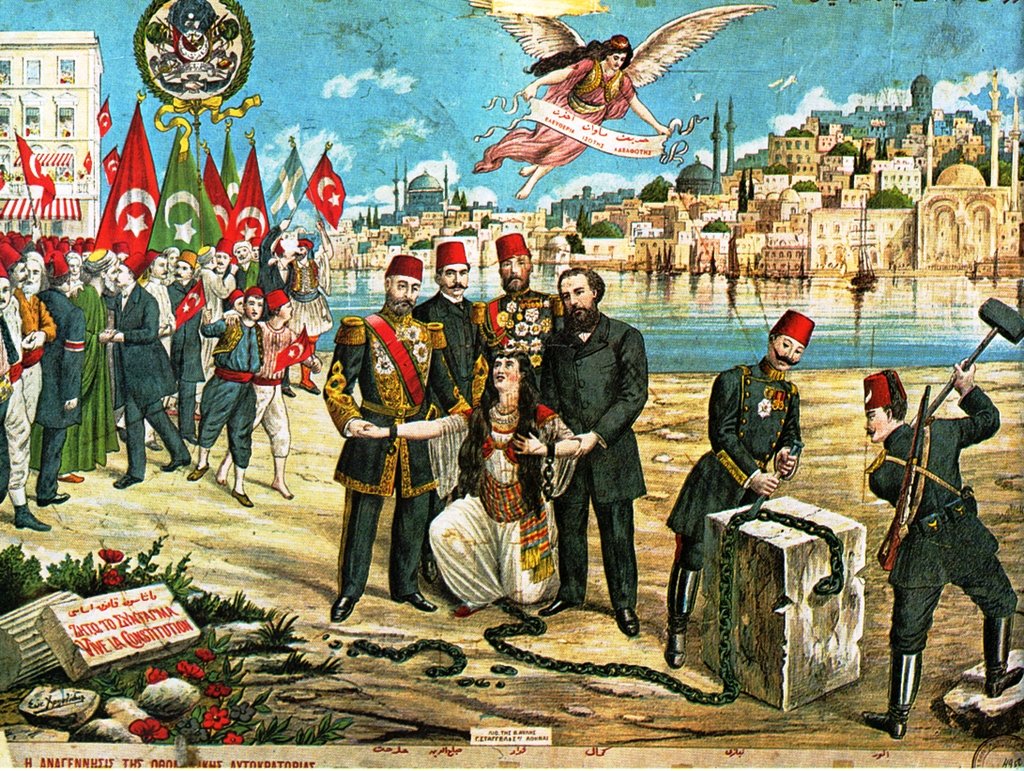
The Ottoman Empire stands as one of the most consequential and long-lasting empires in world history. Founded at the end of the 13th century and lasting until the early 20th century, it bridged continents, cultures, religions, and political systems. At its height, the empire stretched across Southeast Europe, Western Asia, and North Africa, ruling over millions of people from diverse ethnic and religious backgrounds. Its legacy includes monumental architecture, legal reforms, military innovation, and complex governance structures—but also imperial violence, internal decline, and tragic episodes that continue to shape geopolitics today.
This article explores the Ottoman Empire’s rise, achievements, challenges, longevity, influence on later powers, and the remnants that endure in modern states and institutions.
Origins and Rise to Power
The Ottoman Empire was founded around 1299 by Osman I, a leader of a small Anatolian principality. Positioned along the frontier between Byzantine territories and Turkish tribal lands, Osman’s successors capitalized on both military opportunity and regional instability. Over time, the Ottomans expanded steadily into the Balkans and Anatolia.
A defining milestone came in 1453, when Mehmed II captured Constantinople, ending the Byzantine Empire. The city—renamed Istanbul—became the imperial capital and a thriving center of trade, culture, and political authority. This conquest symbolized the Ottomans’ transformation from a regional power into a major imperial force.
Under Suleiman the Magnificent, the empire reached its territorial and administrative zenith in the 16th century. Ottoman forces advanced deep into Hungary, controlled much of the eastern Mediterranean, and extended influence into the Arabian Peninsula and North Africa. The empire’s naval strength challenged European powers, while its armies were feared across three continents.
The “Good”: Strengths and Achievements
Administrative Innovation
One of the empire’s most impressive features was its administrative system. The Ottomans developed a sophisticated bureaucracy capable of managing vast territories. The millet system allowed religious minorities—Christians, Jews, and others—to govern their own communal affairs under imperial oversight. This arrangement fostered relative stability and religious coexistence compared to many contemporary European states.
Legal and Cultural Contributions
The Ottoman legal framework blended Islamic law (Sharia) with secular sultanic decrees (kanun), creating a flexible governance model. Under Suleiman, legal codification strengthened centralized control while maintaining provincial autonomy.
Culturally, the empire produced architectural masterpieces, including the Blue Mosque and Süleymaniye Mosque in Istanbul. Ottoman art, calligraphy, ceramics, and literature flourished. The empire also preserved and transmitted classical knowledge between East and West, acting as a conduit of trade and intellectual exchange.
Economic and Strategic Position
Strategically located between Europe and Asia, the Ottoman Empire controlled key trade routes connecting the Mediterranean, Black Sea, and Silk Road networks. This geographic advantage brought wealth and political leverage. Istanbul became one of the world’s great cosmopolitan cities.
The “Bad”: Challenges, Violence, and Decline
Despite its achievements, the Ottoman Empire was also marked by significant problems and injustices.
Imperial Conquest and Repression
Like most empires, Ottoman expansion relied on warfare and subjugation. Conquered populations often paid heavy taxes, and revolts were suppressed harshly. The devshirme system—where Christian boys were taken, converted to Islam, and trained for military or administrative service—provided elite manpower but remains controversial for its coercive nature.
Internal Corruption and Stagnation
Over centuries, administrative inefficiencies, corruption, and decentralization weakened central authority. The once-formidable Janissary corps became resistant to reform and politically entrenched. Economic shifts, including the rise of Atlantic trade routes dominated by Western European powers, reduced Ottoman control over global commerce.
Nationalism and Fragmentation
By the 19th century, nationalist movements across the Balkans—among Greeks, Serbs, Bulgarians, and others—eroded Ottoman territorial cohesion. The empire increasingly became known as the “Sick Man of Europe,” struggling to compete militarily and economically with industrialized Western powers.
The Armenian Genocide and World War I
One of the darkest chapters in Ottoman history occurred during World War I under the rule of the Committee of Union and Progress (Young Turks). The mass deportation and killing of Armenians in 1915–1917 resulted in the deaths of an estimated one million or more people.
Widely recognized as the Armenian Genocide, it remains a subject of historical and political contention.
World War I ultimately proved fatal for the empire. Defeated and partitioned by the Allied Powers, the Ottoman state collapsed in 1922.
Keys to Longevity
The Ottoman Empire endured for over six centuries—far longer than many of its European rivals. Several factors explain this remarkable longevity:
1. Flexible Governance
The empire balanced centralized authority with regional autonomy. Local elites were often incorporated into imperial administration, reducing resistance and facilitating integration.
2. Religious Accommodation
The millet system allowed pluralism within an imperial Islamic framework. This approach reduced sectarian rebellion for long stretches of time.
3. Military Adaptability
In its early centuries, the Ottomans were military innovators. They adopted gunpowder technology quickly and built one of the world’s most disciplined standing armies.
4. Strategic Geography
Control of Anatolia and the Balkans positioned the empire at the crossroads of Europe, Asia, and Africa—granting leverage in trade and diplomacy.
5. Reform Efforts
In the 19th century, the Tanzimat reforms sought to modernize administration, legal codes, and the military along European lines. Though only partially successful, these reforms prolonged the empire’s existence.
Lessons for Future Empires and States
Later powers studied and reacted to Ottoman strengths and weaknesses.
Administrative Pluralism
The millet system demonstrated that diverse religious communities could coexist under imperial rule. The British Empire later adopted indirect rule in parts of Africa and Asia, allowing local governance structures to persist under imperial oversight.
Military Modernization
The Ottoman decline underscored the importance of industrial and technological modernization. European powers and later nation-states prioritized industrial military capacity to avoid similar stagnation.
Nationalism’s Power
The collapse of Ottoman control in the Balkans showed how nationalism could dismantle multinational empires. The Austro-Hungarian and Russian Empires similarly unraveled amid nationalist pressures during and after World War I.
Reform vs. Resistance
Ottoman reformers struggled against entrenched interests like the Janissaries. Future states learned that modernization requires institutional flexibility and the ability to overcome internal resistance.
The End of Empire and Birth of Modern Turkey
After World War I, the Ottoman Sultanate was abolished. The Turkish War of Independence, led by Mustafa Kemal Atatürk, resulted in the establishment of the Republic of Turkey in 1923. The new republic pursued secularization, legal reform, and Westernization, breaking sharply from imperial governance while inheriting its territorial core.
Remnants of the Ottoman Empire Today
Though the empire formally ended over a century ago, its influence remains visible in many ways:
1. Modern Nation-States
The Ottoman Empire’s former territories now include Turkey, Greece, Bulgaria, Serbia, Iraq, Syria, Lebanon, Israel, Jordan, Egypt, and much of North Africa. Borders drawn after World War I—often by European powers—continue to shape Middle Eastern geopolitics.
2. Legal and Administrative Traditions
Elements of Ottoman land law and administrative practice influenced legal systems in parts of the Middle East and the Balkans.
3. Architecture and Urban Design
Istanbul’s skyline, dominated by grand mosques and palaces like Topkap? Palace, reflects imperial grandeur. Ottoman architectural styles appear throughout Southeast Europe and the Levant.
4. Cultural and Culinary Influence
Ottoman cuisine influenced modern Turkish, Greek, Balkan, and Middle Eastern food traditions. Coffee culture, for instance, spread through Ottoman territories into Europe.
5. Ongoing Geopolitical Memory
In contemporary Turkey, political discourse sometimes invokes Ottoman heritage. Regional diplomacy, cultural outreach, and historical narratives reflect a continued engagement with imperial memory.
Conclusion
The Ottoman Empire was neither purely benevolent nor wholly oppressive. It was a complex, evolving political entity that managed diversity with pragmatic flexibility while also engaging in conquest and, at times, brutality. Its achievements in governance, architecture, and cross-cultural integration stand alongside its failures in reform, human rights, and modernization.
Its six-century lifespan testifies to strategic geography, adaptive institutions, and administrative sophistication. Yet its collapse highlights the dangers of stagnation, unchecked nationalism, and geopolitical overreach.
Today, the Ottoman legacy survives in nations, borders, cities, cuisine, architecture, and political debates. Its story remains essential for understanding modern Europe, the Middle East, and the dynamics of empire itself—offering enduring lessons on power, pluralism, reform, and resilience.