
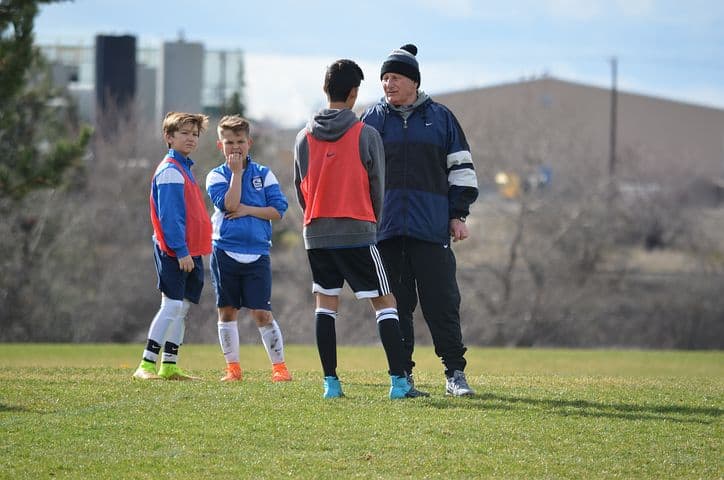
From High School Cuts to College Opportunity: Earning a Place on a College Team
Making a high-level college sports team is difficult under any circumstances. Doing it as a true freshman is even more challenging. But the achievement becomes especially striking when an athlete was cut during the final two years of high school competition, had no influential connection recommending them to the college program, and still earned a place on a strong college team entirely on their own performance—along with a scholarship, even if the scholarship was modest.
That journey illustrates an important distinction between being overlooked at one level and being incapable of competing at the next.
Being Cut Does Not Define an Athlete's Ceiling
High school sports can be highly competitive, particularly at larger schools or programs with established traditions. A player may be competing for limited roster spots against athletes who have been in the program for years, have developed relationships with coaches, or happen to fit what the team needs during a particular season.
Being cut during a player's junior or senior year can therefore be discouraging. Those are often the years when athletes expect their experience to translate into greater opportunities.
But selection for one team is not a universal measurement of athletic ability.
A coach is making a decision based on a particular roster, a particular season, and a particular set of circumstances. A player can be capable of competing at a high level and still not make a specific high school roster.
The College Level Changes the Equation
Moving from high school athletics to college competition introduces another layer of difficulty.
College programs recruit from large geographic areas and may evaluate hundreds of athletes for a relatively small number of roster positions. Players may arrive with extensive club experience, impressive statistics, state or regional recognition, private coaching, and years of exposure to college recruiters.
For a freshman without those advantages, earning a spot requires more than simply showing potential.
The athlete has to demonstrate that their ability translates to a higher level of competition.
The Significance of Earning a Spot as a True Freshman
A true freshman has not yet spent a year developing within the college program. They are competing against returning players who already understand the team's system, terminology, expectations, and coaching style.
Returning athletes also have the advantage of having demonstrated themselves in that environment.
A freshman who earns a roster spot therefore has to establish credibility quickly.
If that freshman does not merely make the team but competes successfully for playing opportunities, the accomplishment becomes even more significant. It suggests that the athlete's ability was sufficiently compelling for the coaching staff to look beyond experience and give the newcomer an opportunity.
Earning It Without an Inside Connection
There is another dimension to this kind of achievement: earning the opportunity without someone making a call on the athlete's behalf.
Connections are not inherently illegitimate. Sports depend heavily on relationships, and coaches naturally rely on recommendations, recruiting networks, and people whose evaluations they trust.
But there is a meaningful difference between receiving an introduction and having one's performance make the case.
An athlete who has no family connection, influential advocate, former coach with special access, or other insider putting in a good word has to create credibility through measurable evidence.
That evidence might include performance in tryouts, statistics, game film, athletic ability, work ethic, positional versatility, or the ability to contribute within the team's system.
In that situation, the athlete's performance effectively becomes the recommendation.
The Scholarship Makes the Story Even More Meaningful
Earning even a small athletic scholarship adds another dimension.
College athletic scholarships represent an investment by a program. The amount can vary considerably, and a scholarship does not necessarily mean that an athlete has received a full ride or that the program expects them to become a star.
Nevertheless, receiving financial athletic assistance means the coaching staff saw enough value in the athlete to allocate some of its limited resources toward them.
For someone who had recently been cut from a high school team, that can represent a remarkable change in circumstances.
The story is not necessarily that the athlete suddenly became talented. It may be that the athlete's talent was finally evaluated in an environment where it could be recognized.
What This Journey Says About Persistence
The psychological part of this journey may be just as important as the athletic achievement.
Being cut can create doubt. An athlete may reasonably wonder whether continuing to pursue the sport is worthwhile. Other players may move forward while the athlete watches from outside the program.
Choosing to continue anyway requires persistence.
That persistence can involve practicing without the validation of a roster spot, seeking opportunities elsewhere, competing in less visible settings, improving weaknesses, and continuing to pursue opportunities that appear unlikely.
The eventual college opportunity does not erase the disappointment of being cut. Instead, it puts that earlier experience into perspective.
Talent Is Not Always Recognized at the Same Time
Athletic development is not perfectly linear.
Some athletes are physically mature at a young age and dominate early. Others develop later. Some respond exceptionally well to additional training or a change in coaching environment. Others discover that their particular skills are better suited to a different style of play.
A high school coach may see one version of an athlete. A college coach may see another.
This is why a player's résumé should be understood in context. A roster decision from one season is evidence of what happened in that particular setting—not necessarily a definitive statement about the athlete's ultimate potential.
The Importance of Creating Your Own Opportunity
There is also a broader lesson in this kind of story.
An athlete cannot control whether another person recommends them. They can control preparation, effort, development, attitude, and how they perform when an opportunity finally appears.
When there is no connection opening the door, the athlete has to make the performance impossible to ignore.
That may mean attending an open tryout, contacting coaches directly, submitting film, competing in additional leagues, improving physical conditioning, or simply showing up prepared when an unexpected opportunity emerges.
The process can be uncomfortable because there is no guarantee that persistence will produce the desired result.
But when it does, the accomplishment carries a particular meaning: the opportunity was earned rather than assumed.
A Different Definition of Success
The most important part of this journey may not be the scholarship itself or even the college roster spot.
It is the evidence that an athlete can experience a significant setback without allowing that setback to become a permanent definition of who they are.
Being cut during the final two years of high school could have been the end of the story.
Instead, the athlete continued developing, found another opportunity, competed against stronger players, earned the trust of a college coaching staff, and secured a place on a high-level team as a true freshman.
That does not mean every athlete who is cut will eventually play college sports. Circumstances, ability, opportunity, and timing all matter.
But when someone does accomplish it—without an influential connection, without someone opening the door for them, and with their performance ultimately earning both a roster spot and even a modest scholarship—the achievement represents more than simply making a team.
It represents resilience, self-reliance, and the ability to turn an earlier rejection into motivation rather than a final verdict.
Sometimes the most meaningful athletic accomplishments are not the ones that begin with being identified as a star. They are the ones that begin with being told, in effect, you didn't make the team—and end with the athlete finding another way forward.
The Numbers: High School to College Basketball
• Overall Odds: Out of more than 537,000 high school boys' basketball players, roughly 19,000 (about 3.6%) play at any collegiate level (NCAA Division I, Division II, Division III, NAIA, or JUCO).
• Division Breakdown: Only about 1% reach Division I, 1% play Division II, and roughly 1.5% play Division III or other levels.
• The Reality: The vast majority of players who continue past high school build alternate pathways through Junior Colleges (JUCO), NAIA programs, or competitive club leagues.
 171240