
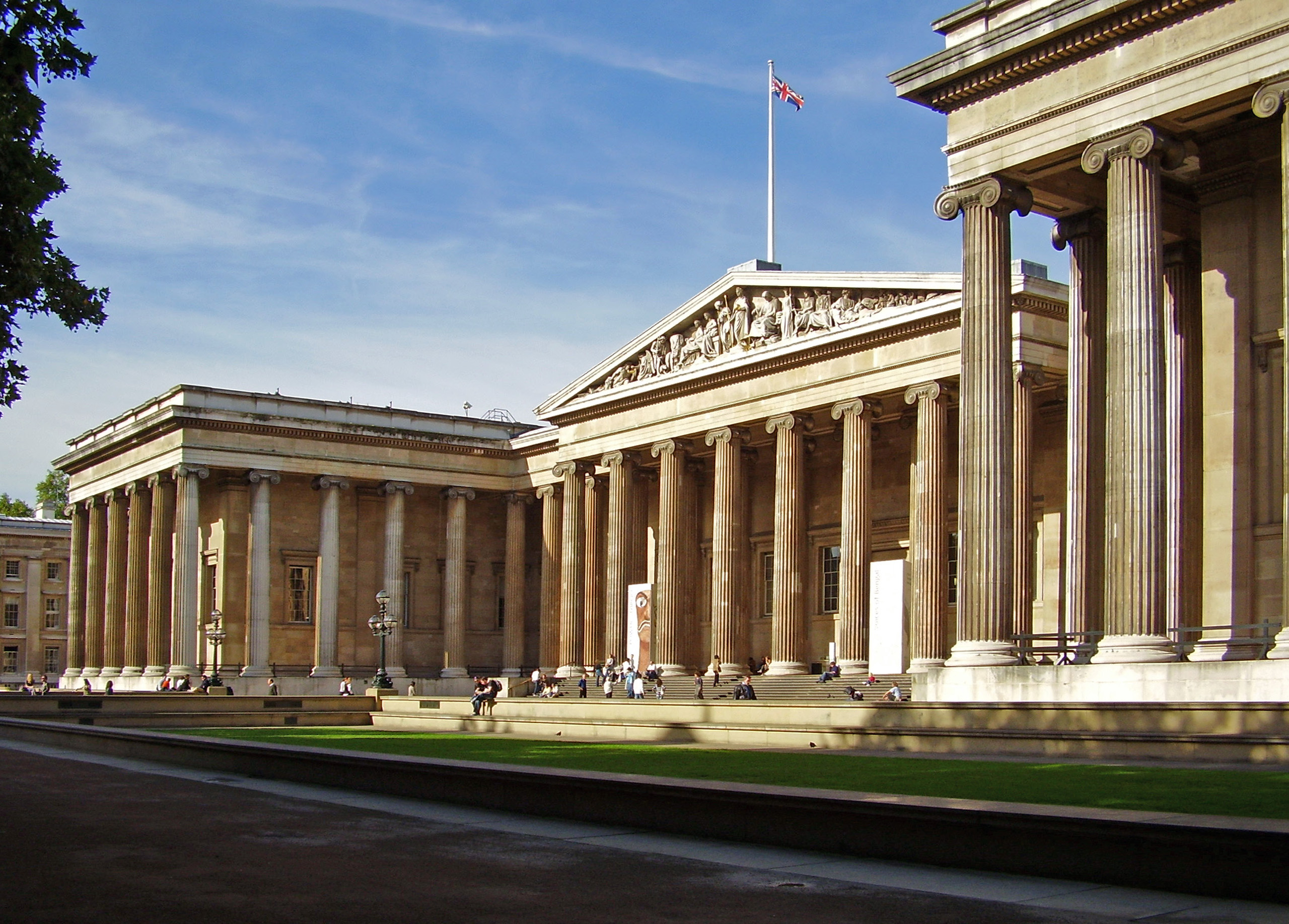
The British Museum: A History of Global Collectionsand Allegations of Stolen Artifacts
The British Museum in London is one of the world's most prominent cultural institutions, housing an extraordinarycollection of objects that span thousands of years of human history. From the Rosetta Stone and the Parthenon sculpturesto ancient Egyptian mummies and treasures from Africa and Asia, its galleries offer visitors a glimpse into civilizationsacross the globe. Yet behind this remarkable collection lies a complicated history of empire, colonialism, archaeologicalexploration, and disputes over cultural ownership.
For centuries, the museum has been celebrated for preserving and displaying historical objects. At the same time, it hasfaced persistent allegations that some of its most famous artifacts were acquired through colonial domination, unequalagreements, or outright removal without the meaningful consent of their countries of origin. These controversies raiseimportant questions about who has the right to own humanity's cultural heritage, how historical acquisitions should bejudged, and whether museums should return objects to the communities from which they came.
The Founding of the British Museum
The British Museum was established in 1753 through an Act of Parliament, following the death of Sir Hans Sloane, aphysician and collector whose personal collection included books, manuscripts, natural history specimens, antiquities, andethnographic objects. Sloane bequeathed his collection to King George II for the nation in exchange for payment to hisheirs. Parliament accepted the bequest, laying the foundation for a national museum intended to preserve knowledge andmake collections accessible to the public.
The museum opened to visitors in 1759 at Montagu House in Bloomsbury, London. It was among the earliest nationalmuseums to offer public access to a broad collection of historical and scientific material, although access in its early yearswas regulated and very different from the open visitor experience familiar today.
During the eighteenth and nineteenth centuries, the museum expanded significantly. Archaeological excavations, privatedonations, purchases, diplomatic exchanges, and the activities of British travelers and imperial officials brought objectsfrom Europe, the Middle East, Africa, Asia, and the Americas into its galleries.
This growth reflected the intellectual ambitions of the Enlightenment, when scholars sought to classify, study, andcompare the world's cultures. However, it also coincided with the expansion of the British Empire. Imperial power oftenshaped the circumstances in which objects were discovered, excavated, acquired, or removed. As a result, the museum'shistory cannot be separated from the political and economic structures of its time.
In 1881, the natural history collections were transferred to a separate institution, which became the Natural HistoryMuseum. The British Museum subsequently concentrated more closely on archaeology, human history, art, and materialculture.
Today, the museum presents itself as a resource for understanding the shared history of humanity. Its collections are alsoat the center of an international debate about whether preserving objects in a major global institution is sufficient when thecircumstances of their acquisition remain contested.
The Museum's Most Famous Artifacts and Their Contested Origins
Several of the British Museum's most celebrated objects have become central to debates over cultural heritage and thelegacy of colonialism. The disputes differ from case to case: some concern military conquest, others disputed permissions,and still others involve the legal and ethical standards of an earlier era.
1. The Parthenon Sculptures: Greece's Longstanding Claim
The Parthenon sculptures, often called the Elgin Marbles, are among the most prominent examples of contested culturalproperty in the museum's collection. They originally formed part of the Parthenon, a temple constructed on the Acropolisin Athens during the fifth century BCE.
Between approximately 1801 and 1812, Thomas Bruce, the seventh Earl of Elgin and British ambassador to the OttomanEmpire, arranged for the removal of substantial portions of the temple's sculptures. At the time, Athens was underOttoman rule.
Elgin maintained that he had obtained permission from Ottoman authorities to remove the sculptures. In 1816, the BritishParliament investigated the acquisition, and the sculptures were purchased for the nation and transferred to the BritishMuseum.
Greece, however, disputes the legitimacy of this removal. Greek officials argue that the sculptures are integral parts of amonument central to Greek history and national identity, and that their removal occurred under conditions of foreign rulerather than through the freely expressed consent of the Greek people.
The British Museum maintains that the sculptures were acquired legally under the circumstances of the early nineteenthcentury. It also argues that displaying objects from different civilizations in a shared institution allows visitors to exploreconnections across human history.
The disagreement therefore involves more than the legal status of an old transaction. It concerns the relationship betweenhistorical permission, political power, cultural identity, and modern expectations about the return of heritage objects.Greece has continued to seek the sculptures' return, while the museum has retained them in London.
2. The Benin Bronzes: Objects Taken During a Military Expedition
The Benin Bronzes are a collection of brass plaques, commemorative heads, sculptures, and other objects created byskilled artists of the Kingdom of Benin, in what is now southern Nigeria. They document the kingdom's royal court,religious traditions, political authority, and artistic achievements.
Their presence in Western museums is closely linked to the British military expedition against Benin City in 1897. Britishforces invaded the city, deposed and exiled the Oba, or king, and looted objects from the royal palace and othercompounds. Many of these objects subsequently entered international art markets and museum collections.
The British Museum holds a substantial collection of Benin works, including objects acquired from people connected tothe 1897 expedition. Its own documentation acknowledges that many pieces were looted during the attack.
For Nigeria and advocates of restitution, the circumstances are particularly significant: these were not simplyarchaeological discoveries or ordinary commercial purchases. Many objects were taken during a violent militaryoperation that dismantled an independent kingdom's political institutions.
The objects also retain cultural and historical significance for the Edo people, descendants of the kingdom's population.Their absence from Nigeria has therefore been viewed not only as a loss of artistic heritage but also as a separation of acommunity from important records of its own history.
In response, Nigerian institutions, the Benin Royal Palace, and international museums have participated in discussionsabout documenting collections, developing museums in Benin City, and arranging returns or loans. Some Europeaninstitutions have returned Benin objects, demonstrating that restitution can occur through different institutional and legalarrangements.
The British Museum's position has included research partnerships and participation in international dialogue, but thebroader question of permanent restitution remains contested. The Benin Bronzes illustrate how a museum may preserveand study an object while still facing serious questions about the violence through which it entered its collection.
3. The Rosetta Stone: A Key to Ancient Egyptian Writing
The Rosetta Stone is one of the museum's most recognizable objects. Discovered by French soldiers in Egypt in 1799during Napoleon's campaign, it contains a decree inscribed in three scripts: hieroglyphic, Demotic, and ancient Greek.Because scholars could read ancient Greek, the stone played a crucial role in deciphering Egyptian hieroglyphs.
Following the French defeat in Egypt, the stone came into British possession under the terms of the 1801 Treaty ofAlexandria and was transported to Britain. It entered the British Museum in 1802.
Egyptian calls for the stone's return reflect a wider debate over the ownership of antiquities removed during periods offoreign military and political control. Advocates of return argue that an object so closely associated with Egyptiancivilization should be preserved and displayed in Egypt.
The British Museum has continued to exhibit the stone as a major resource for understanding ancient Egyptian history andthe development of writing. The dispute is different from the Benin case because the stone was transferred through amilitary surrender agreement rather than taken directly from a royal palace during the 1897 expedition.
Nevertheless, the Rosetta Stone raises a recurring question: does possession acquired through the outcome of a foreignmilitary campaign provide sufficient moral justification for a modern institution to retain an important cultural object?The answer remains disputed.
What Does It Mean to Call an Artifact "Stolen"?
The phrase stolen artifacts is frequently used in discussions about the British Museum, but it is important to distinguishbetween different kinds of allegations.
• Direct looting: Objects removed through military conquest, such as many of the Benin Bronzes taken in 1897.
• Disputed authorization: Objects removed under permissions granted by rulers or officials whose authority, consent,or understanding of the transaction is later challenged, as in the debate over the Parthenon sculptures.
• Colonial-era acquisitions: Objects acquired through purchases, excavations, or transfers during periods of unequalpolitical power. Such circumstances can raise ethical concerns even when the transaction was documented.
• Modern theft from the museum: Objects unlawfully removed from the institution's own collection, which is aseparate issue from whether the museum has a legitimate claim to retain objects acquired centuries earlier.
These distinctions matter because not every disputed artifact has the same legal history. An object can be the subject of aserious ethical restitution claim without a court having determined that its current possession is unlawful. Conversely, anobject may be the subject of a straightforward theft allegation supported by evidence of unauthorized removal.
A careful examination of each object's provenance—the documented history of its ownership, movement, and acquisition—is therefore essential.
The 2023 Missing Artifacts Scandal
While international restitution debates concern objects the museum has held for generations, a separate scandal emergedin August 2023 involving artifacts that disappeared from the museum's own collection.
The museum announced that a number of items had been found to be missing, stolen, or damaged. Most were smallobjects from its Greek and Roman collections, including ancient gemstones, glass intaglios, gold rings, earrings, and otherpieces of jewelry. Many had been held in storage rather than displayed in public galleries.
The investigation exposed weaknesses in collection management, recordkeeping, and internal oversight. The museumdismissed Peter Higgs, a former curator of Greek and Roman collections, after the allegations came to light.
The museumsubsequently pursued civil legal action against him.
In March 2024, Reuters reported that a London court had ordered Higgs to provide information about items he wassuspected of taking and to return any remaining objects in his possession. At that point, he was under police investigationbut had not been criminally charged, and he intended to dispute the museum's civil claim. Allegations against anindividual must be distinguished from findings of criminal guilt.
The scale of the losses was substantial. In May 2024, the museum reported that 626 objects had been recovered andestimated that approximately 2,000 items had been missing or damaged. Of these, roughly 1,500 were believed to bemissing or stolen, while around 500 had been damaged.
The scandal also raised questions about why warnings about potentially missing objects had not led to an earlierresolution. It prompted scrutiny of the museum's procedures for documenting, monitoring, and protecting artifacts, as wellas its responsibility to the public and to the cultures represented in its collection.
The episode highlighted an important distinction: a museum can be a custodian of valuable historical objects while stillexperiencing serious failures in protecting them. It also renewed debate about whether institutions that hold contestedcultural property have sufficient transparency and accountability.
The Case for Keeping Artifacts and the Case for Returning Them
The debate over the British Museum is not simply a disagreement between those who value history and those who seekrestitution. Both sides frequently argue that they are trying to protect cultural heritage, but they differ over how thatprotection should work.
Arguments for retaining objects
Supporters of the museum's traditional approach emphasize several considerations:
• Public access: A major international museum allows visitors from many countries to encounter objects fromdifferent civilizations in one place.
• Research and conservation: Museums provide facilities, specialist knowledge, and long-term preservation forfragile historical materials.
• Shared human history: Some advocates argue that objects can illuminate connections among civilizations ratherthan belonging exclusively within modern national borders.
• Legal ownership: Certain objects were acquired through transactions or legal arrangements that the museum regardsas valid under the laws and circumstances of the time.
The British Museum's collection, in this view, provides opportunities for comparative research and public education thatmight be harder to achieve if every object were held exclusively in its place of origin.
Arguments for restitution
Advocates for returning cultural objects emphasize a different set of concerns:
• Historical injustice: Objects taken during conquest or colonial rule may represent the consequences of coercionrather than voluntary exchange.
• Cultural identity: Artifacts can have religious, ceremonial, political, and emotional significance for the communitiesthat created them.
• National and community sovereignty: Countries and descendant communities argue that they should havemeaningful authority over their own cultural heritage.
• Institutional accountability: Returning objects can acknowledge past wrongdoing and help rebuild relationshipsbetween museums and the communities represented in their collections.
These arguments also challenge the assumption that physical preservation alone settles the question of ownership.
Anobject may be well maintained in London while its absence remains deeply significant to the people whose ancestorscreated it.
Possible solutions include permanent restitution, long-term loans, shared custody, collaborative exhibitions, and jointresearch projects. However, these arrangements are not interchangeable: a loan leaves ownership unchanged, whilerestitution generally involves a transfer of ownership or formal recognition of a claim.
The Legal and Ethical Challenges of Restitution
Returning historical artifacts can be complicated by national laws, international agreements, incomplete records, anddisagreements over who has the strongest claim to an object.
The British Museum Act 1963 places significant restrictions on the museum's ability to dispose of objects in its collection,subject to limited exceptions. Consequently, even when a moral or historical argument for return gains public support, themuseum may face legal barriers to permanently transferring an artifact.
International agreements also vary according to when an object was removed, the countries involved, and the legal rulesapplicable at the time. Modern conventions addressing illicit trafficking in cultural property do not automatically resolveevery dispute involving objects acquired centuries earlier.
For these reasons, restitution claims often require detailed historical research. Investigators may examine excavationrecords, military archives, purchase agreements, correspondence, shipping documents, and oral histories to reconstruct anobject's journey.
Ethical debates can remain unresolved even after its provenance has been established. A museum might demonstrate thata transaction was documented while a source community argues that the transaction took place under circumstances thatmade meaningful consent impossible.
The challenge is to examine these cases individually rather than treating all acquisitions as either legitimate or illegitimateon the basis of a single rule.
The British Museum's Future: Transparency, Cooperation, and CulturalResponsibility
The British Museum's future depends partly on how effectively it addresses the questions raised by its history and recentcontroversies.
One important step is improving provenance research and making acquisition records accessible.
Transparentdocumentation allows researchers, source communities, and the public to examine the circumstances in which objectsentered the collection.
Another is building meaningful partnerships with countries and communities of origin. The museum's work with Nigerianinstitutions on Benin collections demonstrates the value of collaborative research and documentation, althoughcooperation does not automatically settle disagreements about permanent ownership.
The 2023 theft scandal also demonstrated the importance of internal accountability. Accurate inventories, independentaudits, secure storage, effective reporting procedures, and prompt responses to concerns are essential for institutionsentrusted with irreplaceable objects.
Finally, museums must consider how they present difficult histories to visitors. Exhibitions can explain not only anobject's artistic or archaeological importance but also the circumstances of its removal, the people who created it, and theclaims made by communities seeking its return.
Acknowledging contested histories need not diminish an artifact's significance. It can provide a more complete account ofits journey and the historical forces that shaped the modern museum.
Conclusion
The British Museum occupies a distinctive place in the world's cultural landscape. Founded during the Enlightenment, ithas become a major center for preserving, researching, and displaying objects from civilizations across thousands ofyears. Its collections have contributed substantially to historical scholarship and public understanding.
Yet its history also reflects the expansion of the British Empire, the unequal relationships through which some collectionswere assembled, and the continuing consequences of colonial-era acquisitions. Disputes over the Parthenon sculptures,the Benin Bronzes, and the Rosetta Stone illustrate the different ways in which questions of ownership, consent, identity,and historical responsibility continue to shape the institution's public role.
The 2023 missing-artifacts scandal introduced another dimension to these concerns by exposing failures in the protectionand management of the museum's own collection. It reinforced the importance of transparency and accountabilityalongside the traditional responsibilities of preservation and scholarship.
Ultimately, the debate over the British Museum is about more than the location of individual objects. It concerns howsocieties understand their past, who has the authority to interpret it, and what responsibilities institutions inherit whenthey hold the cultural heritage of others.
The challenge facing the museum is to balance public access and scholarly research with a serious examination ofhistorical injustice and legitimate claims for restitution. Whether through the return of particular objects, strongerpartnerships, or more transparent collecting practices, the decisions made today will influence how future generationsunderstand not only the artifacts themselves but also the history of the institution that preserves them.
 98248