The Ottoman Empire: Power, Complexity, and Enduring Legacy
The Ottoman Empire stands as one of the most consequential and long-lasting empires in world history. Founded at the end of the 13th century and lasting until the early 20th century, it bridged continents, cultures, religions, and political systems. At its height, the empire stretched across Southeast Europe, Western Asia, and North Africa, ruling over millions of people from diverse ethnic and religious backgrounds. Its legacy includes monumental architecture, legal reforms, military innovation, and complex governance structures—but also imperial violence, internal decline, and tragic episodes that continue to shape geopolitics today.
This article explores the Ottoman Empire’s rise, achievements, challenges, longevity, influence on later powers, and the remnants that endure in modern states and institutions.
Origins and Rise to Power
The Ottoman Empire was founded around 1299 by Osman I, a leader of a small Anatolian principality. Positioned along the frontier between Byzantine territories and Turkish tribal lands, Osman’s successors capitalized on both military opportunity and regional instability. Over time, the Ottomans expanded steadily into the Balkans and Anatolia.
A defining milestone came in 1453, when Mehmed II captured Constantinople, ending the Byzantine Empire. The city—renamed Istanbul—became the imperial capital and a thriving center of trade, culture, and political authority. This conquest symbolized the Ottomans’ transformation from a regional power into a major imperial force.
Under Suleiman the Magnificent, the empire reached its territorial and administrative zenith in the 16th century. Ottoman forces advanced deep into Hungary, controlled much of the eastern Mediterranean, and extended influence into the Arabian Peninsula and North Africa. The empire’s naval strength challenged European powers, while its armies were feared across three continents.
The “Good”: Strengths and Achievements
Administrative Innovation
One of the empire’s most impressive features was its administrative system. The Ottomans developed a sophisticated bureaucracy capable of managing vast territories. The millet system allowed religious minorities—Christians, Jews, and others—to govern their own communal affairs under imperial oversight. This arrangement fostered relative stability and religious coexistence compared to many contemporary European states.
Legal and Cultural Contributions
The Ottoman legal framework blended Islamic law (Sharia) with secular sultanic decrees (kanun), creating a flexible governance model. Under Suleiman, legal codification strengthened centralized control while maintaining provincial autonomy.
Culturally, the empire produced architectural masterpieces, including the Blue Mosque and Süleymaniye Mosque in Istanbul. Ottoman art, calligraphy, ceramics, and literature flourished. The empire also preserved and transmitted classical knowledge between East and West, acting as a conduit of trade and intellectual exchange.
Economic and Strategic Position
Strategically located between Europe and Asia, the Ottoman Empire controlled key trade routes connecting the Mediterranean, Black Sea, and Silk Road networks. This geographic advantage brought wealth and political leverage. Istanbul became one of the world’s great cosmopolitan cities.
The “Bad”: Challenges, Violence, and Decline
Despite its achievements, the Ottoman Empire was also marked by significant problems and injustices.
Imperial Conquest and Repression
Like most empires, Ottoman expansion relied on warfare and subjugation. Conquered populations often paid heavy taxes, and revolts were suppressed harshly. The devshirme system—where Christian boys were taken, converted to Islam, and trained for military or administrative service—provided elite manpower but remains controversial for its coercive nature.
Internal Corruption and Stagnation
Over centuries, administrative inefficiencies, corruption, and decentralization weakened central authority. The once-formidable Janissary corps became resistant to reform and politically entrenched. Economic shifts, including the rise of Atlantic trade routes dominated by Western European powers, reduced Ottoman control over global commerce.
Nationalism and Fragmentation
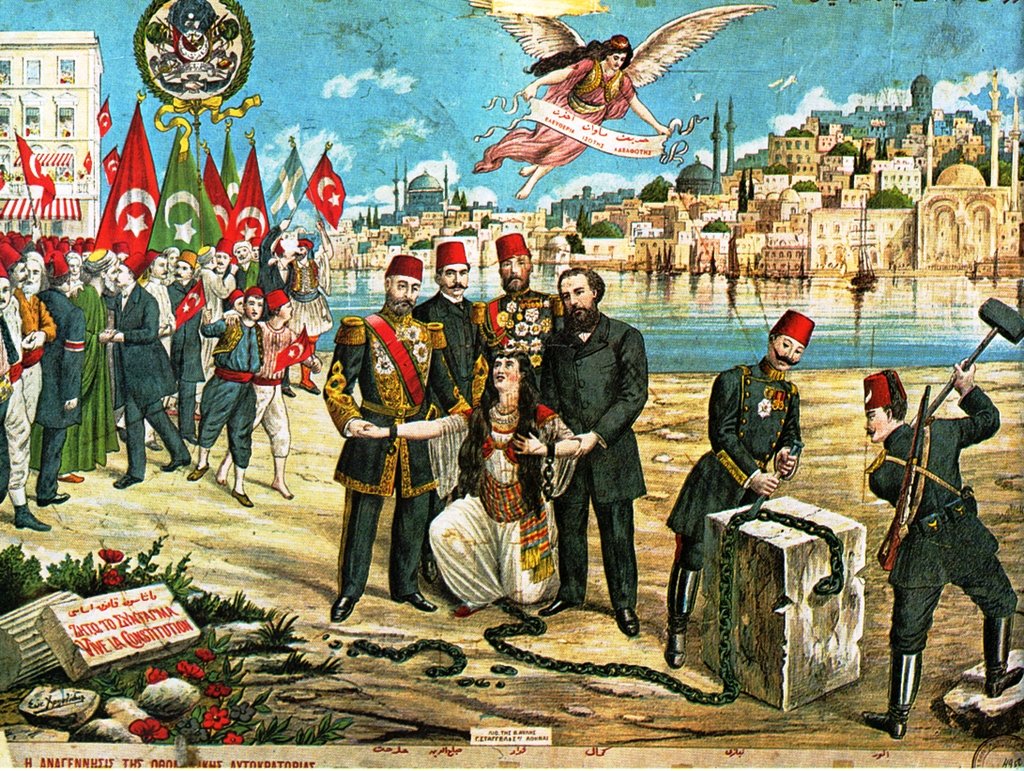
By the 19th century, nationalist movements across the Balkans—among Greeks, Serbs, Bulgarians, and others—eroded Ottoman territorial cohesion. The empire increasingly became known as the “Sick Man of Europe,” struggling to compete militarily and economically with industrialized Western powers.
The Armenian Genocide and World War I
One of the darkest chapters in Ottoman history occurred during World War I under the rule of the Committee of Union and Progress (Young Turks). The mass deportation and killing of Armenians in 1915–1917 resulted in the deaths of an estimated one million or more people.
Widely recognized as the Armenian Genocide, it remains a subject of historical and political contention.
World War I ultimately proved fatal for the empire. Defeated and partitioned by the Allied Powers, the Ottoman state collapsed in 1922.
Keys to Longevity
The Ottoman Empire endured for over six centuries—far longer than many of its European rivals. Several factors explain this remarkable longevity:
1. Flexible Governance
The empire balanced centralized authority with regional autonomy. Local elites were often incorporated into imperial administration, reducing resistance and facilitating integration.
2. Religious Accommodation
The millet system allowed pluralism within an imperial Islamic framework. This approach reduced sectarian rebellion for long stretches of time.
3. Military Adaptability
In its early centuries, the Ottomans were military innovators. They adopted gunpowder technology quickly and built one of the world’s most disciplined standing armies.
4. Strategic Geography
Control of Anatolia and the Balkans positioned the empire at the crossroads of Europe, Asia, and Africa—granting leverage in trade and diplomacy.
5. Reform Efforts
In the 19th century, the Tanzimat reforms sought to modernize administration, legal codes, and the military along European lines. Though only partially successful, these reforms prolonged the empire’s existence.
Lessons for Future Empires and States
Later powers studied and reacted to Ottoman strengths and weaknesses.
Administrative Pluralism
The millet system demonstrated that diverse religious communities could coexist under imperial rule. The British Empire later adopted indirect rule in parts of Africa and Asia, allowing local governance structures to persist under imperial oversight.
Military Modernization
The Ottoman decline underscored the importance of industrial and technological modernization. European powers and later nation-states prioritized industrial military capacity to avoid similar stagnation.
Nationalism’s Power
The collapse of Ottoman control in the Balkans showed how nationalism could dismantle multinational empires. The Austro-Hungarian and Russian Empires similarly unraveled amid nationalist pressures during and after World War I.
Reform vs. Resistance
Ottoman reformers struggled against entrenched interests like the Janissaries. Future states learned that modernization requires institutional flexibility and the ability to overcome internal resistance.
The End of Empire and Birth of Modern Turkey
After World War I, the Ottoman Sultanate was abolished. The Turkish War of Independence, led by Mustafa Kemal Atatürk, resulted in the establishment of the Republic of Turkey in 1923. The new republic pursued secularization, legal reform, and Westernization, breaking sharply from imperial governance while inheriting its territorial core.
Remnants of the Ottoman Empire Today
Though the empire formally ended over a century ago, its influence remains visible in many ways:
1. Modern Nation-States
The Ottoman Empire’s former territories now include Turkey, Greece, Bulgaria, Serbia, Iraq, Syria, Lebanon, Israel, Jordan, Egypt, and much of North Africa. Borders drawn after World War I—often by European powers—continue to shape Middle Eastern geopolitics.
2. Legal and Administrative Traditions
Elements of Ottoman land law and administrative practice influenced legal systems in parts of the Middle East and the Balkans.
3. Architecture and Urban Design
Istanbul’s skyline, dominated by grand mosques and palaces like Topkap? Palace, reflects imperial grandeur. Ottoman architectural styles appear throughout Southeast Europe and the Levant.
4. Cultural and Culinary Influence
Ottoman cuisine influenced modern Turkish, Greek, Balkan, and Middle Eastern food traditions. Coffee culture, for instance, spread through Ottoman territories into Europe.
5. Ongoing Geopolitical Memory
In contemporary Turkey, political discourse sometimes invokes Ottoman heritage. Regional diplomacy, cultural outreach, and historical narratives reflect a continued engagement with imperial memory.
Conclusion
The Ottoman Empire was neither purely benevolent nor wholly oppressive. It was a complex, evolving political entity that managed diversity with pragmatic flexibility while also engaging in conquest and, at times, brutality. Its achievements in governance, architecture, and cross-cultural integration stand alongside its failures in reform, human rights, and modernization.
Its six-century lifespan testifies to strategic geography, adaptive institutions, and administrative sophistication. Yet its collapse highlights the dangers of stagnation, unchecked nationalism, and geopolitical overreach.
Today, the Ottoman legacy survives in nations, borders, cities, cuisine, architecture, and political debates. Its story remains essential for understanding modern Europe, the Middle East, and the dynamics of empire itself—offering enduring lessons on power, pluralism, reform, and resilience.
 6931
6931