By Jena Aldredge
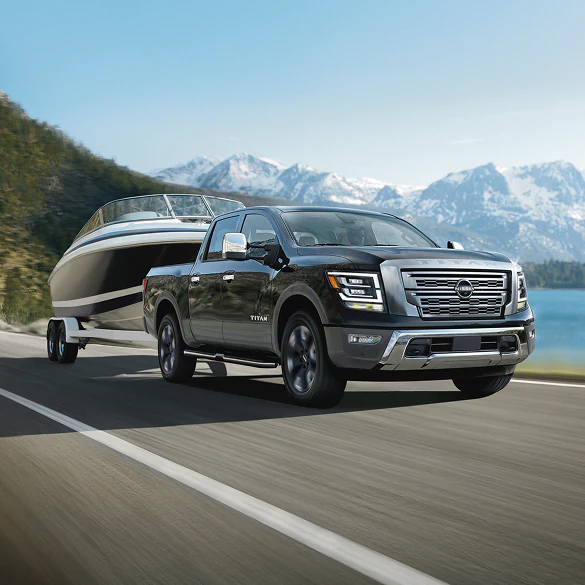
The Nissan Titan has been a significant competitor in the full-size pickup truck market since its introduction for the 2004model year. Designed to compete with established trucks such as the Ford F-150, Chevrolet Silverado, GMC Sierra, andToyota Tundra, the Titan earned attention for its powerful engines, substantial towing capability, and practical utility.
However, like other vehicles produced over multiple decades, the Titan has been subject to safety recalls involving avariety of components, including suspension parts, fuel systems, electrical components, airbags, tires, and transmissions.Some recalls addressed relatively straightforward manufacturing or labeling problems, while others involved defects thatcould cause a vehicle to roll away, lose power, experience tire-pressure loss, or provide inadequate protection in acollision.
Understanding the Titan's recall history is important for current owners, prospective used-truck buyers, mechanics, andanyone researching the model's long-term safety.
This article examines the major patterns in Nissan Titan recalls from 2004 through the final model years, highlightssignificant documented campaigns, explains what the defects mean in practical terms, and outlines how owners candetermine whether a particular truck still needs a repair.
Research scope: U.S. safety recalls and manufacturer campaigns documented in National Highway Traffic SafetyAdministration (NHTSA) records and related recall databases, with emphasis on model years 2004–2024. A recall'sexistence does not mean every truck of that model year is affected. Campaigns and eligibility can be limited by VIN,production date, equipment, or other criteria.
1. Understanding the Nissan Titan's recall history
Nissan introduced the first-generation Titan in 2004. A substantially redesigned second generation arrived for the 2016model year, with later updates adding different engine and equipment configurations. Production of the Titansubsequently ended after the 2024 model year.
Across this period, the truck's recalls reflected both familiar pickup-truck safety concerns and defects specific to certainmanufacturing runs or components.
The overall history can be understood through four broad themes:
- Mechanical and chassis safety: Suspension components, steering-related hardware, and transmission or parkingmechanisms can affect vehicle control or increase the risk of a crash.
- Electrical and fuel-system problems: Wiring faults, engine-control issues, fuel-gauge inaccuracies, and other fuel-system defects can affect reliability and, in some circumstances, safety.
- Occupant protection: Seat-belt anchorage, airbag inflators, and airbag-control components can influence how wellthe truck protects occupants during a collision.
- Tires, visibility, and other equipment: Tire defects, lighting issues, and certain accessories or labels can createadditional safety risks.
Historical recall databases list numerous Titan campaigns across these categories, with some model years appearing inmultiple campaigns. However, counts differ between databases because some aggregate manufacturer campaignsdifferently, include related models, or display separate records for individual model years. The official campaign recordand the truck's VIN are therefore more useful than a single overall recall count.
2. Early Nissan Titan recalls: 2004–2008
The Titan's earliest years are important because they established several recurring themes in its recall history: occupantprotection, electrical wiring, and mechanical components that could affect how a parked or moving truck behaves.
2004: Initial production and occupant-protection concerns
The inaugural model year had recalls involving the column-mounted shift mechanism and rear seat-belt anchorage.
| NHTSAcampaign | Defect | Potential consequence |
| 04V345000 | Rear seat-belt anchorage area did not meet the applicableoccupant-protection requirements | Increased injury risk in a collision |
| 04V408000 | Certain column-shift lever assemblies could have been damagedduring assembly | Failure to hold the lever in Park,creating a crash risk |
For the seat-belt campaign, Nissan's remedy was to replace the affected outboard rear seat-belt assemblies. For the shiftercampaign, dealers were instructed to inspect and replace affected assemblies. The shifter recall covered approximately5,664 vehicles, while the seat-belt campaign covered approximately 59,947 vehicles across the applicable population.
These recalls illustrate why production defects matter even when a truck appears to drive normally. A shift lever canoperate for a long period before a mechanical weakness becomes apparent, while an occupant-protection defect mayremain invisible until a crash occurs.
2005–2008: Wiring, suspension, and other mechanical concerns
As the first-generation Titan aged, recall records included additional concerns involving electrical systems, suspensionhardware, and other vehicle equipment.
One notable early-generation issue involved wiring routed through the rear doors of certain King Cab trucks. Repeateddoor movement could bend the wiring harness excessively and cause wires to break. Because the harness includedconnections associated with seat-belt pretensioners and the front-passenger occupant-classification system, the defectcould affect restraint operation. Nissan's remedy included rerouting the harness and installing a revised protective cover.
Suspension-related campaigns are also relevant when examining older Titans. A suspension component that separates,cracks, or loses structural integrity can compromise alignment and handling, especially when the vehicle is carrying aload or towing.
For owners of early Titans, the main lesson is not that every truck has these problems. It is that an older vehicle should beevaluated for both completed recalls and present-day wear. A completed recall does not eliminate the possibility ofunrelated deterioration caused by age, corrosion, heavy use, or deferred maintenance.
3. Nissan Titan recalls from 2009–2015
The 2009–2015 period continued the first generation's development. Recall records from these years cover severaldifferent systems, including suspension components, airbags, engine-control electronics, and fuel-related equipment.
Suspension and steering-related safety
Suspension and control-arm components are especially important on full-size trucks because they must handle substantialvehicle weight, uneven road surfaces, payloads, and towing forces.
When a suspension defect is serious enough to trigger a recall, the concern may involve structural separation ordeterioration that changes wheel alignment or reduces the driver's ability to control the vehicle.
Used-truck buyers should distinguish three different situations:
- A safety recall: A manufacturer identifies a safety-related defect and provides a specified remedy.
- A technical service bulletin: A manufacturer gives repair guidance for a known condition, which is notautomatically a safety recall.
- Ordinary wear: Ball joints, bushings, shocks, and other parts can wear out through use even if no recall applies.
These categories are not interchangeable. A truck may have no open suspension recall but still need expensive suspensionwork.
Engine-control and electrical issues
Engine-control modules and their associated wiring help manage engine operation, emissions, and other functions.Defects in this area can sometimes cause the engine to stall or behave unpredictably.
A stall is not necessarily proof of a recall-related defect. Fuel delivery, ignition components, sensors, battery condition,and other mechanical problems can produce similar symptoms. The correct approach is to check for relevant campaignsand diagnose the actual fault rather than assuming every engine problem has the same cause.
Fuel-system and gauge concerns
Fuel-gauge faults are another category found in historical Titan recall data. A gauge that inaccurately reports theremaining fuel can leave a driver with less fuel than expected, potentially causing an unexpected loss of propulsion.
For an older Titan, a fuel gauge that fluctuates, reads incorrectly, or fails to correspond to actual fuel consumptiondeserves attention. However, the symptom alone does not establish that the truck falls within a particular recall.
What this period means for buyers: A 2009–2015 Titan should be evaluated by its individual repair history and currentcondition, not just its model-year reputation. Verify recalls by VIN, then separately inspect suspension components,engine operation, fuel-gauge accuracy, and electrical systems.
Historical databases show that the number and types of campaigns vary across these model years.
4. The second-generation Nissan Titan: 2016–2019
The redesigned Titan introduced a more modern truck platform, updated interior technology, and a broader set ofconfigurations. The Titan XD also offered a heavier-duty configuration, including a diesel option during part of thisperiod.
As the truck's electronics, safety systems, and equipment evolved, recall campaigns increasingly encompassed bothtraditional mechanical hardware and newer vehicle systems.
Airbags and supplemental restraint systems
Airbags are among the most safety-critical components in any vehicle. Their performance depends on several systemsworking together, including impact sensors, control electronics, wiring, and the inflator itself.
A recall involving one component does not necessarily mean the entire airbag system is defective. It does mean that theidentified issue could prevent the system from protecting occupants as intended.
Owners should take an airbag warning light seriously and arrange prompt diagnosis. An illuminated warning light canhave causes unrelated to a recall, but it may indicate that part of the supplemental restraint system is not functioningcorrectly.
Electrical systems and vehicle equipment
The later first-generation and second-generation eras also included campaigns involving wiring, lighting, equipment, andother systems.
These issues can vary substantially in severity. A labeling correction may concern regulatory compliance, while anexterior-lighting defect could make the truck less visible or prevent other drivers from recognizing a turn.
It is therefore misleading to treat every recall as equally dangerous. The correct evaluation considers the defect, itspotential consequence, the remedy, and whether the repair has been completed.
What should a buyer inspect?
For a used 2016–2019 Titan, a sensible inspection should include:
- Recall status and service records.
- Airbag and other dashboard warning lights.
- Exterior lighting and rearview-camera operation, where equipped.
- Suspension, steering, and brake condition.
- Engine and transmission operation under normal driving conditions.
- Evidence of previous collision repairs or electrical modifications.
A pre-purchase inspection complements a recall check; it does not replace it. A mechanic can identify wear and damage,but an official VIN lookup is the more reliable way to determine whether a manufacturer campaign applies.
5. Nissan Titan recalls from 2020–2022: Transmission, tires, and rearviewcameras
The 2020–2022 period is particularly important because several documented recalls involved defects with directimplications for vehicle movement, visibility, or control. The most significant examples include transmission parking-pawl problems, rearview-camera malfunctions, and tire defects.
2020–2022: Transmission parking-pawl recall
High-priority safety issue
One of the most consequential Titan recall campaigns during this period involved the automatic transmission's parkingpawl, the mechanism intended to help prevent a vehicle from rolling when the transmission is shifted into Park.
Two related campaigns addressed this general problem:
- NHTSA 22V457000, announced in June 2022, covered certain 2020–2022 Nissan Titan and Frontier vehicles. Theparking-pawl pin could prevent the pawl from engaging correctly, creating a rollaway risk. Nissan's remedyincluded replacing the affected parking-pawl pin.
- NHTSA 22V671000, announced in September 2022, expanded attention to certain 2020–2023 Titan vehicles andrelated models. The parking pawl might fail to engage in Park, potentially allowing the vehicle to roll away. Theprescribed remedy for affected Titans involved control-module reprogramming, with the modules addresseddepending on model year.
Owners were instructed to apply the parking brake whenever parking while the applicable remedy was arranged. Repairswere provided free of charge.
Why does this matter? A transmission can appear to shift normally while still failing to secure the truck reliably. If theparking mechanism does not engage, the vehicle may move unexpectedly on a slope or even on apparently level ground.
A rollaway can injure pedestrians, strike nearby vehicles, or cause a collision. It is especially concerning when the truck isparked near a garage, driveway, trailer, or loading area.
Practical advice: If you own a potentially affected Titan, verify the recall status rather than relying on the fact that theshifter appears to work. Apply the parking brake as directed in the recall notice. If the truck moves after being shifted intoPark, do not assume the issue is harmless; arrange professional evaluation.
2021–2022: Rearview-camera and display failures
Another important category involved the infotainment system and rearview display.
In recall 22V527000, certain 2021–2022 Nissan vehicles, including specified Titan rental vehicles, could experience aninfotainment-system reboot when the SiriusXM subscription setting was set to "Not Subscribed." This could make therearview-camera display inoperative.
A related campaign, 22V772000, covered certain 2022 Titan and Titan XD vehicles, among others, whose infotainmentsystems could continuously reboot after the vehicle restarted, leaving the rearview display inoperative.
The potential consequence was reduced rear visibility and an increased risk of a crash. Nissan's specified remediesincluded infotainment software updates, provided free of charge through a dealer or, where applicable, an over-the-airupdate.
These recalls demonstrate that safety defects are not limited to engines, brakes, or other conventional mechanicalcomponents. A camera-display failure can be a safety issue when drivers rely on that display to see behind a large pickup.
Owners should confirm that the camera works reliably after startup and that the applicable software remedy has beencompleted.
2020–2021: Tire defects
Certain 2018–2021 Titan vehicles equipped with specified Continental tires were included in recall 21V169000,announced in March 2021.
The tires could have been cured for too long during production. The resulting condition could cause a sidewall break,sudden loss of air, or belt separation, increasing the risk of losing vehicle control.
The remedy involved inspection and replacement of affected tires as necessary, free of charge.
This distinction is important: the recall did not mean every Titan tire was defective. Eligibility depended on the affectedvehicles and tires.
A buyer should check tire brand, model, size, condition, and recall history, particularly if the truck has replacement tiresthat differ from its original equipment.
6. Nissan Titan recalls in 2023: Tire-bead defects
In 2023, Nissan recalled certain Titan and Frontier trucks because some tires could have been damaged during the tire-mounting process.
NHTSA recall 23V273000
Announced April 2023 · Nissan campaign numbers PC973 and PC974
The inner bead of an affected tire could contain a tear, potentially allowing air to escape rapidly. Sudden pressure losswhile driving can impair vehicle control and increase crash risk.
Nissan's recall filing identified approximately 4,249 potentially affected vehicles across the covered Titan and Frontierpopulation. The remedy was to replace all four road tires or inspect and replace the spare-tire assembly as applicable,without charge.
This recall is significant because tire defects can be difficult to identify through a casual visual inspection. A tire mayappear adequately inflated before a defect causes a sudden loss of pressure.
For owners, the important steps are to:
- Confirm whether the specific truck was included in the campaign.
- Verify that the prescribed tire replacement or inspection was completed.
- Inspect the current tires for damage, bulges, abnormal wear, and pressure loss.
- Maintain tire pressure according to the vehicle's placard and operating requirements.
A tire-pressure monitoring system is useful, but it should not be treated as a substitute for inspecting tires or resolving aknown recall.
7. Nissan Titan recalls in 2024: Airbag inflators and control units
The 2024 model year provides two particularly important examples of airbag-related recalls. Both campaigns involvedoccupant protection, but they addressed different components and failure mechanisms.
Recall 24V154000: Driver's airbag inflator
Announced in February 2024, this campaign included certain 2024 Nissan Titan vehicles and several other Nissan andInfiniti models.
A manufacturing issue could cause the driver's airbag inflator to absorb moisture, potentially resulting in improperdeployment. An airbag that does not deploy as intended may not protect the driver adequately in a crash.
Nissan's remedy was to replace the affected driver's front-airbag assembly free of charge.
Recall 24V580000: Airbag control unit
Announced in August 2024, this campaign covered certain 2021 and 2024 Titan vehicles.
The airbag control unit (ACU) could be missing a spacer, potentially allowing a fastener to loosen and leaving the unitunsecured. An unsecured control unit could prevent or delay airbag deployment as intended.
Nissan's remedy was to replace the affected ACU free of charge. The campaign was assigned Nissan reference numberPD120.
The two recalls illustrate an important principle: airbag safety depends on both the deployment hardware and theelectronics controlling it. An inflator defect and a control-unit mounting defect are different problems, even though bothcan compromise occupant protection.
A 2024 Titan owner should check both campaigns individually rather than assume that completing one airbag recallresolves all outstanding airbag-related work.
8. Quick-reference timeline of significant Titan recalls
The following table summarizes representative campaigns discussed in this article. It is not a complete list of every recallissued for every Titan model year.
| Recallperiod | Affected vehicles or years | Principal issue |
| 2004 | Certain initial-production Titans | Rear seat-belt anchorage and column-shift assembly |
| 2004–2008 | Certain first-generation Titans | Wiring and other component-specific defects |
| 2009–2015 | Selected first-generation model years | Various mechanical, electrical, restraint, and fuel-systemcampaigns |
| 2018–2021 | Certain Titans equipped with specified tires | Tire over-curing and potential air loss or separation |
| 2020–2022 | Certain Titans | Transmission parking-pawl pin and rollaway risk |
| 2021–2022 | Certain Titans, including specified rentalvehicles | Rearview-camera display malfunction |
| 2020–2023 | Certain Titans | Additional transmission parking-pawl engagement risk |
| 2023 | Certain Titans and Frontiers | Tire inner-bead tears and rapid pressure loss |
| 2024 | Certain 2024 Titans | Driver's airbag inflator manufacturing defect |
| 2021 and2024 | Certain Titans | Airbag control-unit mounting defect |
Sources: NHTSA campaign records and recall summaries.
9. Which Nissan Titan model years deserve the closest recall checks?
There is no single model year that can be declared the most dangerous based solely on the number of recalls.Nevertheless, some groups deserve particular attention because documented campaigns involved important safetysystems.
2004–2008: Early-production trucks
Priority: historical recall completion and current condition
Check early shifter and seat-belt campaigns, applicable wiring recalls, and the condition of aging mechanical components.A detailed inspection is especially valuable for trucks with extensive use or uncertain service records.
2018–2021: Tire and equipment campaigns
Priority: tire eligibility and equipment checks
Verify whether applicable tire campaigns were completed. Also check the vehicle's lighting, restraint systems, and otherVIN-specific recalls.
2020–2023: Transmission and camera campaigns
Priority: parking-pawl and rearview-camera repairs
Confirm that applicable transmission parking-pawl recalls have been completed. Check rearview-camera operation andinfotainment software where relevant.
2021 and 2024: Airbag control-unit campaign
Priority: restraint-system verification
Check campaign 24V580000, and for 2024 trucks also verify whether airbag-inflator campaign 24V154000 applies.
These are practical screening priorities, not a ranking of overall reliability. A truck with several recalls that have beencorrectly repaired may be a better purchase than one with fewer recorded campaigns but serious unresolved defects orpoor maintenance history.
10. How to check whether your Nissan Titan has an open recall
The most reliable method is to search by the truck's 17-character vehicle identification number (VIN), rather than relyingon a general list of recalls by model year.
Step 1: Find your VIN
Look at the lower driver's-side windshield, the label on the driver's door jamb, or your registration documents.
Step 2: Use the official NHTSA recall lookup
Visit the
NHTSA Recalls website and enter the VIN. Review any outstanding safety recalls and their recommendedremedies.
Step 3: Contact an authorized Nissan dealer
Ask the service department to verify all applicable campaigns and whether each repair has been completed. Requestdocumentation of the repair when available.
Step 4: Keep the repair records
Retain work orders and recall-completion documents, especially if you plan to sell the truck or need to demonstrate that asafety repair was performed.
There is one important limitation to understand: NHTSA's VIN lookup generally focuses on unrepaired safety recalls anddoes not display every historical campaign or every recall that has already been repaired. For older Titans, ask the dealerto check the complete applicable campaign and service history as well.
Are Nissan Titan recall repairs free?
In general, safety recall remedies performed under the applicable manufacturer recall are provided without charge to theowner. This is different from routine maintenance or unrelated repairs discovered during a service visit.
If a dealer identifies an open safety recall, ask whether the proposed work is the official remedy and whether anyadditional work quoted is optional or unrelated to the recall.
For help with a recall, NHTSA also provides a vehicle-safety hotline at 1-888-327-4236.
11. What the recall history means for reliability and resale value
A truck's recall history is an important part of assessing its ownership costs, but it is not a complete reliability rating.
A recall means a manufacturer or regulator has identified a safety-related defect or noncompliance that requires correctiveaction. It does not establish that every affected vehicle experienced a failure, and it does not mean every truck of thatmodel year is included.
Three distinctions are particularly important.
First, recall counts are not failure rates. A model year with more campaigns may have been subject to more reported oridentified defects, but raw counts do not reveal how frequently vehicles failed or how severe every defect was.
Second, recall repairs do not eliminate ordinary maintenance costs. An owner can have every recall completed and stillface expenses for brakes, suspension, tires, engine components, or transmission maintenance.
Third, documented repairs can improve buyer confidence. A complete service history helps demonstrate that knownsafety issues have been addressed. When purchasing a used Titan, a buyer should review recall status alongside mileage,maintenance records, accident history, mechanical condition, and evidence of towing or commercial use.
For a seller, retaining recall-completion documents can help answer prospective buyers' questions. For a buyer, anunresolved high-priority safety recall should be addressed before normal use whenever the manufacturer's guidanceindicates a safety concern.
12. Frequently asked questions
Which Nissan Titan recall was especially serious?
The 2020–2023 transmission parking-pawl campaigns are particularly significant because the identified defect couldallow a parked truck to roll away. Airbag-related campaigns also deserve serious attention because they can affectoccupant protection during a collision.
Did the 2024 Nissan Titan have recalls?
Yes. The documented 2024 campaigns discussed here include recall 24V154000, involving the driver's airbag inflator, andrecall 24V580000, involving the airbag control unit on certain 2021 and 2024 Titans. Eligibility must be verified by VIN.
Does a used Nissan Titan automatically have all recalls associated with its model year?
No. Recalls apply to specific vehicles or defined populations, not necessarily every truck of a particular year. Productiondates, equipment, and VIN ranges can determine eligibility.
Can I still get a recall repair on an older Titan?
Many manufacturer safety recall repairs remain available without charge even when a truck is older or has high mileage.Confirm the campaign's status and remedy with Nissan or an authorized dealer.
Should I avoid buying a Nissan Titan because of its recall history?
Not necessarily. Evaluate the particular vehicle. Confirm that its open recalls have been addressed, obtain a mechanicalinspection, review its service records, and assess any known problems relevant to its configuration and intended use.
Conclusion
The Nissan Titan's recall history spans more than two decades of vehicle production and includes defects affectingoccupant restraints, electrical wiring, tires, transmission parking mechanisms, rearview cameras, and other equipment.
The earliest trucks demonstrate the importance of production-quality and occupant-protection checks. Later modelsillustrate how modern electronic systems and conventional mechanical components can both create safety concerns. The2020–2023 transmission campaigns and the 2023 tire recall stand out because their defects could affect vehicle control,while the 2024 airbag campaigns highlight the continuing importance of properly functioning restraint systems.
Ultimately, the most useful question is not simply how many recalls a Nissan Titan has had, but whether the particulartruck you own or intend to buy has any applicable safety recalls that remain unrepaired.
A VIN-based recall check, a review of the vehicle's service history, and a qualified mechanical inspection provide thestrongest foundation for making that determination.

 92930
92930