
NewStori...First & Foremost A Quality News Outlet!
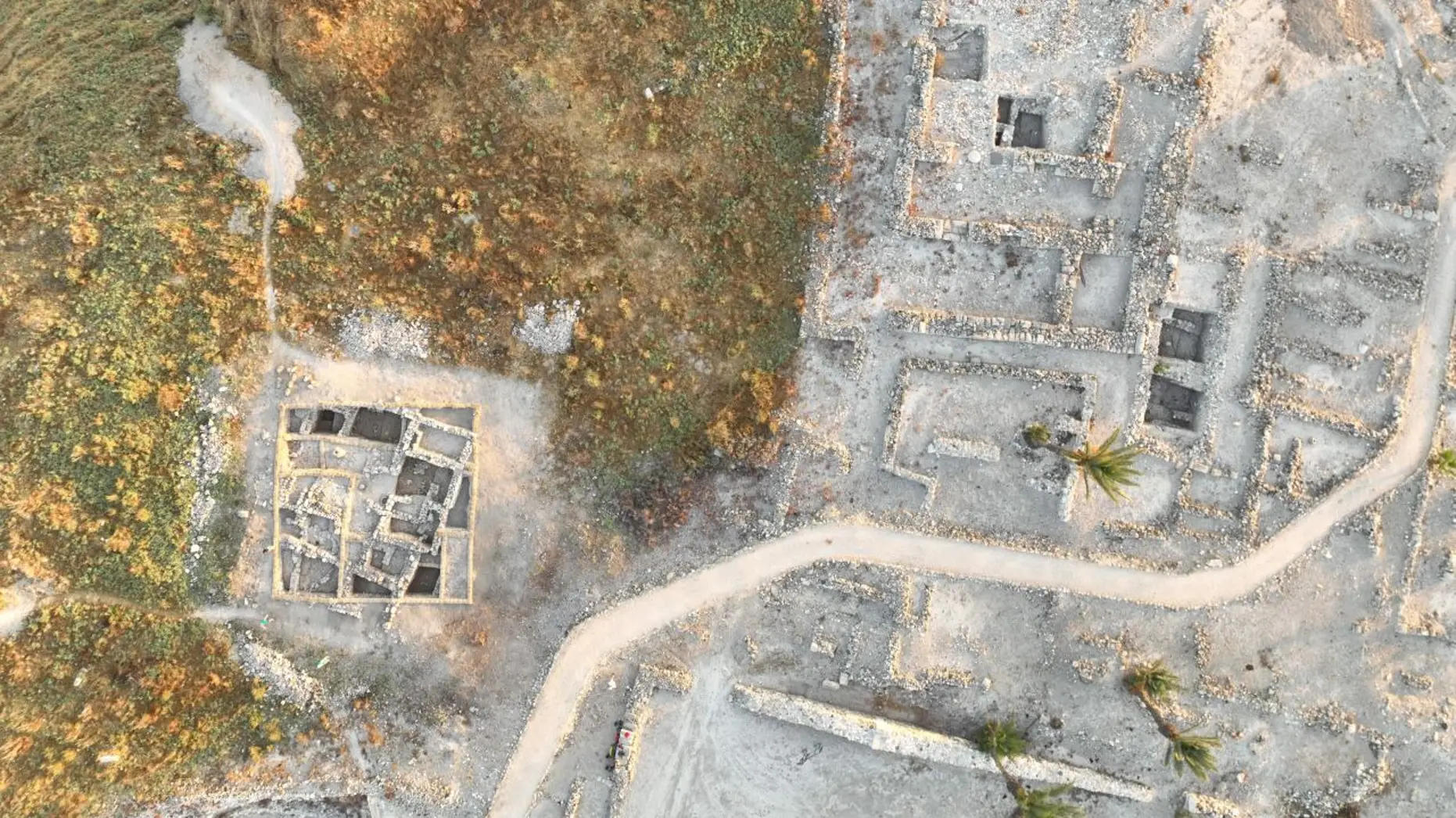
Archaeologists believe they have uncovered evidence of an ancient biblical battle, all thanks to a few broken fragments found in a curious location.
The artifacts, which mostly consist of Egyptian pottery, were found during a recent excavation of the ancient city of Megiddo in northern Israel. The site is said to contain over 30 layers of various settlements, dating back from the Copper Age to World War I.
Tel Megiddo was the location where Josiah, the king of Judah, famously fought the Battle of Megiddo in 609 B.C. The Jewish leader was defeated and killed by the army of Egyptian Pharaoh Necho II.
The story of the battle is told in the Second Book of Kings in the Old Testament, but Megiddo is also referenced in the Book of Revelation. The site is referred to as "Armageddon," closely related to the Hebrew phrase "Har Megiddo," which translates to "mountain of Megiddo."
Megiddo is said to be the location where the prophesied Battle of Armageddon will be fought between the kings of Earth and God. But while archaeologists cannot prove that the site will be the location of a battle during the end times, they believe they may have found proof of the Old Testament story.
Dr. Assaf Kleiman, a senior lecturer at Ben-Gurion University of the Negev in Israel, told Fox News Digital he believes the pottery fragments belonged to the Egyptian army that defeated Josiah.
The findings consist of "significant quantities" of Egyptian-produced broken vessels dating back to the late 7th century B.C., close to when the Battle of Megiddo was fought.
Instead of the fragments being proof of a trade relationship, Kleiman believes that they were brought in by Egyptian troops rather than being imported into the territory.
The expert cited the "crude production technique, functional mixture, and the lack of similar evidence in nearby settlements," as key reasons why they believe the artifacts were brought in by an army.
"The exposure of so many Egyptian vessels, including fragments of serving bowls, cooking pots, and storage jars, is an exceptional phenomenon," Kleiman explained.
"We, therefore, understand it as representing Egyptians who settled at Megiddo in the late 7th century, maybe as part of an army force that arrived at the site following the collapse of the Assyrian Empire," he added.
He also said that the Grecian pottery may be proof of Greek mercenaries in the Egyptian army, which was not unheard of at the time.
"Service of Greeks, probably from western Anatolia, in the Egyptian army of the 26th Dynasty is referred to in both Greek [from Herodotus] and Assyrian sources," Kleiman noted.
"The possibility of the participation of such mercenaries in the killing of Josiah may be hinted in prophetic works in the Bible."
Kleiman also explained that the Egyptian settlement at Megiddo "did not last long" and that the building where the artifacts were found was likely abandoned decades later. The broken vessels were probably left as litter.
Though Kleiman noted that there's no non-biblical proof of Josiah, Kleiman asserted that the king's existence "has never been doubted in biblical and historical scholarship."
"We can also note that literacy was more common in that era, and thus his reign was most likely documented by scribes who witnessed the events in real time," Kleiman said. "Evidence for Necho’s presence in the Levant and the battle against the Babylonians in Carchemish, where the Egyptians lost, is documented in the Babylonian chronicles as well as in the Bible, in Jeremiah and Kings."
Archaeologists plan to do more research into the site's Bronze Age roots.
Kleiman also found evidence to believe that some members of the Ten Lost Tribes of Israel were not all expelled to Mesopotamia in the 7th century B.C. and actually may have stayed in Megiddo.
"Our excavations demonstrated continuous production (and consumption) of similar locally-style vessels at Megiddo, especially cooking pots, also under imperial rule," he explained. "This suggests that the social fabric of Megiddo in the Assyrian Era must have been composed of a significant portion of local populations, who were not expelled by the Assyrians and who lived alongside deportees brought in by the empire."
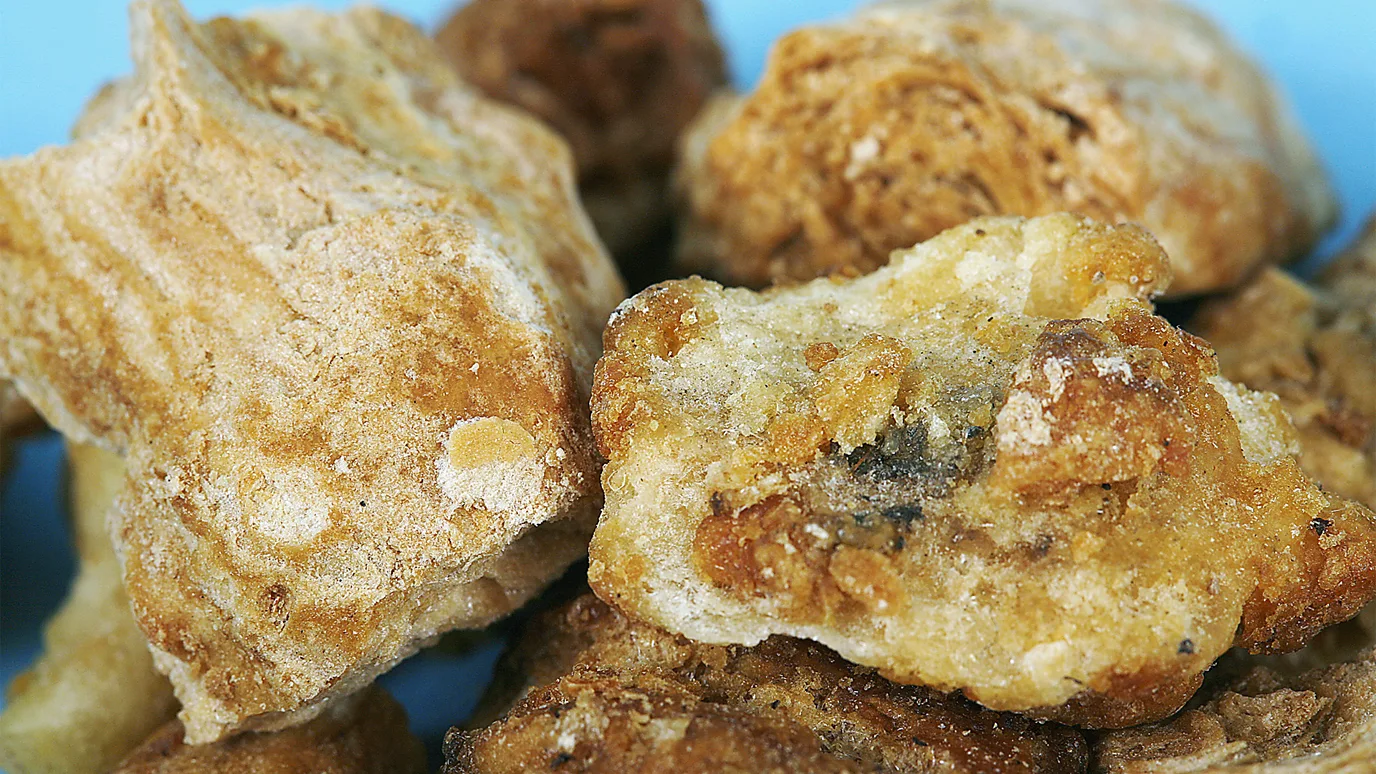
It's mentioned 17 times in the Bible and was harvested in the Mediterranean for more than a millennium. Now, a farmer is reviving this ancient "superfood".
It's a hot and muggy summer day in Sicily's Madonie mountains, a rugged range of ridges about 65km east of Palermo. In a field of ash trees, the buzzing of cicadas is interrupted by a voice. "You came at the right time," says Giulio Gelardi, a local farmer pointing towards a white-streaked branch. "This is the famous manna."
Along the bark of each tree are thick lines of manna, a white mineral-rich resin referenced in the Bible 17 times that has been used as a natural sweetener and medicinal aid for centuries. Manna harvesting (the practice of cutting the bark of Fraxinus ornus trees to collect their sap), used to be a common practice throughout the Mediterranean. But in the past 80 years, urbanisation and industrialisation have led to it nearly vanishing.
For the past 30 years, Gelardi has made it his mission to put this Biblical superfood back on our tables, and today, this once-forgotten sap is being used by chefs and pastry makers in innovative ways.
Even if you've never tasted manna, you may have heard of it. The phrase "manna from heaven" refers to a Biblical story where a food falls from the sky to nourish the Israelites as they crossed the Sinai desert. In Exodus, manna is described as a "flaky substance as fine as frost blanketed on the ground". While experts disagree what substance, specifically, this passage refers to, a honey-like, flaky and frost-coloured resin named manna has been extracted from the bark of ash trees in the Mediterranean region for more than a millennium.
In the Madonie mountains – home to the 40,000-hectare Madonie Natural Park – manna harvesting dates back to at least the 9th Century when the island was under Arab rule. During the Renaissance, Sicilian farmers used to collect this sweet sap – which tastes like cane sugar with almond undertones – and sell it to merchants from around the Mediterranean, a highly profitable trade that led the Kingdom of Naples to put taxes on it during the 16th Century.
Until World War Two, manna farming was a way of life for many Sicilian families. Footage from 1936 shows local farmers harvesting the substance, which was commonly sold to pharmaceutical companies to extract mannitol, a sugar alcohol used as a sweetener and a diuretic. In the 1950s, scientists found a way to synthesise mannitol, and in the decades that followed, manna harvesting virtually disappeared.
When Gelardi came back to his hometown of Pollina in 1985 after 15 years away, he realised that one of the core components of his local culture was vanishing. "When I was growing up, everyone knew how to extract manna," he explains. "When I came back, there were less than 100 farmers who could still do it."
Pollina is a 3,000-person medieval town that seems sculpted out of the surrounding limestone hills. As a child, Gelardi learned to harvest manna in the summer from his parents. "Manna harvesting involved the whole family," he explains. Men used handmade billhooks to make thin cuts along the bark, women collected the overflowing sap using dried prickly pear stems and children turned the goopy nectar into cylindrical cones called cannoli, due to their resemblance to the popular Sicilian sweet.
According to Gelardi, the hardest part of manna harvesting is knowing when to cut the bark. Ash trees produce sap year-round but only produce enough resin to harvest during the hottest days of the year. Gelardi says if you cut the bark too early, it can cause the trees to stop making manna altogether. "Finding out when the moment for cutting has come is a unique skill based on observation and intuition," he says, explaining: "[It's necessary to] listen to each plant."
For example, leaves turning from dark green to lighter green with yellow marks may mean that a tree has reached peak manna production. Spotting cracks in the ground near the roots can also mean it's ready for harvest, as plants produce surplus sap to overcome dry spells. When the tree looks ready, manna farmers make a shallow cut in the bark and observe the plant's reaction. If a plant is mature enough, a small amount of resin will ooze from the cut. Farmers can then proceed to make deeper carvings, as small streams of sticky manna will flow towards the roots.
"Manna harvesting is not something you can learn from a book," Gelardi explains. "If we don't pass these skills down to the next generation, we would lose centuries-old local farming knowledge."
A few months after returning to Pollina, Gelardi set out to revive the waning tradition. At first, most locals did not meet his "manna renaissance" with enthusiasm. "My friends thought I was crazy. They said manna was a thing of the past," he says. Undeterred, Gelardi spent months learning all he could about it.
He spent time with elder farmers to refine his harvesting skills and visited Palermo's public library to study manna. "I knew manna was used locally as a sweetener, a moisturiser and a diuretic," he says. "But I learned that it could also be used to treat food intoxication, a variety of skin conditions, arthritis and cold symptoms."
Gelardi also started to realise how manna shaped local geography and culture. For example, Gibilmanna, a nearby hill home to a famous sanctuary, owes its name to the Arab words "gibil" (mountain) and "manna". Local expressions are also shaped by manna, like the local phrase, "vivere di mieli e manna" ("to live of honey and manna"), meaning living an affluent life.
In 1986 Gelardi began handing out pamphlets containing facts about manna to tourists staying at a nearby resort. "People were captivated by manna's healing properties and its impact on local culture," he recalls. By the 1990s, he was leading tours demonstrating how to harvest manna to international travellers. "They started to see it as our local superfood," he says.
Manna is mostly composed of mannitol, a naturally sweet crystal compound, as well as minerals like potassium, magnesium and calcium. According to Vivienne Spadaro, a professor of botany at the University of Palermo, this thick white resin can be used as a dietary supplement to reintegrate minerals, especially potassium, and as a base for several medicines. "Manna has been used to treat constipation, cough, sore-throats and skin wounds due to its decongestant and soothing properties," she says. And because of its low glycemic index, Spadaro says some manna can be used as a sweetener for diabetic people or those on hypo-caloric diets.
While leading manna tours, Gelardi developed a more efficient way to harvest the substance with far less risk of contamination from bark or insects. He created a "clean manna" technique by attaching a small aluminum spout to the tree so that manna flows away from the trunk along a fishing line attached to the spout. This allowed Gelardi to nearly double his manna production.
In the following years, Gelardi started selling his manna to bakers and pastry chefs, who incorporated it into everything from cannoli, wafers, flakes and chocolates. He also sold manna to pharmacies to make laxatives, minerals supplements and skin products. In recent years French skincare companies Biotherm and Yves Roche have used it to make skin moisturisers.
In 2002, manna from the Madonie was declared a protected ingredient by Slow Food, an international organisation that promotes endangered food traditions. By the mid-2000s, manna became a sought-after ingredient for local chefs and pastry-makers.
"I started using manna to make pandolce (fruitcake) with manna and almonds, but then realised it goes well with savoury dishes, too," says Giuseppe Zingales, chef at Hostaria Cycas in the nearby medieval village of Castelbuono. The restaurant offers many manna-infused dishes, including manna-crusted pork tenderloin; risotto with asparagus, bacon and manna; and wild thistle flan with manna fondue. At another Castelbuono eatery, Ristorante Nangalarruni, chefs Peppe Carollo and his daughter Francesca use crushed manna to create one of the restaurant's signature dishes: suckling pig with almonds, pistachio and manna crust.
"The key is to [use] it well," Francesca Carollo explains, "A small portion of sweet-tasting manna offers a nice contrast to roast meat flavour, but too much manna can make this dish too sweet."
Pastry chefs are particularly interested in manna. Nicola Fiasconaro, one of Italy's most famous patissiers, now produces a special edition of panettone, Italy's traditional Christmas fruitcake, made with chocolate and frosted manna, while Michelin-starred chef Davide Oldani featured chocolate-covered manna sticks as part of the menu of his Milan-area restaurant D'O from 2014 to 2016. In recent years, the Madonie's "white gold", as it is sometimes called, has reached a price of €200 per kg and has been used to make a variety of sugar-free baked goods, from muffins to biscotti.
Most chefs buy manna from the Madonie's Manna Consortium, a cooperative created in 2015 by Gelardi and other farmers to market manna products and promote manna harvesting to younger farmers.
"I grew up hearing about manna but had never learned how to harvest it," says Mario Cicero, who belongs to the Consortium. Born in Castelbuono, he spent years working around the world as a chef before returning to the Madonie. As part of his training, Cicero spent months with older farmers, including Gelardi. "Giulio's taught me many tricks," he says, "but he mostly passed on a contagious passion for manna harvesting." Cicero now tends 200 ash trees in his farm near Castelbuono and hopes that more young people will take up manna harvesting.
Seeing young farmers like Cicero becoming ntaccaluori (Sicilian for "cutters") is what Gelardi is most proud about. As he explains: "Every young person that learns how to harvest manna will ensure the survival of a centuries-old tradition."