
NewStori...First & Foremost A Quality News Outlet!

The National Science Policy Council has approved Hungary’s innovation strategy for 2024, allocating 215 billion forints to support research and innovation through grant funding. The announcement was made by Minister of Culture and Innovation Balázs Hankó during a press conference on Tuesday.
The funding breakdown includes 131 billion forints for innovation programmes and 84 billion for research projects. Highlighting the government’s commitment, Minister Hankó revealed that the Parliament is also set to vote on a new law concerning the HUN-REN Hungarian Research Network, aimed at enhancing its operational flexibility and responsiveness to research needs. Under the proposed reforms, HUN-REN will operate outside the state budget framework, and the Hungarian government will acquire properties and assets used by the Hungarian Academy of Sciences’ researchers. These resources will be dedicated to public research activities. To further support the research community, the government plans to implement a performance-based funding system, allocating an additional 18 billion forints for wage increases in 2024. This will ultimately double the total funding for researchers to 97 billion forints over three years.
The National Research Excellence Programme (NKKP) will also see a significant boost, with funding rising from 19 billion forints in 2023 to 40 billion forints in 2024. This increase will allow researchers to access grants of up to 200 million forints per project, a dramatic rise from the 48 million previously available under the older OTKA programme. President of the Research Council of Hungary Péter Domokos emphasized that the expanded resources will enable a broader range of researchers to receive support. ‘Many exceptional proposals had to be declined in the past due to funding constraints,’ he noted. In 2023 the Excellence Programme funded 26 projects, preparing researchers for participation in the European Research Council’s prestigious initiatives. Other grants supported 96 Advanced Research proposals, 67 projects for young researchers, and nine collaborative projects with Austrian and Slovenian institutions. Of the supported projects, 152 focused on natural sciences and 46 on social sciences and humanities.
Addressing recent EU criticisms, Hankó reacted strongly to the European Commission’s decision on governance and conflict-of-interest concerns within Hungarian public interest foundations. He accused Brussels of discriminatory behaviour towards Hungarian students and universities, adding, ‘Brussels is stalling!’
Despite these tensions, Hungary continues its global outreach through initiatives like the Pannonia Scholarship Programme, enabling 3,000 students to study at leading universities worldwide, and the HU-rizon programme, fostering partnerships with institutions such as Stanford and Cambridge.
The government’s ambitious plans underscore its determination to elevate Hungary’s research and innovation capabilities while navigating complex relations with international and European bodies. The reforms and increased funding aim to position Hungarian science and education on the global stage.
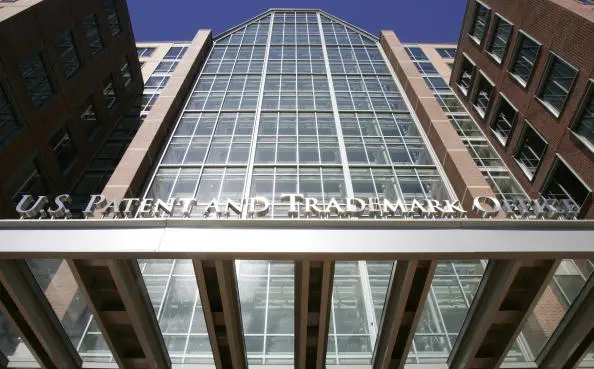
This February, teachers, students, historians, and many others will extol the virtues of African American inventors during Black History Month. The remarkable inventions such as the first portable air conditioner, the gas mask, the automatic elevator door, traffic signs — were all invented by Black people. The impact of these inventions—not only on everyday life, but on our economy—is astounding. How much more impactful would those creators and inventors have been if they did not have to struggle against the racial barriers and economic inequity that blocked their potential? How many more inventions would they have created if they had sufficient access to capital during the research start up and distribution stages? What about today?
While there is no shortage of talented Black founders, creatives, and innovators, research reveals that bias continues to prevent equal footing, competition, and autonomy for those individuals. There are significant barriers and disparities that hinder the growth of Black innovators, including inadequate access to capital, inequitable legislation, regulatory hindrances, and limited philanthropic support.
Unfortunately, the barriers and disparities faced by these Americans and the failure to support Black innovators stunt economic growth for all. Systemic failures and policy inaction prevent full capitalization of the potential of these creators, as 40 percent of revenue for Black businesses is used to resolve debt. According to McKinsey & Company, achieving racial parity between White and Black businesses alone would add $290 billion to the economy. At a time when the demand for Black businesses and Black brands is rising, only a fraction of Black businesses make it to their third year of operation. Additionally, only 4 percent of Black-owned businesses are still in operation after three and a half years of operation, compared to 55.5 percent for all other businesses.
Research continually points to the lack of adequate investment as the primary reason for the closing of these businesses. Raising capital is difficult for any entrepreneur, but this challenge is even harder for minority groups.
Majority Black women-owned firms grew 67 percent from 2007 to 2012, compared to 27 percent for all women, and grew by 50 percent from 2014 to 2019, representing the highest growth rate of any female demographic during that time. Black women owned firms, however, have the lowest capital investment. According to research commissioned by American Express, 4 million new jobs and $981 billion in revenue could be added to the U.S. economy if the average revenue of women of color-owned businesses matched those of white women owned businesses.
During the reckoning of Black Lives Matter in 2020, numerous corporations, tech companies, and financial institutions committed to supporting the growth of Black wealth through investment in Black innovators and tech startups. Despite the promises made by investment firms, venture capitalists, angel investors and technology companies, the inequities persist. The continued inequities in access to capital impede sustainability. Black founders received only 1.2% of a record $147 billion venture capital dollars invested in U.S. startups in the first half of 2021.
Given these circumstances, I have continued to implore Black innovators to utilize grants, crowdfunding campaigns, Small Business Administration (SBA) Loans, and Community Development Financial Institutions (CDFI). The reality, however, is that while these alternate funding sources come with their advantages and disadvantages, they still do not place Black innovators on equal footing with their counterparts.
That is why, from a government perspective, it is incumbent that I and my colleagues, particularly those in the Congressional Caucus of Black Innovation, remain vigilant and advocate for legislation and regulatory action (particularly after passage of the COMPETES Act) that provide the programmatic, regulatory, and funding support necessary to advance Black wealth creation in the technology space.
As we celebrate the history of Black America this month, it is important to understand and appreciate the journey that Black innovators in history have taken—especially because of the way their contributions continue to influence, improve, and secure all of our futures. Although Black founders, creatives, and innovators have been disenfranchised and refused mainstream funding for ages, history has continued to demonstrate the power and resilience of our Black innovators.
Just imagine the exponential benefit to the U.S. economy through jobs, increased family wealth, tax revenues, productivity, and of course innovation if corporations, tech companies, and financial institutions who committed in the reckoning of 2020 to support the growth of Black wealth through investment in Black innovators and tech startups were to follow through with their promise. This would be a tremendous boon not just to the Black community, but our nation at large.