Focus on What You Can Control: Stop Worrying About Everything Else
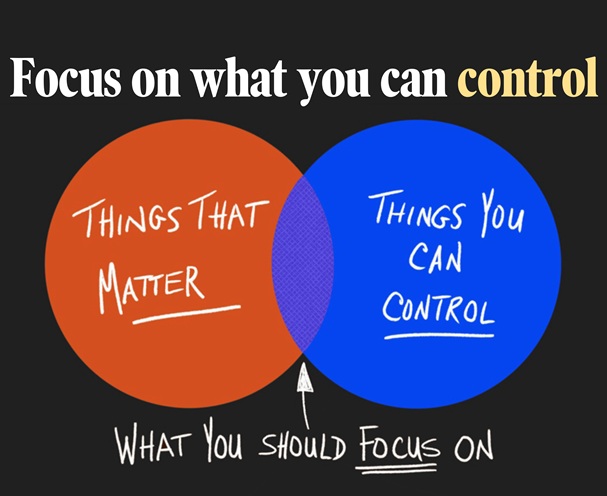
One of the most important lessons in life is learning to focus on what you can control and letting go of what you cannot. Too many people spend their days worrying about circumstances they cannot change, decisions other people make, situations they cannot predict, and outcomes that are completely beyond their influence. They become mentally and emotionally exhausted trying to manage things that were never theirs to manage in the first place.
The truth is that life will never be completely predictable. People will disappoint you, plans will change, unexpected problems will arise, and circumstances will not always work in your favor. No matter how carefully you plan or how hard you try, you cannot control everything that happens around you.
However, you do have control over how you respond, what you prioritize, the decisions you make, and the direction you choose to take.
Learning to recognize that difference can change the way you approach life. Instead of wasting valuable time fighting battles you cannot win, you can redirect your energy toward things that actually make a difference.
Stop Wasting Energy on Things You Cannot Change
One of the biggest sources of unnecessary stress is worrying about things that are outside your control.
You cannot change yesterday. You cannot force someone to treat you with respect. You cannot control what people think about you, how they interpret your actions, or whether they appreciate your efforts. You cannot guarantee that every opportunity will work out or that every relationship will last.
Yet people spend countless hours thinking about these things.
They replay conversations, question other people's intentions, worry about future problems, and become frustrated when situations do not unfold according to their expectations.
The problem is that worrying does not give you control. It simply consumes your time, energy, and peace of mind.
You have to learn when to stop investing your emotions in something that you cannot change. Recognize what is happening, accept what is beyond your influence, and move your attention toward something productive.
Not every situation deserves your continued attention. Sometimes the healthiest decision is to accept reality and move forward.
Take Responsibility for Your Own Actions
Although you cannot control everything around you, you are responsible for your own choices.
You control how you speak to people, how you manage your responsibilities, how you spend your time, and how you respond when life becomes difficult.
You control whether you continue making excuses or begin taking action. You control whether you learn from your mistakes or keep repeating them. You control whether you allow negative experiences to make you bitter or use them as opportunities to develop wisdom.
Taking responsibility means recognizing that your life is influenced by the decisions you make every day.
It is easy to blame circumstances, other people, or bad experiences for everything that goes wrong. Sometimes those circumstances genuinely are unfair. But remaining focused on blame does not necessarily improve your situation.
Ask yourself what you can do differently. Identify the decisions within your control. Take ownership of your behavior and make changes where necessary.
You may not be responsible for everything that happens to you, but you are responsible for deciding how you move forward.
Control Your Attitude and Your Response
You cannot always control what happens, but you can work on controlling how you respond.
Two people can experience the same disappointment and react in completely different ways. One may become consumed by anger and frustration, while the other may acknowledge the disappointment and begin looking for a solution.
Your initial emotional reaction may not always be something you can immediately control, but you can develop healthier ways to process your emotions and choose your next response.
Before reacting to a difficult situation, take a moment to think.
Ask yourself whether your response will improve the situation or make it worse. Consider whether the issue will matter next week, next month, or next year. Decide whether the situation deserves an argument or whether walking away would be more productive.
You do not have to respond to every insult, participate in every disagreement, or allow every negative experience to determine your mood.
Sometimes strength is demonstrated through patience, self-discipline, and the ability to remain calm when everything around you feels chaotic.
Your peace becomes easier to protect when you stop allowing every external circumstance to dictate your internal condition.
Stop Trying to Control Other People
One of the most frustrating things in life is trying to control another person's behavior.
You may want someone to understand your perspective, change their attitude, recognize your efforts, or treat you differently. You may spend months or even years trying to convince someone to become the person you believe they should be.
But people make their own decisions.
You can communicate your expectations, express your concerns, offer advice, and establish boundaries. What you cannot do is force someone to listen, agree, change, or behave according to your wishes.
The sooner you accept this reality, the less emotional energy you will waste.
Instead of trying to manage other people's choices, focus on managing your own.
If someone repeatedly disrespects you, decide what boundaries you need. If someone refuses to communicate honestly, decide how much access that person should have to your life. If someone consistently brings negativity into your environment, consider whether maintaining that relationship is healthy.
You do not need to control people to protect yourself. You simply need to make decisions that reflect your values and respect your well-being.
Focus on Your Goals Instead of Other People's Progress
It is easy to become distracted by what everyone else is doing.
You see people accomplishing goals, building successful careers, purchasing homes, traveling, starting businesses, and reaching milestones. Before long, you may begin questioning your own progress.
You may feel that you are falling behind or that your efforts are not producing results quickly enough.
But comparing your journey to someone else's is a distraction from the work you need to do.
You cannot control how quickly another person succeeds. You cannot control their opportunities, resources, circumstances, or advantages. What you can control is how consistently you work toward your own goals.
Focus on your progress rather than someone else's accomplishments.
Set realistic goals. Develop a plan. Build productive habits. Improve your skills. Manage your finances responsibly. Take advantage of opportunities when they become available.
Some achievements take longer than expected. Some goals require patience and repeated effort. That does not mean you are failing.
Your responsibility is to keep moving in the direction that matters to you, not to compete with everyone around you.
Control How You Spend Your Time
Time is one of the most valuable resources you have, yet it is often wasted on things that provide little value.
People spend hours arguing about things that will never change, worrying about situations that may never happen, scrolling through social media, and involving themselves in other people's problems.
Meanwhile, the responsibilities and goals that could improve their own lives continue to receive less attention.
You cannot control how much time has already passed, but you can make better decisions about how you use the time you have today.
Be intentional about your priorities.
Spend time developing yourself. Invest in relationships that are meaningful. Take care of your physical and emotional well-being. Work toward your goals and make room for activities that bring genuine enjoyment into your life.
Learn to recognize the difference between being busy and being productive.
Not everything that demands your attention deserves your time.
The way you spend your days eventually influences the direction of your life. Make sure your daily habits are helping you build the future you want rather than keeping you distracted from it.
Accept That Life Will Not Always Go According to Plan
You can make plans, establish goals, work hard, and do everything within your ability to prepare for the future. Still, things will not always turn out the way you expect.
Opportunities may disappear. Relationships may end. Financial circumstances may change. Unexpected responsibilities may interfere with your plans.
These experiences can be frustrating, especially when you have invested significant time and effort into something.
However, accepting that life is unpredictable does not mean giving up on your goals.
It means understanding that flexibility is necessary.
When circumstances change, evaluate your options. Adjust your expectations when necessary. Look for alternative solutions instead of becoming trapped in disappointment.
Sometimes a different direction can lead to opportunities you never considered.
You do not have to abandon your ambitions simply because the original plan did not work. You may need to change your approach, develop new skills, or give yourself more time.
Focus on what remains possible instead of becoming consumed by what did not happen.
Protect Your Peace Through Healthy Boundaries
Focusing on what you can control also means recognizing what you should no longer allow into your life.
You cannot control whether someone chooses to be negative, disrespectful, dishonest, or difficult. However, you can control how much exposure you have to that behavior.
You can decide when to walk away from unnecessary arguments. You can limit conversations that repeatedly become unhealthy. You can stop making yourself available to people who only contact you when they need something.
You can also choose not to participate in gossip, unnecessary drama, or conflicts that have nothing to do with your responsibilities.
Establishing boundaries is not about being unkind. It is about understanding that your time, energy, and well-being deserve consideration.
You do not have to explain every decision or defend every boundary.
Sometimes protecting your peace requires accepting that certain people will not agree with the changes you make.
That is okay.
You are not obligated to keep participating in situations that consistently take more from you than they give.
Develop the Discipline to Focus on Yourself
Personal growth requires consistency, patience, and discipline.
It is easy to become distracted by everything happening around you. It takes greater effort to remain focused on your responsibilities when other people are creating problems, circumstances are changing, or progress seems slow.
Developing discipline means learning to do what needs to be done even when you do not feel motivated.
It means keeping commitments to yourself, following through on important responsibilities, and continuing to work toward your goals when immediate results are not visible.
You can control whether you make an effort to improve your circumstances.
You can choose to learn something new, develop healthier habits, improve your communication, strengthen your financial decisions, and become more intentional about your future.
Do not wait for the perfect circumstances to begin improving your life.
Start with what you have. Work with what is available. Make the best decisions you can with the information and resources you currently possess.
Small, consistent improvements can eventually produce meaningful changes.
Learn to Let Go Without Giving Up
There is an important difference between letting go and giving up.
Giving up means abandoning something because you no longer want to make an effort. Letting go means recognizing when something is outside your control and refusing to allow it to consume your life.
You can let go of resentment without pretending you were never hurt. You can stop chasing someone without believing you are unworthy of love. You can accept a disappointing outcome while continuing to pursue other opportunities.
Letting go is not weakness. It is an acknowledgment that your energy is better spent on things that can still be influenced.
You cannot change every outcome, but you can decide what you do after an outcome disappoints you.
You cannot force every door to open, but you can continue looking for opportunities elsewhere.
You cannot make everyone appreciate you, but you can continue treating yourself and others with respect.
Sometimes moving forward requires accepting that you have done everything you reasonably could.
Once you recognize that, give yourself permission to move on.
Conclusion: Put Your Energy Where It Makes a Difference
Life becomes less stressful when you stop trying to control everything and start focusing on the things that are actually within your reach.
You cannot control other people's decisions, the past, unexpected circumstances, public opinion, or every outcome that affects your life. But you can control your attitude, your actions, your habits, your priorities, and the effort you put into becoming a better person.
Stop wasting valuable time worrying about what other people are doing. Stop allowing situations you cannot change to consume your thoughts. Stop giving unnecessary attention to problems that do not deserve control over your happiness.
Instead, focus on your responsibilities. Work toward your goals. Make thoughtful decisions. Establish healthy boundaries. Learn from your mistakes and take advantage of the opportunities available to you.
Understand that peace does not come from having control over everything. It comes from knowing where to direct your attention and having the wisdom to release what you cannot change.
You do not need to solve every problem today. You do not need to understand every situation. You do not need to have your entire future figured out.
You simply need to take responsibility for the things you can influence and stop allowing everything else to distract you from living your life.
Focus on your actions. Control your attitude. Protect your peace. Improve yourself. And put your energy into the things that can actually make a difference.
You may not control everything that happens in life, but you have more influence over the direction of your life than you sometimes realize. Use that influence wisely.
 92893