
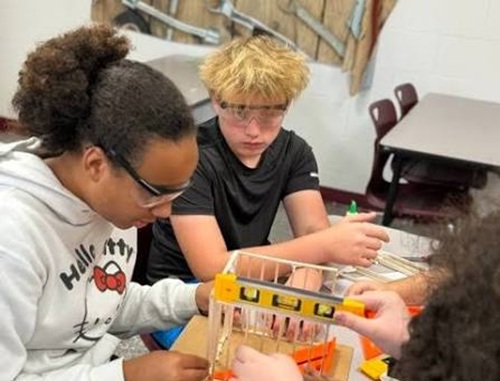
Middle Schoolers Are Learning Skilled Trades, and It Could Shape Their Futures
For generations, students have often been encouraged to follow a traditional path after high school: attend college, earn a degree, and pursue a professional career. But as the demand for skilled workers continues to grow, a different approach to career education is gaining attention. Middle school students are increasingly being introduced to skilled trades, giving them an early opportunity to discover career possibilities that could shape their futures.
From electrical work and plumbing to construction, welding, automotive technology, and manufacturing, hands-on career programs are helping young students explore practical skills long before they reach high school graduation.
Educators and workforce development advocates say introducing trades at an early age can help students recognize their interests, develop confidence, and understand the many opportunities available beyond a traditional four-year college education.
Introducing Career Opportunities Before High School
Middle school is an important period when students begin discovering their interests, strengths, and potential career goals. Traditionally, career exploration has received more attention during high school. However, some schools are beginning to introduce technical education much earlier.
Through classroom demonstrations, career and technical education programs, workshops, and supervised hands-on activities, students can learn about different occupations and the skills required to succeed in them.
A student might discover an interest in building through a woodworking project, develop an appreciation for engineering while learning about electrical circuits, or become fascinated with automotive technology after exploring how engines work.
These experiences allow students to connect what they learn in the classroom with real-world applications.
Rather than simply reading about careers, students have opportunities to see, touch, build, and experiment.
Skilled Trades Offer More Than a Paycheck
Skilled trades are essential to everyday life. Communities depend on electricians, plumbers, mechanics, construction workers, heating and air-conditioning technicians, welders, and manufacturing specialists to maintain infrastructure and keep businesses operating.
As experienced workers retire and industries continue to evolve, employers face the challenge of developing the next generation of skilled professionals.
Introducing middle schoolers to these occupations could help build a stronger future workforce while giving young people a better understanding of available career paths.
Many skilled trades offer opportunities for apprenticeships, industry certifications, technical college programs, and employment without requiring a traditional four-year college degree.
Depending on the occupation, experience, location, and qualifications, skilled workers can also advance into supervisory positions, specialized technical roles, or business ownership.
For students who enjoy working with their hands, solving problems, and creating tangible results, these careers can provide rewarding professional opportunities.
Building Confidence Through Hands-On Learning
One of the most important benefits of early trade education is the opportunity for students to learn by doing.
Hands-on activities encourage problem-solving, creativity, teamwork, and critical thinking. Students learn that mistakes are part of the process and that completing a project often requires patience, planning, and persistence.
For example, a classroom construction project can introduce basic measurements, geometry, material selection, and design. Learning about simple electrical circuits can connect science lessons to practical applications.
These activities can also help students who may struggle with traditional classroom instruction discover new ways to engage with education.
When students see how academic subjects apply to real-world situations, subjects such as mathematics, science, and technology can become more meaningful.
Changing the Conversation About College and Careers
Introducing skilled trades to younger students is not about discouraging college attendance. Instead, it is about expanding the definition of educational success.
A four-year university remains an important option for many careers, but it is not the only path toward financial stability or professional achievement.
Some students may pursue technical schools, apprenticeships, community colleges, or specialized certification programs. Others may eventually combine trade experience with additional education to advance their careers or establish their own businesses.
The goal is to help students make informed decisions based on their interests, abilities, and long-term goals rather than feeling pressured to follow a single educational path.
Parents and educators also have an important role in changing outdated perceptions that skilled trades are less valuable than careers requiring traditional college degrees.
In reality, many trade occupations require extensive technical knowledge, specialized training, problem-solving abilities, and a strong commitment to safety and professional standards.
Preparing Students for a Changing Workforce
Technology is transforming nearly every industry, including traditional trades. Modern construction increasingly incorporates advanced equipment, digital design, automation, and energy-efficient systems.
Automotive technicians must understand increasingly sophisticated computer systems, while manufacturing professionals work with robotics and advanced production technologies.
Introducing students to trades early can help them become familiar with the relationship between traditional craftsmanship and modern technology.
It can also encourage interest in science, technology, engineering, and mathematics (STEM) while demonstrating how those subjects translate into practical careers.
Schools that develop partnerships with local businesses, technical colleges, apprenticeship organizations, and workforce development programs may create additional opportunities for students to learn about careers in their communities.
Giving Young People More Options for Their Future
For middle school students, choosing a career may still be years away. However, discovering interests and developing practical skills early can have lasting benefits.
A student who discovers a passion for construction at age 12 may eventually pursue an apprenticeship. Another may develop an interest in automotive technology, manufacturing, or electrical engineering.
Even students who ultimately choose different career paths can benefit from learning practical skills, working collaboratively, and understanding how industries operate.
The experience can help young people recognize that their talents may lead them in directions they had never previously considered.
Conclusion: The Future of Work May Start in Middle School
As communities look for ways to address workforce shortages and prepare young people for changing economic conditions, introducing skilled trades during middle school could become an increasingly important part of education.
Early exposure gives students time to explore their interests, build confidence, and understand the opportunities available through technical education and hands-on training.
The larger lesson is that success does not look the same for every student. Some will pursue university degrees, while others will enter apprenticeships, technical programs, or specialized occupations.
By introducing skilled trades before students reach high school, educators can help ensure that young people understand they have choices.
Sometimes, discovering a future career does not begin with a college application. It begins with a classroom project, a set of tools, and the opportunity to build something with their own hands.
 100361