The Hidden Risk in America's Technology Supply Chain: Could Imported Technology Become a Weapon in a Future Conflict?
The central issue for this article is an important national security question: Could technology components imported into the United States over many years contain hidden vulnerabilities, remote access capabilities, or mechanisms that could eventually be used to disrupt American infrastructure during a geopolitical conflict?
This is a legitimate supply-chain security concern, but it is important to distinguish between documented foreign cyber operations, known hardware vulnerabilities, and the possibility of deliberately pre-positioned shutdown mechanisms. The latter should be examined as a potential threat rather than presented as an established fact.
1. The Dependence on Foreign-Made Technology
Over the past several decades, the United States has increasingly relied on international suppliers for the production of electronic components, computer hardware, telecommunications equipment, industrial controls, batteries, networking devices, and other essential technologies.
Many of these products are manufactured, assembled, or supplied through complex international supply chains involving multiple countries and companies.
This arrangement has provided economic advantages, increased manufacturing capacity, and made advanced technology more widely available. However, it has also introduced a national security challenge: The United States may not always have complete visibility into how every component is designed, manufactured, programmed, or maintained.
A technology product may be assembled in one country, contain processors manufactured in another, use software developed somewhere else, and rely on remote maintenance services provided by yet another company.
This creates an important question:
What if a component entering the American technology supply chain contains a vulnerability that is not immediately apparent but could become useful to a foreign adversary years later?
The concern is not limited to computers or smartphones. It potentially extends to:
• Electrical grid control systems.
• Telecommunications networks.
• Internet routers and switches.
• Industrial manufacturing equipment.
• Transportation and railroad systems.
• Water treatment facilities.
• Solar energy inverters and battery systems.
• Military electronics and communications equipment.
• Connected vehicles and autonomous systems.
The federal government has acknowledged that weaknesses can be introduced at different stages of the information and communications technology supply chain. A CISA supply-chain assessment specifically identifies malicious hardware, counterfeit components, and vulnerabilities introduced during manufacturing and distribution as national security concerns.
2. Could Technology Be Manufactured With Hidden Capabilities?
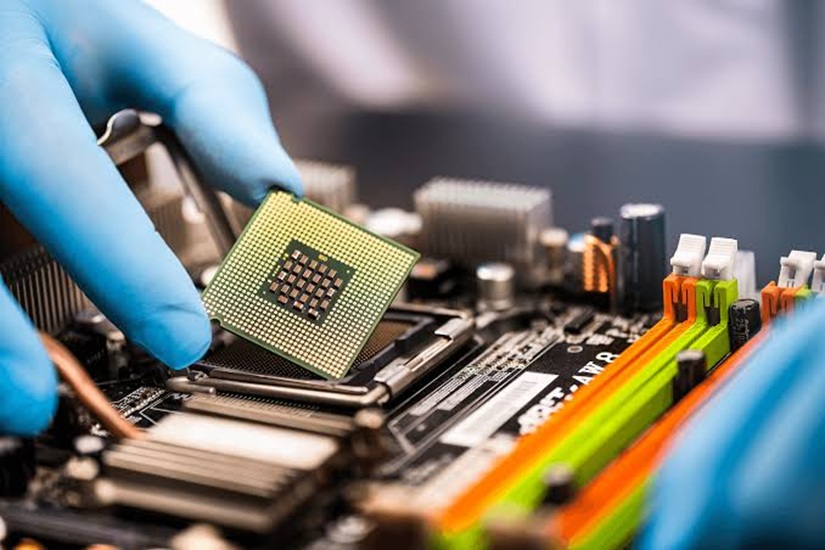
One of the more concerning possibilities is that a technology component could be designed or modified to include an undisclosed capability that allows unauthorized access, surveillance, disruption, or control.
Such a capability might not immediately interfere with normal operations.
Instead, a compromised device could appear to function normally for years while retaining an exploitable weakness or unauthorized access pathway.
It is important to distinguish between several possibilities:
Undisclosed Remote Access: A device may contain functionality that allows someone without proper authorization to access information or communicate with the device.
Compromised Software or Firmware: Software controlling a device may contain malicious code or weaknesses that could be exploited later.
Hardware Vulnerabilities: A component may have design or manufacturing weaknesses that create opportunities for unauthorized access or interference.
Remote Disruption Capabilities: Certain connected devices depend on communications and software services that, if compromised, could potentially be manipulated or disrupted.
Deliberately Engineered Shutdown Mechanisms: The most serious hypothetical concern is that a component could contain a concealed mechanism intended to disable equipment or interfere with its operation at a later date.
The last possibility deserves investigation, particularly where equipment supports critical infrastructure. However, the existence of supply-chain vulnerabilities does not establish that foreign manufacturers have systematically installed dormant shutdown switches in products imported into the United States.
The distinction matters because a security vulnerability, an intentional backdoor, and a deliberately installed kill switch are three different things.
3. The Possibility of a Long-Term Strategic Operation
Consider a hypothetical national security scenario.
Over a period of 10, 15, or even 20 years, a foreign adversary becomes an important supplier of electronic components and technology used throughout another country's economy.
During that period, the importing country increasingly depends on these products.
The components become integrated into power systems, communications networks, transportation infrastructure, industrial facilities, and commercial operations.
Years pass, and the equipment continues functioning normally.
Then an international crisis develops.
A major geopolitical confrontation, military conflict, or economic dispute creates an incentive for the foreign adversary to disrupt the opposing country's ability to communicate, manufacture, transport goods, or maintain essential services.
If previously compromised equipment or networks can be accessed or exploited, the adversary might attempt to use those weaknesses as part of a broader cyber campaign.
This is a hypothetical scenario, not proof that such a coordinated, decades-long hardware implantation program has taken place.
Nevertheless, the strategic concern is real enough that U.S. national security agencies have publicly warned about foreign adversaries seeking to establish access to American infrastructure before a crisis occurs.
One particularly important example is the cyber activity attributed by U.S. authorities to a Chinese state-sponsored group known as Volt Typhoon.
In 2024, CISA, the FBI, and the NSA warned that the group had gained access to portions of American critical infrastructure and was seeking to maintain access that could potentially support disruptive or destructive activity during a major crisis or conflict.
This is especially significant because it demonstrates that the concept of preparing access in advance of a future conflict is not merely theoretical.
However, the documented activity involved network intrusions and compromised systems, not proof of hidden shutdown switches installed in imported hardware.
4. What Happens If Critical Infrastructure Becomes Vulnerable?
The potential consequences of compromised technology extend far beyond stolen information.
Modern infrastructure depends on interconnected systems that communicate with one another and coordinate essential operations.
A disruption affecting one sector can create consequences for other sectors.
For example:
• Electricity: Disruptions to control systems could interfere with power generation, transmission, or distribution.
• Communications: Compromised telecommunications equipment could affect internet connectivity, cellular services, and emergency communications.
• Transportation: Vulnerabilities in connected transportation systems could interfere with logistics, scheduling, and operational reliability.
• Manufacturing: Industrial systems could experience interruptions that affect the production of essential goods.
• Water Systems: Compromised operational technology could threaten the reliability and safety of water treatment and distribution.
• Military Readiness: Dependence on vulnerable commercial components could create difficulties maintaining communications, equipment, and logistical operations.
The most concerning aspect is the interconnected nature of these systems.
A disruption in one area could complicate recovery efforts in another. For example, restoring electricity may depend on telecommunications, while restoring telecommunications may depend on reliable electricity.
This creates the possibility of cascading disruptions.
The objective of a sophisticated cyber campaign would not necessarily have to be the permanent destruction of infrastructure. Temporary interruptions affecting multiple essential services could also create significant economic and national security consequences.
5. Evidence That the U.S. Government Is Taking These Risks Seriously
These concerns are not limited to theoretical discussions. Several government investigations and policy decisions demonstrate that foreign technology supply chains are receiving increased national security scrutiny.
A. Government Accountability Office: Foreign Supplier Risks
In July 2025, the U.S. Government Accountability Office (GAO) published a report examining the Department of Defense's dependence on foreign suppliers.
The report identified concerns that foreign adversaries could potentially:
• Interrupt access to essential materials and components.
• Introduce technology backdoors that provide intelligence access.
• Exploit weaknesses in lower-level suppliers.
• Create vulnerabilities through manufacturing and distribution dependencies.
The report also highlighted a significant challenge: The Department of Defense has difficulty obtaining complete visibility into the lower tiers of its extensive supplier network.
The Pentagon relies on more than 200,000 suppliers supporting its defense industrial base.
B. Connected Vehicles and Foreign Technology
In January 2025, the Department of Commerce finalized restrictions involving certain connected vehicle technologies associated with China and Russia.
The government identified concerns involving hardware and software that could potentially provide unauthorized access to sensitive information or enable remote manipulation of connected vehicles.
This is significant because modern vehicles are increasingly sophisticated computer systems with wireless connectivity, cameras, sensors, GPS, and communications capabilities.
The restrictions demonstrate that the government considers foreign technology dependencies a potential national security concern, even in products used by ordinary American consumers.
C. Telecommunications Equipment
In May 2026, the GAO reported that federal agencies had been examining telecommunications and surveillance equipment associated with certain Chinese companies.
Its investigation found that the Departments of Defense and Energy had identified a small number of covered devices connected to their networks and were taking steps to address the associated risks.
The report also discussed vulnerabilities involving equipment that had been exploited by malicious actors.
Taken together, these developments show that the U.S. government recognizes the importance of identifying and addressing risks associated with foreign-manufactured technology.
6. Why the Passage of Time Makes Supply-Chain Security Important
One of the most difficult aspects of technology security is that equipment can remain in service for many years.
A component installed today might still be operating in a power facility, manufacturing plant, communications network, or transportation system 10 or 15 years from now.
During that period:
• The original manufacturer may change ownership.
• Software and firmware may receive updates.
• Security standards may become outdated.
• Companies may discontinue support.
• The equipment may become increasingly difficult to replace.
• The original manufacturing history may become difficult to verify.
This creates a long-term security problem.
Even when a product is considered safe when purchased, its security status may change as new vulnerabilities are discovered or new methods of exploitation become available.
The issue becomes particularly important when an organization cannot easily identify every component inside its equipment or determine where those components originated.
A vulnerability discovered years after installation may be much more difficult to address than one identified before the equipment enters service.
7. What Should the United States Do to Reduce This Risk?
Addressing these concerns does not necessarily mean eliminating all foreign technology imports. International manufacturing is deeply integrated into the modern economy, and complete domestic production of every electronic component would be extremely difficult and expensive.
Instead, the United States could strengthen several areas of national security and supply-chain management.
A. Improve Supply-Chain Transparency
Government agencies and critical infrastructure operators should have better visibility into the origins of important technology components.
Knowing the manufacturer, supplier, production location, and ownership structure can help identify potential areas of concern.
B. Independently Test Critical Equipment
Important infrastructure equipment should undergo independent security testing before deployment and periodically throughout its operational life.
Testing should examine hardware integrity, software security, unauthorized communications, and unexpected operating behavior.
C. Reduce Dependence on Single Foreign Suppliers
The United States should maintain multiple sources of supply for essential components.
Domestic manufacturing, trusted international partnerships, and strategic inventories could reduce the consequences of an interruption in foreign supplies.
D. Maintain the Ability to Operate Independently
Critical infrastructure should be designed with resilience in mind.
Where practical, essential operations should have secure backup systems and alternative operating capabilities that do not depend entirely on external connectivity or remote services.
E. Establish Long-Term Monitoring
Technology security should not end when equipment is purchased.
Organizations should maintain inventories, track security updates, monitor unusual activity, and periodically reassess the risks associated with equipment already in operation.
F. Strengthen Domestic Manufacturing
Rebuilding domestic capabilities in semiconductors, telecommunications equipment, industrial electronics, and other strategically important technologies could provide greater control over critical portions of the supply chain.
This would not eliminate cybersecurity risks, but it could improve oversight, accountability, and manufacturing resilience.
8. The Bigger Question: Could a Future Conflict Begin Before a Single Shot Is Fired?
Perhaps the most important issue raised by this discussion is how modern warfare is changing.
Historically, military conflict was generally associated with visible military preparations, troop movements, weapons deployment, and physical attacks.
Today, national security competition also involves cyber operations, intelligence gathering, economic pressure, communications disruption, and access to critical infrastructure.
A country does not necessarily have to destroy another country's infrastructure to create significant disruption.
It may be sufficient to compromise essential systems, interfere with communications, interrupt manufacturing, or create uncertainty about the reliability of critical services.
The Volt Typhoon activity described by U.S. authorities illustrates the concern about establishing access to critical infrastructure before a potential future confrontation.
This raises a serious question for policymakers:
Should the United States treat the security of imported technology components as a long-term national defense priority, just as it treats the protection of military installations, energy resources, and strategic materials?
The answer deserves serious consideration regardless of political affiliation.
Conclusion: The Technology Supply Chain Is Also a National Security Issue
For decades, the United States has benefited from the availability of affordable technology manufactured throughout the world. However, the increasing dependence on foreign suppliers has created security challenges that deserve greater attention.
The possibility that imported technology could contain undisclosed vulnerabilities, unauthorized access capabilities, or deliberately engineered mechanisms for future disruption raises important questions about the security of America's infrastructure.
It is entirely reasonable to investigate whether equipment already operating inside the United States could present vulnerabilities that might be exploited during a future international crisis.
At the same time, it is important not to confuse documented cyber intrusions and supply-chain weaknesses with unverified allegations of widespread, deliberately installed shutdown switches.
The distinction does not diminish the seriousness of the issue. Rather, it identifies exactly what needs to be investigated.
The United States should know what technology it is purchasing, where critical components originate, how those components function, and whether they can be trusted throughout their operational lives.
The greatest concern may not be whether a piece of imported technology works today. It may be whether the United States can still trust that technology when the country needs it most.
 220207