NewStori...First & Foremost A Quality News Outlet!

Introduction
The University of New Mexico (UNM), founded in 1889, is the flagship public research university of the State of New Mexico. Located in Albuquerque, UNM serves as a critical educational, cultural, research, and healthcare pillar for New Mexicans and beyond. Over more than 130 years, the university has evolved from humble beginnings into a distinguished Carnegie R1 research institution and a Hispanic Serving Institution with a diverse student body, expansive academic offerings, and deep community engagement.
Historical Background
Founding and Early Growth
The University of New Mexico was established by an act of the New Mexico Territorial Legislature on February 28, 1889, with provisions to locate the institution in Albuquerque. The first building, Hodgin Hall, opened in 1892, symbolizing the university’s early aspirations to provide comprehensive higher education in literature, science, and the arts.
In its formative years, UNM expanded its campus size, academic programs, and institutional vision. Under successive presidents, the university added critical infrastructure and programs—including support for scientific research and new departments—setting the stage for future expansion.
Architectural and Cultural Identity
UNM’s campus is known for its distinctive Pueblo Revival architecture, a style nationally recognized and embraced as a reflection of New Mexico’s indigenous and Hispanic cultural heritage. Significant buildings like Scholes Hall and the preservation of historical sites like Hodgin Hall embody this aesthetic legacy.
Current Profile and Operations
Academic Strength and Research
UNM is classified as an R1 – Highest Research Activity university, a designation signifying top tier research intensity in the United States. The university offers over 200 degree programs across 14 colleges and supports robust research in fields ranging from science and engineering to health sciences and the humanities.
Research expenditures at UNM reached approximately $389 million in FY25, supporting more than 3,500 publications and engaging hundreds of students and faculty researchers.
Enrollment and Diversity
UNM has experienced consistent growth in enrollment in recent years. Fall 2025 data show nearly 24,000 students at the main Albuquerque campus and more than 28,000 across all branch campuses, with the largest incoming first year class in the university’s history.
The student body is also increasingly diverse: Hispanic and Asian American student numbers are rising, and UNM continues to serve students from across the nation and around the world.
Healthcare and Medical Education
UNM’s Health Sciences Center and affiliated University of New Mexico Hospital play a central role in education, research, and clinical care in the state. Originating from a hospital agreement in the 1950s, UNM Hospital became the primary teaching hospital and now includes significant facilities such as the NCI designated Cancer Center and Level I trauma services.
Challenges Facing UNM
Despite its strengths and growth, UNM faces several important challenges that affect its present performance and future trajectory.
1. Student Basic Needs and Equity
Many students in New Mexico, including those at UNM, struggle with unstable housing and food insecurity, issues that significantly impact academic success and well being. Surveys have shown that more than half of students face food scarcity and housing instability, with disproportionate effects on Native American and Black students.
2. Healthcare Workforce and Infrastructure
Like many states, New Mexico suffers from a physician shortage. To help address this, UNM is planning a major expansion of its School of Medicine, including constructing a new facility to nearly double medical student and resident capacity by 2035. This effort, while vital, requires significant investment and coordination with state funding and philanthropy.
3. Financial and Operational Pressures
As a public research university, UNM depends heavily on state appropriations (constituting a large share of its budget), tuition, research grants, and other revenue sources. Reductions or changes in funding—such as federal indirect cost policy changes—can put strain on operational sustainability, research support, and healthcare services. (Local reporting suggests concern about NIH cost policy effects, highlighting how financial shifts can have substantial impacts.)
4. Institutional Complexity and Governance
Public universities often navigate complex governance environments. Ensuring transparent oversight, maintaining accreditation standards, and aligning leadership decisions with institutional priorities remain ongoing situational and public accountability considerations.
5. Campus Safety and Community Expectations
Through the years, universities like UNM also face occasional safety incidents and community tensions that require responsive policies and student support systems. Not all such events are reflective of campus identity, but they do influence public perception and campus climate.
Strategic Vision and Future Outlook
UNM has articulated a long range strategic vision called “UNM 2040: Opportunity Defined,” a framework guiding the university’s direction for the next two decades. This plan is designed to ensure UNM adapts proactively to changes in demographics, education trends, and community needs.
Core Strategic Goals
UNM 2040 sets ambitious institutional goals:
1. Advance New Mexico: Align research and service to address critical state and global challenges.
2. Enhance Student Experience and Innovation: Transform educational quality, support student success, and promote lifelong learning.
3. Inclusive Excellence: Expand opportunity and equity for students, staff, and communities.
4. Sustainability: Build environmentally and institutionally sustainable practices.
5. One University: Strengthen internal integration and external partnerships.
This strategic planning effort emphasizes inclusive stakeholder engagement, measurable outcomes, and accountability systems to track progress and adjust priorities over time. Implementation leaders have been named for each goal, and the plan is meant to align campus culture, community engagement, and educational innovation with UNM’s long term aspirations.
Research and Community Impact Initiatives
UNM’s research enterprise prioritizes interdisciplinary “Grand Challenges” such as sustainable water resources and successful aging, harnessing faculty, staff, and student expertise to address critical regional issues.
As a Hispanic Serving Institution and a leading research university in New Mexico, UNM is positioned to play a central role in workforce development, healthcare expansion, and culturally responsive education across the state.
Enrollment and Retention Trends
Recent years of growth in enrollment—particularly among first year and historically underrepresented students—signal increasing confidence in UNM’s educational value and its role as a higher education destination.
Conclusion
The University of New Mexico stands as a vital institution with a rich history and an ambitious future. From its founding in 1889 and iconic Pueblo Revival architecture to its status as an R1 research university and central healthcare provider, UNM has played a transformative role in education, research, and community life in New Mexico.
However, the university faces persistent challenges—including student basic needs, healthcare workforce shortages, financial pressures, and complex governance—that require innovative strategies and adaptive leadership. UNM’s long range strategic plan (“UNM 2040: Opportunity Defined”) outlines a comprehensive roadmap to navigate these challenges while advancing equity, academic excellence, community engagement, sustainability, and institutional coherence.
As UNM continues to grow in enrollment, research impact, and community involvement, its future looks promising—provided it balances tradition with change, meets student and faculty needs, and leverages its strengths to tackle pressing societal issues.
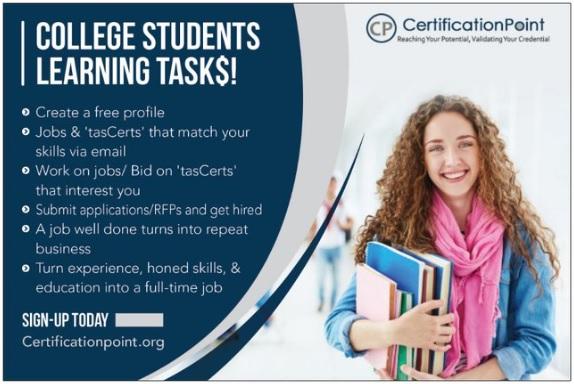
As workforce dynamics shift toward remote, skill-based, and cross-regional collaboration, traditional education and static portfolios are no longer enough. Employers, educators, and aspiring professionals increasingly prioritize documented competencies, measurable outcomes, and verified work experience. CertificationPoint’s integrated ecosystem—including Work Experience Builders, CP Social, and its Talent Management Platform—addresses these needs precisely and powerfully.
Below is a deep exploration of how each component uniquely supports the processes described in the earlier case study and elevates them into practical, scalable, long-term success pathways.
1. Work Experience Builders: Real-World Experience, Verified
Turning Theory Into Tangible Output
One of the biggest challenges students and career changers face is proof of real skill. Academic coursework alone rarely translates into evidence employers trust. CertificationPoint’s Work Experience Builders solves this by:
• Guiding users through structured project tasks
• Tracking progress against real, outcome-based competencies
• Embedding industry standards into experiential deliverables
This transforms abstract skills into verified artifacts that can be shared on resumes, talent platforms, and professional profiles.
Why This Matters
Employers want proof—not promises. Traditional internships sometimes lack structure, requiring manual documentation and subjective evaluation. Work Experience Builders automate and standardize experience creation by:
• Providing templates aligned with labor market needs
• Mapping tasks to measurable skill outcomes
• Tracking contributions in a digital, verifiable way
This elevates learners from “aspiring” to “qualified,” giving them a portfolio of real work executed and verified.
2. CP Social: Community and Collaborative Intelligence
A Professional Network Built for Skills and Experience
Often, when people think “social network,” they think of followers or likes. CP Social goes beyond social interaction; it is a professional ecosystem designed for meaningful peer collaboration, feedback, and discovery.
Key features include:
• Public profiles enriched with verified work experiences
• Peer endorsements and experience badges
• Collaboration groups organized by industry, competency, or project
• Cross-regional interaction and engagement tracking
How It Supports Real-World Outcomes
Learning beyond the classroom requires connection. CP Social enables:
• Cross-regional collaboration, breaking geographic learning barriers
• Peer mentoring and team formation for real work projects
• Community problem solving and knowledge exchange
• Social proof through endorsements, badges, and documented contributions
Because users can demonstrate competencies in context and receive peer validation, their profiles carry more weight with employers and clients.
3. Talent Management Platform: Closing the Loop to Opportunity
Match Verified Skills With Real Roles
CertificationPoint’s Talent Management Platform functions as a talent ecosystem—connecting verified, work-ready individuals with employers actively seeking proven competencies.
Core Benefits:
• Filter candidates by documented skill outcomes, not just resumes
• View skill badges, project portfolios, and collaborative history
• Enable employer engagement with top talent directly
• Provide analytics on candidate skill trends and hiring pipelines
Why This Is Game-Changing
In traditional hiring, recruiters sort through paper resumes and self-reported claims. Talent Management flips this by providing:
• Evidence-based candidate evaluation
• Searchable work history built on structured experiences
• Confidence for employers to hire remote, cross-regional talent
• Insights into future skills demand and talent readiness
By replacing guesswork with verified outcomes, employers and educators alike can make data-informed decisions.
4. Building Confidence and Reducing Transition Friction
One of the most documented challenges for students and career changers is confidence in the transition. Many know they have learned skills, but lack the evidence and validation to present themselves credibly.
CertificationPoint solves this by:
• Standardizing experience documentation so users can prove what they know
• Providing a structured path from novice ? experienced ? employable
• Supporting asynchronous and remote collaboration, mirroring real workplace models
• Offering community feedback, peer endorsement, and digital badges
This holistic ecosystem supports learners emotionally and professionally, increasing:
Confidence, credibility, clarity, and conversion.
5. Enhancing Remote Collaboration and Cross-Regional Insight
Mimicking Real Workplace Conditions
A core challenge identified in the earlier case study was the lack of remote work exposure in traditional education. CertificationPoint addresses this by enabling real team-based work virtually:
• Multiple contributors can collaborate on project tasks
• Activity logs demonstrate individual contributions
• Discussion threads, project notes, and deliverables are all timestamped and trackable
• Skills and outcomes can be compared across regions and teams
This is not simulated teamwork—it is documented practice in real collaboration protocols.
Advantage for Employers
Remote work is no longer an exception—it’s now a preference across industries.
But many candidates are inexperienced with:
• Asynchronous communication
• Remote accountability
• Digital professional etiquette
• Virtual deliverables and collaboration tools
CertificationPoint provides documented proof that a user has effectively collaborated in remote workflows—bridging the gap for employers seeking remote-ready candidates.
6. Cultivating Diversity Through Shared Vantage
Enriching Perspectives Through Cross-Regional Engagement
CertificationPoint fosters diversity not just in demographic terms, but in thought, experience, and worldview.
Via CP Social:
• Users from different regions, industries, and cultural contexts can collaborate
• Project feedback loop expands beyond local norms
• Team dynamics encompass a range of communication styles
This richly diversified experience:
• Strengthens global mindset
• Improves cultural competency
• Builds adaptability in future career contexts
Employers who value innovation and inclusivity gain access to candidates who are already practiced at navigating diversity.
7. Real-World Work Opportunities Reduce Hiring Risk
Employers today are increasingly reluctant to hire based solely on degrees, GPAs, or self-reported achievements. Digital credentials and verified work experience provide a risk-reduction mechanism.
CertificationPoint allows employers to:
• See documented contributions from specific work experiences
• Validate actual competencies through digital badges and activity history
• Evaluate team collaboration behavior through logs and peer endorsements
This level of verification makes hiring decisions more predictable and less dependent on traditional proxies that may not reflect actual readiness.
8. Supporting Career Changers With Transferable Evidence
Career changers often struggle with a paradox:
“I have skills—but no experience in this field.”
CertificationPoint solves this by capturing transferable experiences in ways that matter.
Scenario examples:
• A retail manager transitions into project coordination by completing workflow and operations projects
• A teacher becomes a UX designer by building real user research deliverables
• A hospitality professional transitions to marketing by demonstrating real campaign outcomes
In each case, the work experience is documented, verifiable, and directly relevant to the new field—eliminating the “experience gap” that typically stalls career pivots.
9. Supporting Entrepreneurial Readiness
Entrepreneurship is fundamentally about problem solving, execution, and outcome delivery. CertificationPoint’s ecosystem provides:
• Structured tasks that mirror real business challenges
• Team collaboration and leadership experience
• Community feedback to strengthen product and service concepts
• Portfolio evidence for investors, partners, and clients
Aspiring entrepreneurs benefit from:
• A simulated yet real environment to test business ideas
• Validated skills and documented deliverables
• Exposure to varied perspectives that shape better products and services
This prepares them to enter the market with more confidence and credibility.
10. Measuring Long-Term Success Through Data
The value of CertificationPoint becomes especially visible over time through measurable outcomes:
Tracking User Success Metrics:
• Employment placement rates
• Employer engagement and hiring conversions
• Completed verified work experiences
• Skill badges earned by competency categories
• Cross-regional collaboration indicators
These metrics don’t just tell users they succeeded—they tell employers that users have measurable readiness.
Conclusion: A New Paradigm for Career and Entrepreneurial Development
CertificationPoint isn’t just a platform—it’s an ecosystem designed to transform aspiring talent into workforce-ready professionals and confident entrepreneurs. By bridging the gap between education, experience, and measurable outcomes, it delivers exceptional value in ways that traditional pathways do not.
CertificationPoint provides:
? Run-way for real experience rather than theoretical learning
? Remote collaboration that mirrors the modern workplace
? Verified competencies, not self-reported skills
? Community and professional networking that cultivates diversity
? Talent management tools that connect work with opportunity
In a world where work is increasingly remote, global, and skills-driven, CertificationPoint equips learners with not only what they know, but what they have done—and that distinction is what employers and entrepreneurial ecosystems value most.