
NewStori...First & Foremost A Quality News Outlet!
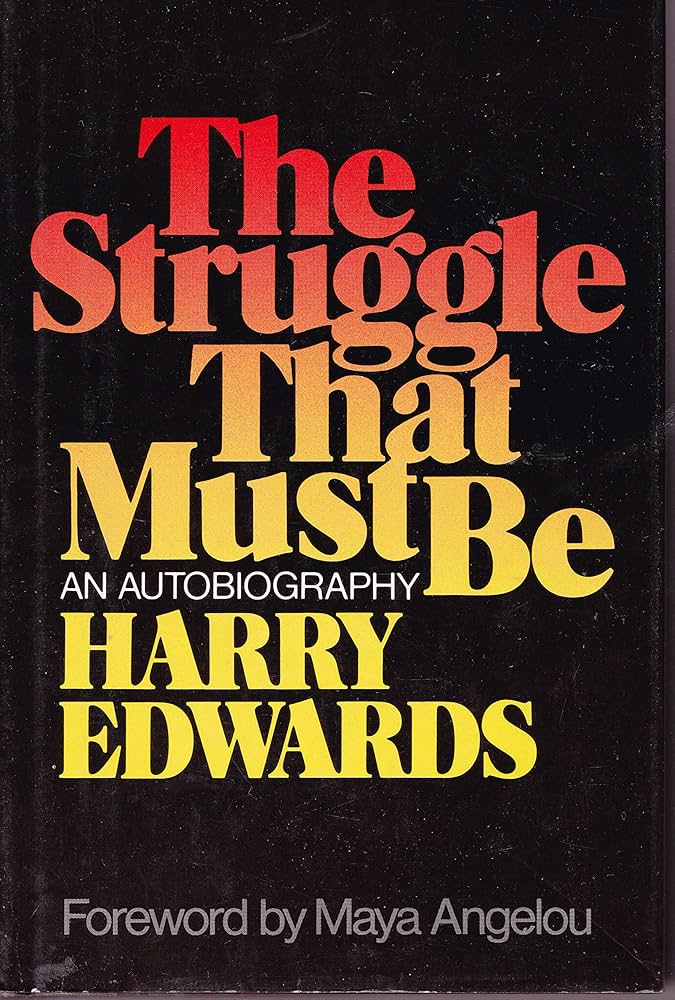
The Struggle That Must Be is the powerful autobiography of Harry Edwards, a pioneering sociologist, activist, and architect of the modern movement linking sports with social justice. In this deeply personal and political narrative, Edwards traces his life from a childhood marked by poverty and racial inequality to his emergence as a leading voice in the fight for Black empowerment, particularly within the world of athletics. The book is both a memoir and a manifesto, arguing that struggle is not only inevitable but necessary for meaningful social change.
Edwards begins by recounting his early life in East St. Louis, Illinois, a city plagued by economic decline, segregation, and limited opportunities for Black residents. Growing up in a working-class family, he experienced firsthand the harsh realities of systemic racism. His childhood was shaped by instability, violence, and the constant pressure to survive in an environment that offered little support or hope. These early experiences instilled in him a deep awareness of injustice and laid the foundation for his later activism.
Sports played a significant role in Edwards’s youth, providing both an escape from his surroundings and a pathway to opportunity. Like many young Black men of his time, he saw athletics as one of the few viable routes to success. However, even as he excelled physically, Edwards began to recognize the contradictions inherent in the system. While Black athletes were celebrated for their performance on the field, they were often denied respect, equality, and basic rights off it. This realization would become central to his life’s work.
After serving in the military, Edwards pursued higher education, eventually earning a scholarship to attend college. His academic journey exposed him to new ideas and frameworks for understanding race, power, and inequality. Influenced by the broader Civil Rights Movement and the emerging Black Power Movement, Edwards began to see sports not just as a personal opportunity, but as a platform for political expression and social change. He became increasingly convinced that athletes had both the visibility and the responsibility to challenge injustice.
A major turning point in Edwards’s life came during his time at San Jose State University, where he worked as a sociology instructor. There, he began organizing Black student-athletes and raising awareness about the exploitation and marginalization they faced. Despite generating significant revenue and prestige for their institutions, many Black athletes were denied proper education, treated as disposable, and subjected to discriminatory practices. Edwards sought to expose these inequities and push for systemic reform.
This activism culminated in the creation of the Olympic Project for Human Rights (OPHR), an organization Edwards founded to protest racial injustice in sports and society. The OPHR called for a boycott of the 1968 Olympic Games unless certain demands were met, including the restoration of Muhammad Ali’s boxing title (after he was stripped of it for refusing military service), the removal of apartheid South Africa and Rhodesia from international competition, and the hiring of more Black coaches and administrators.
Although the full boycott did not materialize, the movement gained international attention and set the stage for one of the most iconic moments in sports history: the Black Power salute at the 1968 Olympics in Mexico City. U.S. sprinters Tommie Smith and John Carlos raised their gloved fists during the medal ceremony to protest racial injustice and express solidarity with oppressed people worldwide. Edwards was a key figure behind this act, helping to conceptualize and support the protest.
The aftermath of the protest illustrates one of the central themes of the book: the cost of resistance. Smith and Carlos faced severe backlash, including public condemnation, death threats, and the loss of their athletic careers. Edwards himself was heavily criticized and surveilled. Through these experiences, he emphasizes that “the struggle” is not abstract—it involves real risks, sacrifices, and consequences. Yet he also argues that such actions are essential for progress, as they force society to confront uncomfortable truths.
Throughout the book, Edwards challenges the myth that sports exist separate from politics. He argues that sports are deeply embedded in social structures and reflect broader inequalities related to race, class, and power. He critiques the idea that athletic success alone can uplift Black communities, pointing out that only a small percentage of athletes achieve long-term success, while many others are left without education or career prospects. For Edwards, the glorification of sports can sometimes serve as a distraction from more systemic issues.
Another key theme is the concept of exploitation. Edwards describes how Black athletes are often used as tools to generate profit and prestige for predominantly white institutions, without receiving fair compensation or support. He highlights the imbalance of power between athletes and those who control the systems they operate within, including coaches, administrators, and governing bodies. This critique remains highly relevant in contemporary discussions about college athletics and athlete compensation.
In addition to examining institutional issues, Edwards reflects on his own personal growth and struggles. He does not present himself as a flawless hero, but rather as someone shaped by hardship, mistakes, and learning experiences. He acknowledges moments of doubt, conflict, and failure, offering a nuanced and honest portrayal of what it means to dedicate one’s life to a cause. This introspection adds depth to the narrative and reinforces the idea that struggle is both external and internal.
The book also situates Edwards’s work within the broader context of the Civil Rights and Black Power movements. He draws connections between his efforts in sports and the larger fight for equality in American society. By doing so, he underscores the interconnectedness of different forms of activism and highlights the role of athletes as part of a wider movement for justice.
As the narrative progresses, Edwards discusses the long-term impact of his work and the evolving role of athletes in social activism. He reflects on how the actions of the 1960s helped pave the way for future generations to speak out on issues such as racism, inequality, and human rights. While progress has been made, he emphasizes that many of the same challenges persist, making the struggle ongoing.
The title of the book, The Struggle That Must Be, encapsulates Edwards’s central message: that struggle is not optional, but necessary. Change does not occur passively; it requires effort, resistance, and a willingness to confront injustice, even in the face of opposition. For Edwards, struggle is both a burden and a source of strength—it is what drives individuals and communities to push beyond limitations and demand a better future.
In conclusion, The Struggle That Must Be is a compelling and thought-provoking account of one man’s journey through adversity, activism, and transformation. It offers valuable insights into the intersection of sports and society, the realities of racial inequality, and the power of collective action. Through his story, Harry Edwards challenges readers to reconsider the role of athletes, the meaning of success, and the importance of standing up for what is right. Ultimately, the book serves as a reminder that progress is never given—it must be fought for, and that fight is the struggle that must be.
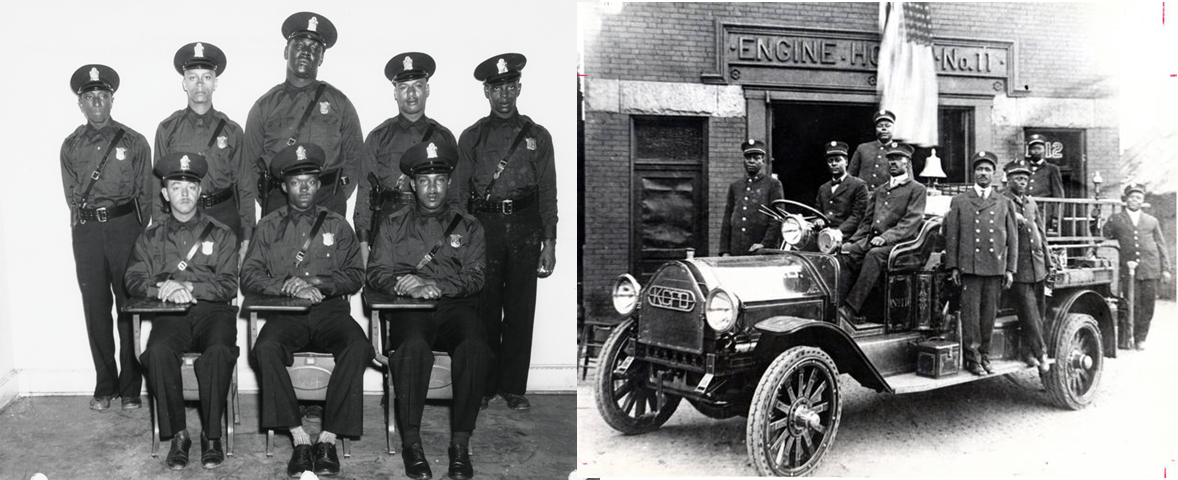
In the spring of 1921, the Greenwood District of Tulsa, Oklahoma—widely known as “Black Wall Street”—stood as one of the most prosperous Black communities in the United States. Its success was not accidental; it was the product of determination, self-reliance, and a network of Black professionals, laborers, and entrepreneurs who built a thriving economy under the constraints of segregation. Among those who served this community were Black police officers and firefighters, men tasked with upholding public safety in a society that often denied them full citizenship. When the Tulsa Race Massacre erupted on May 31 and June 1, 1921, these men found themselves in an impossible position—stripped of authority, caught between duty and survival, and subjected to decisions made almost entirely by white officials and white mobs.
To understand what happened to Black police officers and firefighters during the massacre, it is necessary to first grasp the rigid racial hierarchy that defined Tulsa at the time. Law enforcement and emergency services were segregated institutions. Black officers were few in number and held limited power. They often served primarily within Black neighborhoods and were subordinate to white leadership. Black firefighters operated under similar constraints, frequently denied equal resources, recognition, and authority. Even before violence broke out, their roles were circumscribed by a system that ensured white control over all meaningful decision-making.
When tensions escalated following the arrest of a young Black man accused of assaulting a white woman, the situation quickly spiraled. White citizens gathered at the courthouse, and rumors of a lynching spread. Black veterans and community members, aware of the long history of racial violence in America, arrived to protect the accused man. What followed was chaos: a confrontation, a gunshot, and then widespread violence as white mobs turned their attention toward Greenwood.
At that moment, the fragile structure of law enforcement collapsed—at least for Black officers. Rather than being mobilized to restore order, many Black police officers were disarmed or ordered to stand down. Some were reportedly detained or prevented from entering the very neighborhoods they were sworn to protect. Their badges, symbols of authority, became meaningless in the face of white mob rule and institutional bias. In some cases, white law enforcement officers actively participated in the violence or deputized white civilians, handing them weapons and granting them impromptu authority.
This act of deputizing white citizens was a critical turning point. It formalized the imbalance of power and reinforced the idea that law enforcement authority belonged exclusively to whites. For Black officers, this was a devastating reversal. Men who had taken oaths to uphold the law were suddenly treated as potential threats. Their identity as Black men overshadowed their identity as officers. They were no longer enforcers of the law but targets of suspicion and, in some cases, violence.
Black firefighters faced a similarly dire situation. As fires began to engulf Greenwood—many of them deliberately set—firefighting efforts were obstructed. Reports indicate that when fire crews attempted to respond, they were turned away or blocked by armed white individuals. In some instances, white rioters threatened firefighters at gunpoint, preventing them from extinguishing flames. The destruction was not incidental; it was systematic, and the suppression of firefighting efforts ensured that it would be total.
For Black firefighters, the dilemma was profound. Their duty was to save lives and property, yet doing so could mean risking their own lives in an environment where they had no protection. Unlike their white counterparts, who were often shielded by the mob or even complicit in its actions, Black firefighters had to navigate a landscape where both inaction and action carried grave consequences. To attempt to fight the fires was to potentially invite violence; to refrain was to witness the destruction of their own community.
This dilemma extended beyond professional duty into personal identity. Many Black officers and firefighters lived in Greenwood or had family and friends there. The neighborhoods burning were not abstract assignments; they were home. The people in danger were not strangers; they were neighbors, relatives, and colleagues. This blurred the line between professional responsibility and personal survival in a way that white counterparts rarely experienced.
For white citizens, the situation presented no such moral conflict. The decisions that shaped the events of the massacre were overwhelmingly made by white individuals—law enforcement leaders, city officials, and ordinary citizens who joined the mob. These decisions were informed by a racial ideology that dehumanized Black residents and viewed their success as a threat. In this framework, the destruction of Greenwood was not a tragedy to be prevented but a problem to be solved.
White law enforcement officers and city leaders had choices. They could have mobilized to protect Greenwood, enforced the law impartially, and ensured that firefighters were allowed to do their jobs. Instead, many chose inaction or active participation in the violence. The deputizing of white civilians, the disarming of Black officers, and the obstruction of firefighting efforts were not random occurrences; they were decisions that reflected the priorities of those in power.
For Black officers, the dilemma was not merely professional but existential. To assert their authority could be seen as insubordination or even provoke violence from white colleagues and mobs. To comply with orders to stand down meant abandoning their duty and their community. There was no safe or just option. Every choice carried the risk of harm, whether physical, professional, or moral.
The concept of duty itself became distorted under these conditions. In theory, a police officer’s duty is to uphold the law and protect citizens. But what happens when the law is not enforced equally? What happens when the institutions meant to uphold justice are complicit in injustice? For Black officers in Tulsa, these questions were not theoretical. They were lived realities. Their role as officers was undermined by a system that refused to recognize their authority when it mattered most.
Similarly, the role of firefighters—to protect life and property—was rendered impossible by deliberate obstruction. Fire requires oxygen, fuel, and heat to spread. In Greenwood, it also required the absence of intervention. By preventing firefighters from doing their jobs, white rioters and, in some cases, authorities ensured that the fires would consume entire blocks. The destruction of over a thousand homes and businesses was not simply the result of arson; it was the result of a coordinated failure to respond.
In examining these events, it becomes clear that the dilemma faced by Black police officers and firefighters was a product of systemic inequality. It was not an isolated incident but a reflection of broader patterns of racial discrimination in early 20th-century America. The limited authority granted to Black public servants was contingent and could be revoked at any moment. Their roles existed within a framework that prioritized white control and white interests.
For white citizens, the absence of a similar dilemma highlights the asymmetry of power. White individuals did not have to choose between professional duty and personal safety in the same way. Their authority was reinforced rather than undermined by the events of the massacre. Even those who did not participate directly benefited from a system that protected them and marginalized others.
The aftermath of the massacre further underscores these disparities. Black residents were detained in large numbers, often held in internment camps under the pretext of maintaining order. Meanwhile, few white perpetrators were held accountable. The legal system, like the law enforcement agencies that failed during the massacre, operated within a framework that favored white citizens. For Black officers and firefighters, this meant not only enduring the trauma of the event but also navigating a system that offered little recognition or justice.
The legacy of these events continues to resonate. The experiences of Black police officers and firefighters during the Tulsa Race Massacre reveal the complexities of serving within institutions that do not fully accept or protect you. They highlight the tension between individual duty and systemic injustice, a tension that has persisted in various forms throughout American history.
In reflecting on this history, it is important to recognize the humanity of those who faced these dilemmas. Black officers and firefighters were not abstract figures; they were individuals making difficult choices under extreme circumstances. Their experiences challenge simplistic narratives and invite a deeper understanding of the interplay between race, power, and responsibility.
At the same time, the actions—or inactions—of white citizens and authorities must be examined critically. The decisions made during the massacre were not inevitable. They were the result of choices, shaped by prejudice and reinforced by systems of inequality. Acknowledging this is essential to understanding the full scope of the event and its implications.
Ultimately, the story of Black police officers and firefighters during the Tulsa Race Massacre is one of constrained agency. They were entrusted with roles that implied authority and responsibility, yet denied the power necessary to fulfill them. Their dilemma was not of their own making but imposed upon them by a society that valued their service only within limits.
For white citizens, the lack of a comparable dilemma reflects a broader truth about privilege. When systems are designed to benefit one group, the moral and practical challenges faced by others can remain invisible. The events in Tulsa serve as a stark reminder of how such systems operate and the consequences they can produce.
As we examine this history, the question is not only what happened but why it happened and what it reveals about the structures of power that shaped it. The experiences of Black police officers and firefighters during the destruction of Black Wall Street offer a window into these dynamics, shedding light on the difficult choices faced by those on the margins and the relative ease with which those in power can act when unburdened by such constraints.
In the end, the dilemma was never evenly distributed. For Black public servants, it was a matter of survival, identity, and duty, all in conflict. For many white citizens, it was not a dilemma at all, but an opportunity to assert dominance in a system that already favored them. That imbalance lies at the heart of the tragedy and remains a crucial part of its legacy.