The Rise of Anthropic and It's Rise In The Modern Artificial Intelligence Landscape
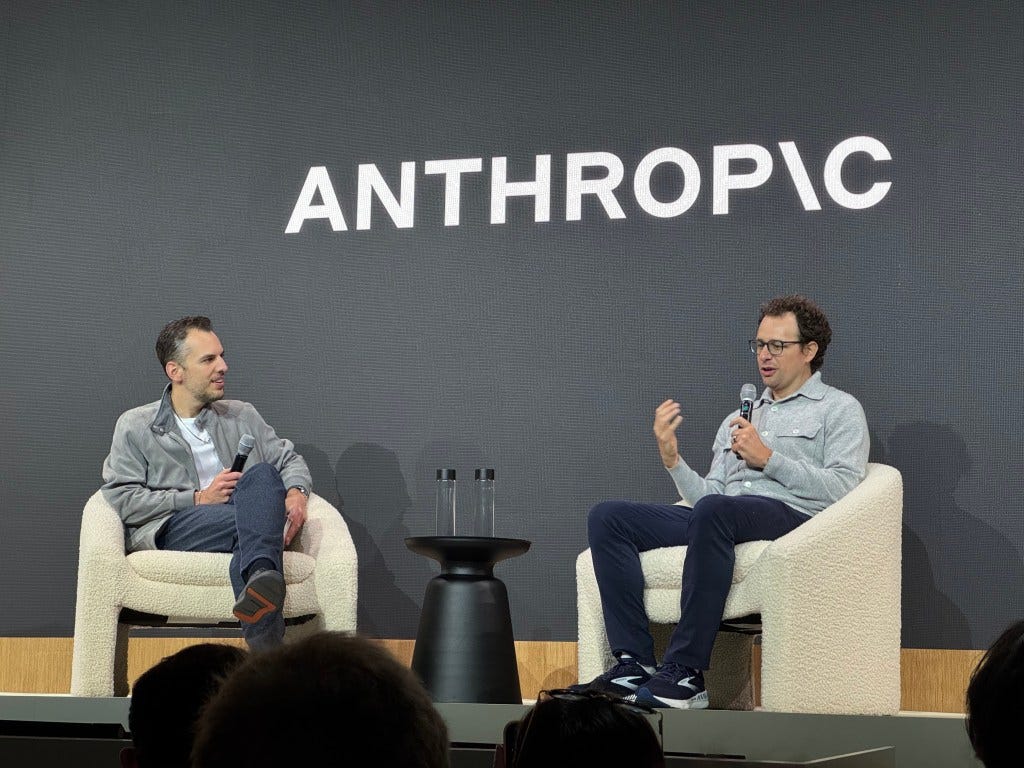
The rise of Anthropic represents one of the most consequential developments in the modern artificial intelligence landscape. Founded in 2021 by siblings Dario Amodei and Daniela Amodei along with a group of former AI researchers and engineers, Anthropic emerged from both optimism and concern about the future of advanced AI systems. Their path to success was shaped not only by technical brilliance but by ethical conviction, institutional friction, fundraising challenges, and a strategic belief that AI must be developed responsibly at scale. The hurdles they faced—and the way they crossed them—help explain why Anthropic is considered a central player in shaping the future of AI.
Origins Inside OpenAI
Before founding Anthropic, many of its core team members worked at OpenAI, one of the world’s leading AI research labs. Dario Amodei served as Vice President of Research, contributing to major breakthroughs in large language models and reinforcement learning systems. The team played critical roles in advancing scaling laws research, which demonstrated that increasing model size and training data often led to predictable improvements in performance.
However, as AI capabilities accelerated, internal debates intensified around governance, commercialization, and safety. The founding team became increasingly focused on alignment—the challenge of ensuring that powerful AI systems behave in accordance with human values and intentions. Concerns about the pace of deployment and long-term safety risks led several key researchers to depart and form a new organization centered explicitly on AI alignment research.
Leaving a high-profile institution was a significant hurdle. OpenAI had brand recognition, financial backing, and momentum. Departing meant forfeiting institutional stability and starting from scratch in a capital-intensive field. Yet the founding team believed that alignment research required deeper structural commitment and independent focus.
Establishing a Safety-First Mission
From its inception, Anthropic positioned itself as a safety-driven AI company. Its core philosophy emphasized “constitutional AI,” a method designed to guide large language models using explicit principles rather than relying solely on human feedback loops. This approach aimed to make models more transparent, controllable, and resistant to harmful outputs.
The hurdle here was conceptual as much as technical. Safety research is often viewed as slower or less commercially attractive compared to product deployment. Convincing investors that alignment-focused development could coexist with business growth required careful framing.
Anthropic’s founders argued that safety is not an obstacle to innovation but a prerequisite for sustainable progress. They believed that increasingly capable AI systems demand increasingly rigorous safeguards. This framing helped differentiate the company in a rapidly expanding AI marketplace.
The Capital Challenge
Training frontier AI models requires immense computational resources. Securing funding for such an endeavor is no small task. Unlike software startups that can operate leanly, AI labs must invest heavily in compute infrastructure, talent acquisition, and research.
Anthropic overcame this hurdle by attracting significant investment from major technology companies and venture capital firms. Strategic partnerships with cloud providers enabled access to large-scale computing resources. These partnerships allowed Anthropic to train its Claude series of AI models, positioning the company as a serious competitor in the generative AI space.
Raising billions of dollars in capital was both a milestone and a challenge. Large investments bring expectations for growth and productization. The founding team had to balance commercial viability with their safety-first ethos. Maintaining alignment as a central mission while scaling operations required disciplined governance structures.
Building Claude and Competing at the Frontier
Anthropic’s flagship AI system, Claude, entered a competitive landscape that included models from OpenAI and other global labs. The hurdle was clear: compete with established players while maintaining a distinct identity.
Anthropic leaned into reliability and safety as competitive advantages. Claude was designed to produce more predictable outputs and demonstrate improved resistance to harmful or biased content. Enterprises seeking AI tools for customer support, research assistance, and knowledge management found value in systems designed with guardrails.
Competing at the frontier also required rapid iteration. AI development cycles are intense, with breakthroughs emerging quickly. The founding team relied on deep expertise in scaling laws and model interpretability research to refine performance. Their scientific grounding enabled them to adapt to evolving benchmarks.
Organizational Culture and Governance
Another major hurdle was organizational design. AI labs face pressure to move fast, release products, and capture market share. At the same time, internal debate about safety, deployment thresholds, and societal impact is essential.
Anthropic adopted a governance structure intended to protect long-term safety goals. It incorporated mechanisms to limit short-term financial pressures from overriding mission commitments. This structure reflects lessons learned from prior experiences in fast-scaling AI organizations.
Balancing idealism with pragmatism remains a constant challenge. As AI systems grow more capable, public scrutiny intensifies. Regulatory discussions around AI transparency, bias mitigation, and risk management continue to evolve. Anthropic’s leadership must engage with policymakers while maintaining technological momentum.
Hurdles in Public Perception
The AI sector is increasingly polarized. Some view advanced AI as transformative and beneficial; others warn of existential risks. Anthropic operates within this tension.
One hurdle is managing expectations. Overhyping AI can erode trust if systems fail to meet promises. Undercommunicating progress risks falling behind competitors in perception. Anthropic has attempted to communicate cautiously, emphasizing incremental improvements and responsible deployment.
Another challenge involves talent competition. Top AI researchers are in high demand globally. Retaining world-class engineers while preserving a mission-driven culture requires both financial incentives and intellectual fulfillment.
Why Anthropic Matters to the AI Future
Anthropic’s significance lies in its integration of safety research with frontier model development. Many organizations focus either on academic safety theory or aggressive commercialization. Anthropic attempts to bridge both.
First, its research into constitutional AI and interpretability contributes to broader understanding of how large language models reason and respond. This work informs industry-wide best practices.
Second, its willingness to scale responsibly demonstrates that safety and capability can advance simultaneously. If successful, this model could influence how other AI companies structure governance.
Third, its partnerships with major cloud and enterprise platforms ensure that its systems are integrated into real-world applications. As AI becomes embedded in business workflows, reliability and controllability become paramount.
Finally, Anthropic’s founding team represents a generation of AI leaders shaped by firsthand exposure to rapid capability growth. Their experiences inside OpenAI gave them insight into both the promise and peril of scaling AI systems. That perspective informs strategic decisions about deployment thresholds and model transparency.
Crossing the Hurdles
The founding team crossed multiple hurdles through:
• Scientific Depth: Leveraging prior research expertise in scaling laws and reinforcement learning.
• Mission Clarity: Anchoring decisions in alignment principles.
• Strategic Fundraising: Securing large investments without abandoning governance safeguards.
• Partnership Building: Collaborating with cloud providers and enterprises.
• Cultural Discipline: Maintaining internal debate and ethical reflection amid growth.
Each phase required balancing ambition with caution. In a field characterized by exponential progress, that balance is difficult but essential.
Conclusion
Anthropic’s founding team transformed concern about AI alignment into an institutional mission. By leaving a leading lab to create a safety-focused frontier company, they embraced uncertainty in pursuit of long-term impact.
Through technical innovation, capital acquisition, and governance design, they positioned Anthropic as a pivotal force in AI development.
As artificial intelligence becomes more powerful and pervasive, organizations capable of combining capability with responsibility will shape its trajectory. Anthropic’s growth reflects both the urgency and the opportunity of this moment. Its founders’ willingness to confront structural hurdles—scientific, financial, and ethical—places the company at the center of debates about how AI should evolve.
In an era when AI systems increasingly influence communication, research, and decision-making, the question is no longer whether AI will shape the future, but how. Anthropic’s founding team has made it clear that safety and alignment must be foundational, not optional. That conviction may prove to be their most important contribution to the AI future.
 169575