How Does Propaganda Truly Work
Propaganda is one of the most powerful tools ever developed for shaping public opinion. From ancient empires to modern digital platforms, leaders, organizations, and movements have used it to influence how people think, feel, and act. While propaganda can sometimes be used for positive purposes—such as public health campaigns—it is often associated with manipulation, misinformation, and social control.
Below are ten essential “keys” that explain how propaganda works and why it remains so effective.
1. Emotional Appeal Over Rational Argument
One of the most important keys to propaganda is its reliance on emotion rather than logic. Human beings are emotional decision-makers; we often justify our choices rationally after we have already made them emotionally.
Propaganda leverages fear, pride, anger, hope, resentment, or love to drive responses. During both World War I and World War II, governments used posters that stirred fear of the enemy or pride in national identity. Emotional triggers bypass critical thinking and create immediate psychological engagement.
When people feel threatened, inspired, or outraged, they are more likely to accept simplified narratives without questioning their accuracy.
2. Repetition
Repetition creates familiarity, and familiarity creates acceptance. The more often a message is repeated, the more “true” it feels—a phenomenon known as the illusory truth effect.
The Nazi regime under Adolf Hitler and his propaganda minister Joseph Goebbels mastered the art of repetition. Messages about racial superiority and national destiny were echoed across speeches, newspapers, radio broadcasts, and posters until they became embedded in public consciousness.
Modern digital media has amplified this key dramatically. Social media algorithms repeat similar narratives in users’ feeds, reinforcing beliefs and limiting exposure to alternative viewpoints.
3. Simplification and Slogans
Propaganda thrives on simplicity. Complex political, economic, or social issues are reduced to short slogans or binary choices.
Phrases like “You’re either with us or against us” eliminate nuance and frame issues in absolute terms. During the Cold War, messaging often reduced geopolitics to a struggle between “freedom” and “communism,” particularly in speeches by leaders such as Ronald Reagan.
Slogans are easy to remember and easy to repeat. They travel quickly through populations and require little cognitive effort to process.
4. Creation of an Enemy
A unifying enemy strengthens group identity. Propaganda frequently identifies a scapegoat responsible for social problems. By focusing anger and blame outward, leaders can consolidate power internally.
In Nazi Germany, Jews were falsely portrayed as responsible for economic decline and social unrest. In other contexts, propaganda has targeted immigrants, political opponents, religious minorities, or foreign nations.
This key relies on dehumanization. When an “enemy” is depicted as dangerous, immoral, or subhuman, harsh policies against them become easier to justify.
5. Authority and Legitimacy
Propaganda often borrows credibility from authority figures—scientists, celebrities, military leaders, or respected institutions.
In the Soviet Union under Joseph Stalin, state-controlled media presented government policies as scientifically and historically inevitable. Images of leaders were carefully curated to project strength, wisdom, and paternal authority.
Today, endorsements from influencers, experts, or public figures can lend persuasive power to a message, even when the underlying claims are weak or misleading.
6. Bandwagon Effect
People tend to align with what appears to be the majority opinion. Propaganda exploits this psychological bias by suggesting that “everyone” supports a particular cause.
Election campaigns frequently display large rallies, crowd shots, and polling data to create the impression of overwhelming support. During the rise of Benito Mussolini in Italy, state media emphasized mass participation in fascist events, reinforcing the perception of unstoppable momentum.
When individuals believe they are joining a popular movement, they feel safer and more validated in their choice.
7. Control of Information
Limiting access to alternative perspectives is a cornerstone of propaganda. When information flows are tightly managed, competing narratives struggle to gain traction.
Authoritarian governments often censor media, restrict journalists, and block foreign broadcasts. In contemporary contexts, some states tightly regulate internet access, shaping what citizens can see or share.
Control does not always require outright censorship. Algorithms, editorial decisions, and selective reporting can subtly influence which stories receive attention and which are buried.
8. Use of Symbols and Imagery
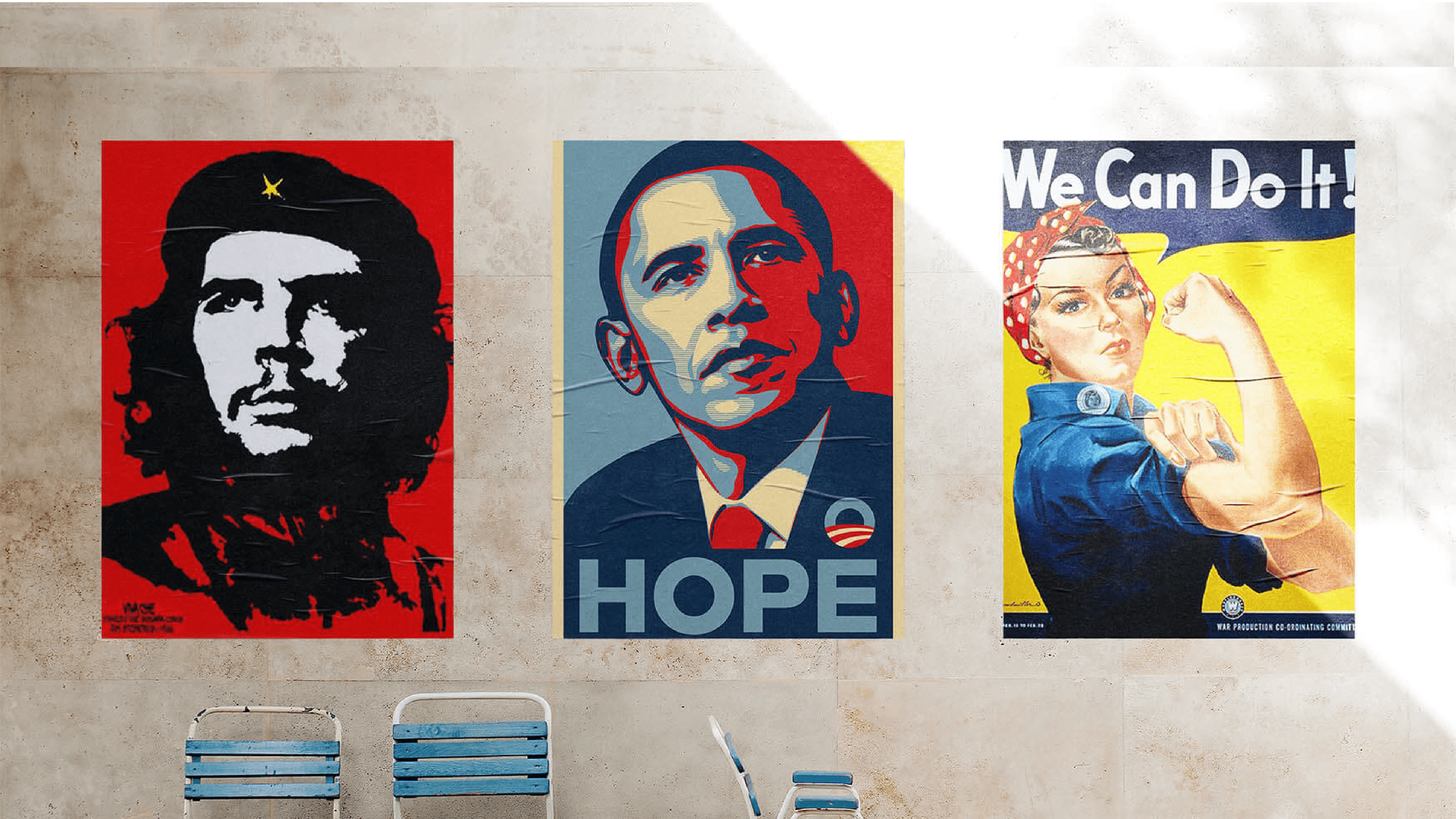
Visual symbols communicate powerful messages instantly. Flags, uniforms, logos, and carefully staged photographs can evoke deep emotional responses.
For example, the swastika became a central symbol of Nazi ideology, appearing everywhere from official buildings to youth organizations. Patriotic imagery—such as heroic soldiers, national monuments, or idealized families—reinforces identity and belonging.
Symbols simplify ideology into recognizable visual shorthand, allowing propaganda to operate even without words.
9. Appeal to Identity
Propaganda connects messages to core aspects of identity—national, religious, racial, cultural, or political.
In revolutionary movements, appeals to shared history and collective destiny are common. During the American civil rights movement,
leaders like Martin Luther King Jr. framed demands for equality within the broader identity of American democratic ideals. While not propaganda in the manipulative sense, this illustrates how identity can mobilize large groups.
When people see a cause as tied to who they are, rather than just what they believe, they defend it more fiercely and internalize it more deeply.
10. Crisis and Urgency
Propaganda flourishes in times of crisis. War, economic collapse, pandemics, and political instability create fear and uncertainty—conditions in which people seek clear guidance and strong leadership.
After the attacks of September 11, 2001, messaging in the United States emphasized unity and vigilance. Crises compress decision-making time and reduce tolerance for debate, making populations more receptive to decisive narratives.
Urgency discourages reflection. When people feel that immediate action is required, they are less likely to scrutinize the information driving that action.
The Modern Landscape of Propaganda
While the basic keys remain consistent, the tools have evolved. Social media platforms allow highly targeted messaging. Artificial intelligence can generate realistic fake images, audio, and video. Microtargeting can tailor emotional triggers to specific demographic groups.
Unlike earlier eras, propaganda is no longer monopolized by governments. Political movements, corporations, extremist groups, and even individuals can spread persuasive narratives at scale.
The speed of information flow today increases the impact of repetition, emotional contagion, and bandwagon effects. At the same time, digital literacy and access to diverse sources of information can serve as counterweights.
Recognizing and Resisting Propaganda
Understanding these ten keys is the first step toward resilience. Critical thinking involves asking:
• What emotions is this message trying to provoke?
• Is the issue being oversimplified?
• Who benefits if I believe this?
• Are alternative viewpoints available?
Education, media literacy, and exposure to diverse perspectives help individuals avoid manipulation. Democracies depend on informed citizens capable of distinguishing persuasion from deception.
Conclusion
Propaganda is not merely a relic of totalitarian regimes; it is a persistent feature of human communication and political life. Its power lies in its understanding of psychology: emotion over reason, repetition over complexity, identity over nuance.
By recognizing the ten keys—emotional appeal, repetition, simplification, enemy creation, authority, bandwagoning, information control, symbolism, identity appeal, and crisis framing—we can better understand how narratives shape societies.
In an age of rapid communication and information overload, awareness is the most effective defense.
 23554
23554