NewStori...First & Foremost A Quality News Outlet!

View Discovery Article Here
In the modern digital world, people starting a small business or trying to launch a product or service typically turn to major tech ecosystems — the platforms and tools offered by companies like Google, Meta (Facebook), Apple, Amazon, and Microsoft. These ecosystems provide powerful tools that appear free or affordable at first — hosting, analytics, email, marketing, payment tools, and more — but they are designed to keep users engaged, dependent, and ultimately paying for multiple interconnected services over time.
This pattern is not accidental. Tech platforms have developed ecosystem strategies that prioritize capture and retention of users by lowering barriers to entry early and raising them dramatically later — often long after a person has begun building their business through those same systems.
Part 1: Entering the Ecosystem — Accessible at First, Costly Later
Most entrepreneurs today begin building online presence without expecting to fundraise or join a startup. Yet, from the very first steps — registering a domain name to setting up an email — many find themselves inside a digital ecosystem and paying repeatedly at each stage.
Step 1: Build a Website
For example, someone wanting a website might begin by using:
• Google Domains or Google Sites for simple hosting
• Meta Business Tools to create a business page and link content
• Apple App Store or Google Play Store for mobile app versions
Each service seems inexpensive or even free, but often pushes additional paid tiers — premium hosting, analytics, ad credits, developer tools, or subscription plan upgrades — especially as the business scales.
Step 2: Marketing and Analytics
Once the website exists:
• Google Analytics and Google Ads become essential for tracking traffic and running campaigns
• Meta Ads (Facebook/Instagram) are used to reach customers
• Additional tools like email automation, SEO optimization, and conversion tracking add subscription costs
This pay to pay roadmap quickly increases costs, as platforms monetize by selling tools that support your growth. But critically, they also gather deep insights into your business performance and user behavior — often to inform advertising pricing and recommendations tailored to your exact needs.
Step 3: Payments and E Commerce
When the product or service goes live, payment and e commerce infrastructure kick in:
• Google Pay, Apple Pay, Stripe, PayPal recurring charges
• Amazon Marketplace fees for sellers
• Shopify or similar hosted stores connected to search and ad platforms
Each system integrates with others, often requiring users to subscribe to multiple tools — marketing dashboards, payment gateways, inventory software, and analytics — all creating paid dependencies.
Part 2: The Ecosystem Lock In Effect
Once users are on these platforms, they often feel “locked in” — either because switching to alternative tools is technically difficult or because they are so entangled with the original ecosystem that moving out would require significant time and money.
Vendor Lock In and Switching Costs
Economists call this ecosystem lock in — situations where customers become dependent on a company’s products and services to the point that switching to competitors involves high costs or effort.
For example:
• An Apple user who has bought content on iTunes, uses iCloud for storage, owns an iPhone, and subscribes to Apple Music finds switching to Android difficult due to data and subscription loss.
• A business that uses Google Analytics, hosts on Google Cloud, runs ads through Google Ads, and syncs email via Gmail is deeply embedded — switching requires migrating data, workflows, and retraining employees.
This creates high switching costs and effectively locks individuals into the ecosystem, leading to dependency that persists long after initial adoption — a dynamic that can trap early entrepreneurs in recurring payments.
Ecosystem Growth Strategy
Once “inside,” digital ecosystems use strategies that amplify spending over time. Tech platforms offer basic tools free or cheap, then push premium add ons:
• priority support
• advanced analytics
• extra storage
• subscription rates tied to usage
This mirrors a classic business strategy of maximizing customer lifetime value — the revenue generated over the full duration of a customer’s engagement with an ecosystem service.
Part 3: The Data Advantage — Companies Know You Inside and Out
One of the biggest — and least visible — advantages these ecosystems have is data.
When users take initial steps — signing up for Gmail, logging into a social platform, using an app, or clicking on ads — they’re contributing valuable behavioral, demographic, and transactional data. Over time, this data builds an extremely detailed profile of:
• Interests
• Purchasing behavior
• Engagement patterns
• Search and conversion intent
This data allows ecosystem companies to:
1. Tailor recommendations that nudge users toward paying services
2. Price ads dynamically based on user value
3. Offer bundling incentives that seem convenient but embed users deeper into paid services
Meta’s “social graph” — the interconnected map of user relationships and interactions — is a prime example of how deeply platforms understand users, enabling highly targeted advertising and product suggestions.
Because many platforms track users across devices and apps, individuals often won’t even notice how much has been learned about their habits and preferences — yet this data is instrumental in algorithmic suggestions designed to keep people engaged and spending.
Part 4: The Subscription Spiral — From One to Many
As users adopt more tools, most founders and entrepreneurs gradually end up subscribing to several interconnected services — often without realizing the full cost until it adds up.
Typical subscriptions might include:
• Website hosting and domain renewal
• Premium email and productivity software
• Analytics dashboards
• Marketing automation
• App store developer accounts
• Cloud storage
• Ad campaigns on Meta and Google
• Payment processing fees
Before long, an individual might be paying for 7–8 interconnected services, each linked in subtle ways — account data shared across platforms, integrated billing, and connected workflows.
This can create a virtual ownership scenario, where users feel tied to the ecosystem not just technologically but financially and operationally, making it hard to step away. This mirrors wider concerns about closed platforms creating barriers for users and limiting competition and mobility in the market.
Part 5: Integrity and Ethical Concerns
There is a growing ethical debate about the integrity of these ecosystem strategies — especially regarding consumer awareness and consent.
1. Opacity vs. Transparency
Most users don’t realize how deeply embedded they are in these ecosystems until they try to extract their data or switch services, at which point:
• Data is difficult to transfer
• Subscription paths are not obvious
• Costs for leaving are high
Regulators have taken notice. For example, the European Union’s Digital Markets Act aims to curb unfair dominance by “gatekeeper” platforms, requiring more openness and fostering competition.
2. Manipulation vs. Choice
Platforms have incentives to keep users engaged because usage drives revenue — especially through ads and premium subscriptions. Critics argue this can lead to coercive or manipulative design practices (dark patterns, nudges, defaults that favor paid upgrades). Independent consumer protection reports have found that many subscription interfaces include design choices that steer users toward less beneficial, paid decisions.
3. Privacy and Data Harvesting
The accumulation of user data — often without clear, informed consent — raises additional issues. While users click “agree” to privacy policies, many don’t understand the extent of tracking and data sharing that occurs across products and third parties for ad targeting or feature personalization.
This can create tension between functionality and exploitation — where services seem valuable but trade user data in ways that produce revenue streams far beyond what most customers intended.
Part 6: When Ecosystems Expand — The Spiral of Dependencies
Large tech ecosystems don’t remain static. As companies acquire new tools or integrate third party services, those services increasingly tie back into the original ecosystem, reinforcing dependency.
Examples include:
• Platform extensions into cloud services (Google Cloud, AWS, Azure)
• Ecosystem commerce (Amazon Marketplace)
• Device linked subscriptions (Apple iCloud or Apple One bundles)
• Developer ecosystem services (Google Play developer fees or Apple App Store commissions)
This expansion makes switching not just a matter of leaving one tool — it entails rewiring workflows, data infrastructure, customer pipelines, and ongoing revenue streams.
Conclusion: Awareness and Intentional Choices
For individuals entering the market — whether launching a product, service, or small business — the journey through large tech ecosystems can feel organic and helpful at first. The ease of access and integrated tools seem supportive. But over time, that convenience can turn into a subscription maze, deep platform dependency, and complex renewal costs across multiple linked services.
Understanding how ecosystems:
• Acquire users early through free or low cost tools
• Leverage data to personalize paid service offerings
• Build lock in and switching costs
• Encourage multiple recurring subscriptions
is crucial for anyone who wants to make intentional, cost effective decisions. The better people understand the incentives and mechanisms at play, the more they can choose services that serve their long term needs — rather than becoming unwitting subscribers to an entire digital ecosystem.
Stronger polices are needed if renewables are to power the country’s expanding steel sector instead of coal, experts say
Zimbabwe is poised to become Africa’s largest steel producer following USD 5 billion in investments from two Chinese multinationals.
Tsingshan Holding Group made its USD 800 million investment in August 2024 through subsidiary Dinson Iron and Steel Company (DISCO).
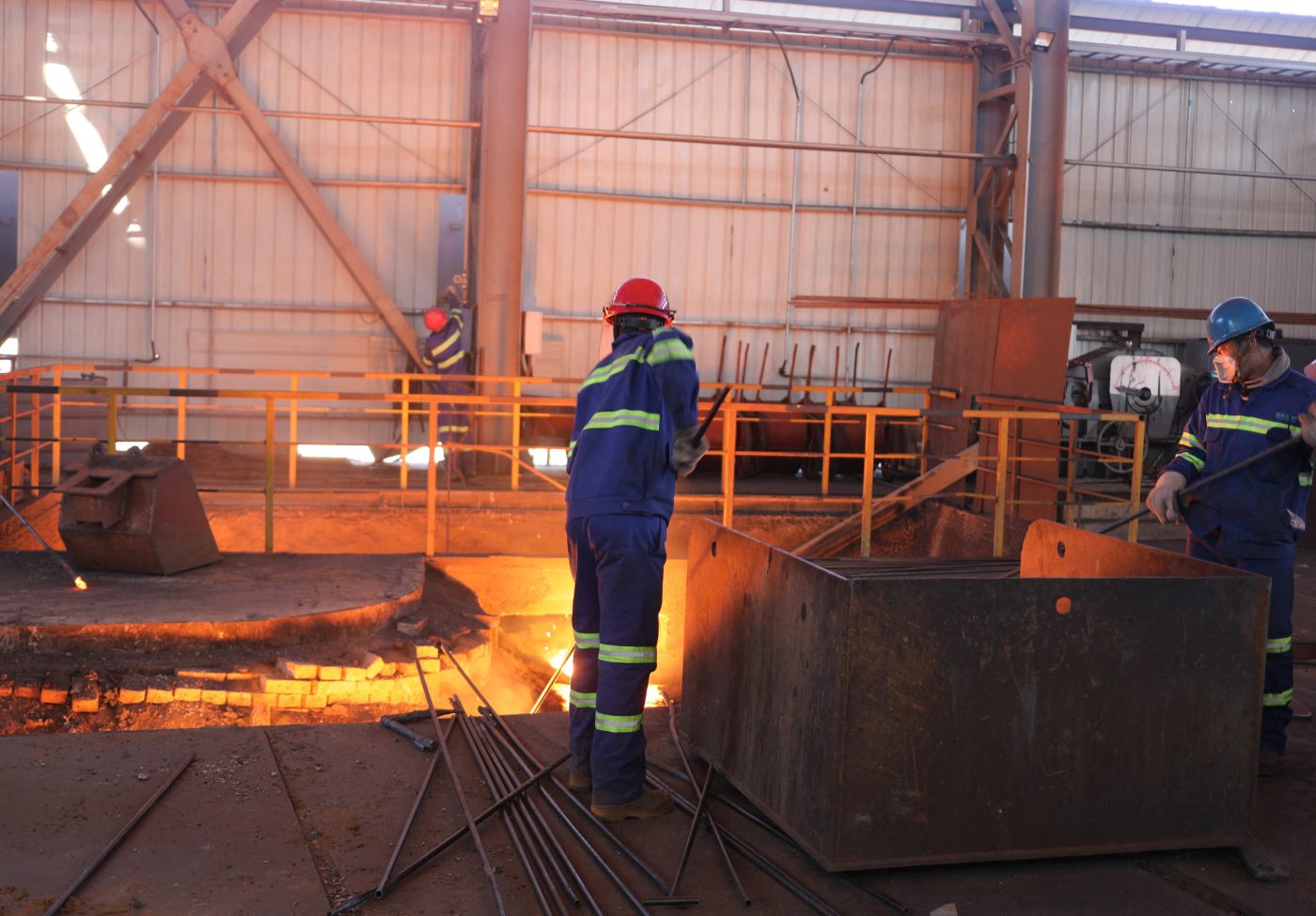
The company already owns a large steel plant in Manhize, central Zimbabwe. The investment is expected to double the facility’s capacity from 600,000 to 1.2 million tonnes per year. The plant, which began operating in 2024, was the driving force behind Zimbabwe’s eye-watering 1,500% growth in steel production in the first eight months of 2025.
While this appears to be good news for Zimbabwe’s struggling economy, there are concerns over the use of coal to power the country’s steel ambitions. This is at a time when less carbon-intensive methods of smelting are becoming increasingly viable, and an important asset for accessing highly regulated markets such as the European Union.
Could the country’s steel sector develop in a greener way?
A largely fossil-powered industry
Zimbabwe has a long history of producing steel, largely through blast furnaces fuelled by coal.
By 1980, the country was producing 800,000 tonnes of steel per year. But Zimbabwe has been deindustrialising since then and production fell to around 1,300 tonnes in 2018, according to data from the World Steel Association.
Apart from the Manhize plant, the other project at the centre of Zimbabwe’s efforts to revitalise its steel industry is the Palm River Energy Metallurgical Special Economic Zone. This USD 3.6 billion project was launched in early 2025 and is located in Beitbridge in the south of the country.
Spearheaded by another Chinese company, Xinganglian Holding Group, the SEZ is slated to produce 1 million tonnes of coal from a nearby mine, according to Mining Zimbabwe. It will include a vast facility to turn this coal into coke for steelmaking, mainly in blast furnaces. There will also be a coal-fired power station and electric arc furnaces, which emit less greenhouse gas than conventional blast furnaces. Once complete, the plan is for the SEZ is to produce 1 million tonnes of steel per year.
The core problem with coal
The Zimbabwe government, in its 2026-2030 national development strategy released in November 2025, positions the Dinson Manhize steel plant as central to its plans to add value to the steel industry. Meanwhile, in the 2026 national budget, the government states it will try to reduce the country’s USD 1.9 billion steel import bill, partly by locally sourcing steel products for major infrastructure projects.
Kudakwashe Manjonjo, just transition advisor at Power Shift Africa, says Zimbabwe needs the economic benefits from large-scale steel production.
“The use of coal – which is currently the vital energy in Zimbabwe’s steel industry – is the core problem we face,” Manjonjo tells Dialogue Earth. “Chinese investment in the country’s steel industry has increased demand for coal from the Hwange region,” he says. “The country has taken the developmental pathway that will eventually result in increased emissions.”
He says any future transition away from such a pathway will be extremely difficult, and notes the “environmental and social crises” in towns that produce coal. “The quality of life is just not as good.”
Obert Bore, programme manager at the Zimbabwe Environmental Law Association (ZELA), says Dinson is already producing steel at large scale using coal in Zimbabwe following the rise in demand for steel in the region. This is coming especially from South Africa where a large steel manufacturing company shuttered operations in 2025.
Bore says coal is abundant in Zimbabwe but by using more and more of it, the country is violating its commitment to reduce emissions by phasing down fossil fuels.
“In that way, we are not contributing enough to … reducing the use of coal as part of the fight against climate change,” he says.
Zimbabwe’s latest climate action plan, known as a Nationally Determined Contribution, under the Paris Agreement, commits it to reduce reliance on coal by increasing its renewable-energy capacity. It pledges a reduction in greenhouse gas emissions of 40% per capita by 2035.
Bore also notes Europe’s Carbon Border Adjustment Mechanism (CBAM), a tax imposed on goods with a large carbon footprint being imported into the EU market. CBAM came into full effect on 1 January 2026.
“If Zimbabwe is looking at exporting its steel to Europe and that steel is produced with coal, it will be much more expensive, hence not competitive in the EU market,” he says.
According to ZimTrade, iron and steel were Zimbabwe’s second most valuable export to the EU in 2022 and 2023, after tobacco.
Greening the steel industry
Shen Xinyi, a researcher at the Centre for Research on Energy and Clean Air, says Zimbabwe can “embed sustainability from the outset” as it grows its domestic steel industry. She says it can, like many African countries, marry industrial development to long-term climate goals.
According to Shen, countries like China that are already industrialised should contribute more to Zimbabwe and other Global South economies to support low-carbon industrialisation “through technology transfer, climate finance and capacity-building”.
She observes that Africa is one of the few regions experiencing sustained growth in demand for steel. While consumption in China and other major steel producers faces decline, and the issue of overcapacity.
“A growing market provides both profitability and the right conditions to deploy emerging low-carbon technologies,” she tells Dialogue Earth. “Zimbabwe could, therefore, benefit from leapfrogging to cleaner production pathways.”
Compared to blast furnaces, electric arc furnaces (EAF) can offer a much less emission-intensive route to making steel.
Green energy for green steel
For technologies such as EAFs to be truly low-carbon, a large supply of renewable energy is needed. That means investment in clean energy sources which, according to Bore, most African governments and the private sector have not sufficiently made.
Very few large industrial plants in Africa are powered by renewable energy, he says.
“Clean energy is … not readily available across Africa,” Bore says. “In some instances, it is not very reliable for large-scale production, hence you will need backup power, which is mostly in the form of fossils.”
Power Shift Africa’s Manjonjo says that while green sources of energy are often believed to be expensive to exploit, Zimbabwe, Zambia, South Africa and Namibia are blessed with an abundance of sun and wind resources.
Martin January, a mining engineer at the Zimbabwe School of Mining, notes that Dinson’s Manhize steel plant currently includes a 50-megawatt solar component and a 200-megawatt waste-gas recovery system under development.
“These energy choices lay the groundwork for future decarbonisation,” January says. “The country should focus on navigating the current development-climate dilemma rather than be constrained by it.”
Guiding investments
From 2021 to 2022, China introduced a series of policy documents, signalling its intention to promote greener overseas investment and trade.
“These documents indicate that the Chinese government recognises the importance of green investment, particularly given China’s role as a major manufacturing and steel-producing country,” Shen explains.
However, most of these policies are guiding frameworks, rather than legally binding regulations, she adds.
She points out that host countries like Zimbabwe therefore need “strong domestic standards, clear regulatory expectations and consistent enforcement to ensure all foreign investors – Chinese or otherwise – comply with green requirements.”
“With the right policies, African economies can develop competitive steel industries aligned with global decarbonisation trends instead of repeating the ‘pollute first, clean up later’ trajectory taken by many industrialised nations,” she says.
Manjonjo says Zimbabwe government policy “is simply that we need to produce more steel” and when the country got the Chinese investment, coal was the default fuel choice.
“The country does not have specific policy or regulation on steel production technologies,” he tells Dialogue Earth. “The current policy is very much development first.”