What’s Behind the Recent Silver Price Surge
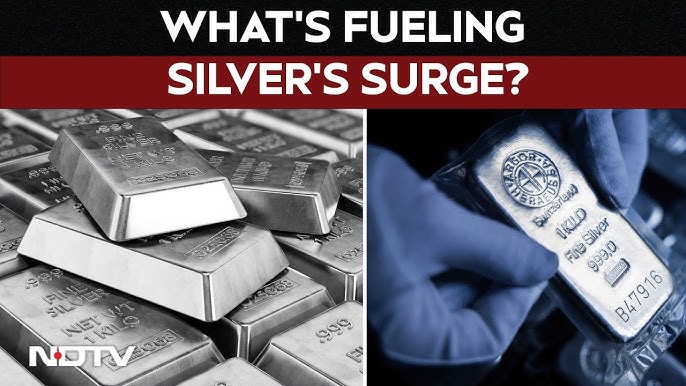
Silver has exploded to multi-decade highs—surpassing previous records and gaining dramatically in late 2025 and early 2026.
On January 13, 2026, silver was trading near $86/oz amid global market stress and investor demand for safe havens.
Key drivers include:
1. Structural Supply Deficits
Silver has experienced a multi-year supply shortfall, with demand regularly exceeding supply. Mine production has been relatively stagnant while consumption continues to climb.
2. Industrial Demand Explosion
Industrial use now accounts for well over half of total silver demand—especially in high-growth sectors like solar energy, electric vehicles (EVs), electronics, and AI data infrastructure, which all rely on silver’s unmatched electrical and thermal conductivity.
3. Investment & Safe-Haven Flows
With geopolitical uncertainty and expectations of lower interest rates, investors are flocking to precious metals as inflation hedges and portfolio diversifiers.
4. Inventory Tightness and Market Structure
Physical inventories in major trading hubs like London have plunged, leading to market conditions where immediate physical demand is outstripping available stock.
5. Policy & Regional Moves
Some countries are tightening export controls or stockpiling strategic metals, which can further tighten supply.
Price Outlook: Realistic Scenarios
1. Continued Rally Toward $100+
Many analysts and market participants see the price trending higher:
• Some forecasts peg silver above $100/oz in 2026 due to persistent deficits and robust industrial demand.
• Survey data shows a significant portion of retail investors expect silver to break this key milestone.
Bullish scenario drivers:
• Continued industrial demand growth (solar, EVs, electronics)
• Further geopolitical instability
• Acceleration of safe-haven investing
• Prolonged physical shortages
2. Volatility and Pullback
Even with a strong backdrop, the market could see sharp swings:
• Major financial institutions warn of continued volatility, not a steady climb, because tight supply can reverse if inventories are released or monetary conditions shift.
• Some forecasts predict a bullish first half of 2026 but growing uncertainty later.
Potential triggers for a pullback:
• Rising interest rates
• Improved mining output or increased recycling
• Release of stored inventories or supply chain changes
3. “Shortage” Mental Model vs. Actual Supply Reality
There’s a big difference between market tightness and a literal global shortage where silver disappears from the economy. Here’s how both might play out:
What Happens in a Worldwide Silver Shortage?
If silver supply truly can’t meet demand, several economic and industrial effects could unfold:
A. Industrial Consequences
• Industries that rely heavily on silver (especially solar panels, EVs, semiconductors) would face higher input costs.
• Some manufacturers might slow production or redesign products to reduce silver content.
B. Price Feedback Loops
• Prices rising far above typical levels (e.g., $150–$200+) could incentivize:
1. Increased recycling
2. Exploration and development of new mines
3. Substitution with alternative materials where technically feasible
C. Strategic Stockpiling
• Governments and large tech companies might hoard silver supplies to secure critical supply chains.
D. Market Dislocations
• Severe physical shortages could cause pricing mechanisms (like futures markets) to behave erratically, including market backwardation (higher spot than futures), as seen historically in tight markets.
However, a true global shortage where silver is unavailable would likely spur rapid adaptation and substitution, not a permanent depletion of use.
Alternatives to Silver in Industrial Use
If silver becomes prohibitively expensive or constrained, industries could increasingly turn to alternative metals or technologies. Each has its own limitations:
1. Copper
• Widely available, excellent conductivity
• Already in high demand (and facing its own supply pressure).
• Less conductive than silver and heavier—so not a perfect substitute
2. Aluminum
• Lightweight, relatively cheap
• Used widely in power transmission
• Less conductive than copper and much less than silver
3. Graphene & Advanced Materials
• Superior conductivity in lab settings
• Still niche and expensive to integrate at scale
4. Conductive Polymers & Alloys
• Used in niche electronics
• Typically don’t match silver’s performance for critical applications
5. Gold (for select electronics)
• Close second in conductivity
• Far more expensive than silver, limiting broader industrial use
Bottom line: Some alternatives exist, but most involve trade-offs in performance, cost, or scalability.
The Takeaway
Silver’s surge is real and rooted in fundamentals—a rare combination of tight physical markets, soaring industrial demand, and investor interest. Prices could continue higher if these conditions persist, but volatility and medium-term corrections are likely. A true “world shortage” would shake industries but also trigger substitution, recycling, and new supply responses rather than permanent paralysis.
Silver isn’t just a precious metal—it's a critical industrial metal in the world’s transition to renewable energy, electrification, and high-tech infrastructure. That dual role makes its price story uniquely complex and likely more durable than past precious metals rallies.
 7140
7140