Cloudflare Says the Modern Attack Cycle
In recent years, cybersecurity has entered a new and unsettling phase. Attackers are no longer relying primarily on manual techniques or slow reconnaissance.
Instead, sophisticated tools now allow cybercriminals to automate the entire lifecycle of an attack—from discovery to exploitation and even monetization.
According to the security company Cloudflare, the modern attack cycle has become fully automated, dramatically increasing both the speed and scale of cyber threats across the internet.
This shift represents a fundamental transformation in the threat landscape. Where once attacks required highly skilled hackers carefully probing systems for vulnerabilities, today automated bots can perform the same work continuously and at massive scale. Vulnerabilities are detected, exploited, and weaponized faster than organizations can often respond.
The automation of cyberattacks is reshaping how companies think about security, forcing defenders to adopt new strategies and technologies to keep up with increasingly intelligent threats. Understanding how the modern attack cycle works—and why it has become automated—is essential for organizations hoping to protect themselves in this evolving environment.
The Traditional Cyberattack Model
To understand how dramatic the change has been, it helps to consider how cyberattacks historically unfolded.
In the past, many attacks followed a relatively manual process. Skilled hackers would spend days or weeks conducting reconnaissance on a target organization.
They might scan networks, study software configurations, analyze employee behavior, or attempt to trick users through phishing emails.
Once vulnerabilities were identified, attackers would craft customized exploits to gain access to systems. Even after gaining entry, they often needed time to move through networks, escalate privileges, and extract valuable data.
This approach required expertise, patience, and careful planning. As a result, large-scale attacks were relatively rare, and attackers often focused on high-value targets such as banks, government agencies, or major corporations.
However, advances in automation, cloud computing, and artificial intelligence have fundamentally changed this model.
The Rise of the Automated Attack Cycle
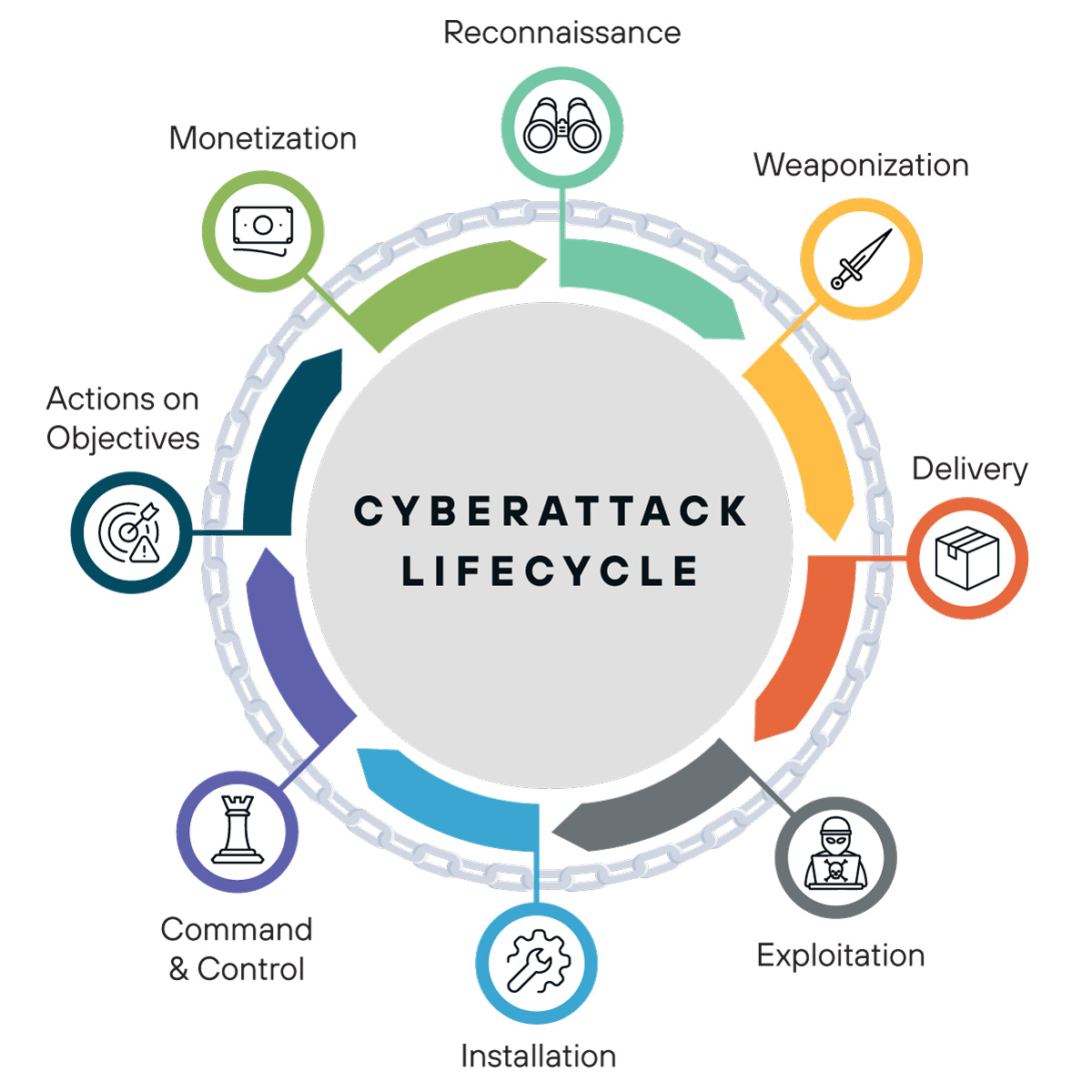
According to Cloudflare, the modern cyberattack lifecycle has evolved into a continuous automated process that runs constantly across the internet.
Rather than manually investigating individual targets, attackers deploy automated systems that scan millions of websites, servers, and applications simultaneously.
These systems identify potential weaknesses in real time and immediately attempt to exploit them.
Automation has drastically reduced the time between vulnerability discovery and exploitation. In many cases, attackers can identify and attack new vulnerabilities within minutes of them being publicly disclosed.
This rapid cycle makes it far more difficult for organizations to patch systems and respond before attackers strike.
The Stages of the Modern Automated Attack
Although attacks are now automated, they still follow a recognizable sequence. Each stage of the traditional attack lifecycle has been accelerated and scaled by automation.
1. Automated Reconnaissance
The first stage of any cyberattack involves gathering information about potential targets. In the automated era, attackers deploy large networks of bots that continuously scan the internet.
These bots search for exposed services, misconfigured servers, outdated software, and other weaknesses. Automated scanning tools can probe thousands of systems every second, mapping out the global attack surface.
Because many organizations rely on cloud infrastructure and public-facing applications, much of this information is accessible through automated scanning.
This constant reconnaissance allows attackers to maintain up-to-date databases of vulnerable systems.
2. Vulnerability Detection
Once reconnaissance tools identify potential targets, automated systems begin analyzing them for vulnerabilities.
These tools compare detected software versions and configurations against databases of known security flaws. When a match is found, the system flags the target for exploitation.
Modern vulnerability scanners can perform this process incredibly quickly. They can also test multiple potential weaknesses simultaneously, dramatically increasing efficiency.
In many cases, attackers integrate vulnerability detection with publicly available exploit frameworks, allowing them to move seamlessly from discovery to exploitation.
3. Automated Exploitation
The next stage is the actual compromise of the target system.
Automation allows attackers to launch exploitation attempts against thousands of systems at once. Scripts and bots deliver prebuilt exploit payloads designed to take advantage of known vulnerabilities.
If a system is unpatched or misconfigured, the exploit can grant attackers access within seconds.
These automated tools are often packaged into widely distributed exploit kits that can be operated even by relatively inexperienced criminals.
As a result, the barrier to entry for launching sophisticated cyberattacks has dropped significantly.
4. Post-Exploitation Automation
Once attackers gain access to a system, automation continues to play a role.
Scripts can automatically perform tasks such as:
• Installing malware
• Creating backdoor access
• Escalating privileges
• Mapping internal networks
• Extracting sensitive data
Some automated tools even attempt to move laterally through networks, searching for additional vulnerable systems within the same organization.
These capabilities allow attackers to expand their access quickly and maximize the impact of an intrusion.
5. Monetization
The final stage of the automated attack cycle involves turning stolen data or compromised systems into profit.
Automation also plays a major role here. Malware can automatically encrypt files for ransomware attacks, harvest credentials for sale on dark web marketplaces, or use infected systems as part of botnets.
In some cases, attackers deploy automated tools that continuously search compromised systems for financial data or other valuable information.
This ability to monetize breaches quickly and efficiently helps fuel the global cybercrime economy.
Why Automation Is Accelerating
Several factors have contributed to the rise of fully automated cyberattacks.
The Expansion of the Internet
The internet now connects billions of devices, including servers, smartphones, industrial systems, and Internet of Things devices. This enormous digital landscape provides attackers with countless potential targets.
Automation is the only practical way to scan and exploit such a vast environment.
Public Vulnerability Databases
Security researchers frequently publish details about newly discovered vulnerabilities in software systems. While this transparency helps defenders understand risks, it also provides attackers with valuable information.
Automated tools can monitor vulnerability databases and immediately launch scanning campaigns to find unpatched systems.
Cloud Computing Infrastructure
Cloud platforms have made it easier for attackers to deploy large-scale automated systems. With minimal cost, cybercriminals can launch scanning bots or exploitation frameworks across thousands of servers.
Ironically, the same technologies that allow businesses to scale quickly also allow attackers to scale their operations.
Artificial Intelligence
Artificial intelligence is increasingly being used to enhance automated attacks.
Machine learning systems can analyze network patterns, optimize scanning strategies, and identify vulnerabilities more efficiently.
AI can also generate more convincing phishing emails or automate social engineering attacks.
While defensive AI technologies are also improving, the arms race between attackers and defenders continues to intensify.
The Role of Bots in Modern Attacks
One of the most visible manifestations of automated cyberattacks is the widespread use of malicious bots.
Bots are automated programs designed to perform repetitive tasks on the internet. While many bots are legitimate—such as search engine crawlers—others are used for malicious purposes.
Malicious bots can perform activities such as:
• Credential stuffing attacks
• Distributed denial-of-service (DDoS) attacks
• Web scraping
• Vulnerability scanning
• Spam distribution
Companies like Cloudflare frequently report that a significant portion of internet traffic now comes from automated bots rather than human users.
This reality has forced organizations to develop sophisticated bot detection and mitigation technologies.
The Defensive Challenge
The automation of cyberattacks has created a difficult challenge for defenders.
Traditional security approaches often rely on manual investigation and response. However, when attacks occur at machine speed, human intervention alone cannot keep up.
Organizations must therefore adopt automated defenses capable of detecting and responding to threats in real time.
Security tools now increasingly incorporate:
• Automated threat detection
• Machine learning analysis
• Behavioral monitoring
• Real-time traffic filtering
Companies such as Cloudflare provide services designed to block malicious traffic before it reaches customer systems.
However, the effectiveness of these defenses depends on continuous monitoring and rapid response.
The Importance of Patch Management
One of the most critical defenses against automated attacks is timely software patching.
Because automated systems can exploit vulnerabilities almost immediately after they are disclosed, organizations must apply security updates quickly.
Unfortunately, patch management remains a major challenge. Many organizations operate complex systems that require careful testing before updates can be deployed.
Attackers are well aware of these delays and often exploit them by launching automated campaigns targeting newly disclosed vulnerabilities.
Reducing the time between vulnerability discovery and patch deployment is therefore essential.
The Human Factor
Despite the rise of automation, human behavior continues to play a major role in cybersecurity.
Phishing attacks, for example, still rely on tricking individuals into revealing passwords or clicking malicious links. Automated tools can send thousands of phishing messages simultaneously, increasing the likelihood that someone will fall victim.
Organizations must therefore combine technical defenses with employee training and awareness programs.
Educating users about cybersecurity risks can significantly reduce the effectiveness of automated social engineering attacks.
The Future of Cybersecurity
As cyberattacks become increasingly automated, the future of cybersecurity will likely involve greater reliance on automation as well.
Defensive technologies may include:
• AI-driven threat detection
• Automated incident response systems
• Predictive vulnerability analysis
• Adaptive network defenses
The goal is to create security systems capable of responding to threats at machine speed.
In many ways, cybersecurity is becoming an arms race between automated attackers and automated defenders.
Organizations that fail to adopt advanced defensive technologies may struggle to keep pace with rapidly evolving threats.
A New Security Mindset
The recognition that the attack cycle is fully automated requires a shift in how organizations approach cybersecurity.
Security can no longer be treated as an occasional project or compliance requirement. Instead, it must be an ongoing, proactive process integrated into every aspect of digital infrastructure.
Companies must assume that attackers are constantly scanning their systems and looking for weaknesses.
This mindset—often referred to as “assume breach” security—encourages organizations to design systems that can detect and contain intrusions quickly rather than relying solely on prevention.
Conclusion
The modern cyber threat landscape has changed dramatically. According to Cloudflare, the attack cycle that once required skilled hackers working manually has become a fully automated process operating continuously across the internet.
Automated reconnaissance, vulnerability detection, exploitation, and monetization now allow cybercriminals to launch large-scale attacks with unprecedented speed and efficiency.
While this transformation has increased the complexity of cybersecurity challenges, it has also spurred innovation in defensive technologies. Automated detection systems, AI-driven analysis, and advanced traffic filtering are helping organizations respond more effectively to machine-speed threats.
Ultimately, the automation of cyberattacks highlights a fundamental reality of the digital age: as technology evolves, both attackers and defenders adapt. The organizations that succeed will be those that recognize the scale of the challenge and build security strategies capable of operating at the same speed as the threats they face.
In an internet dominated by automation, cybersecurity itself must become automated—because human response alone is no longer fast enough.
 6594
6594