Case Study: Anthropic, Claude, and the Architecture of Responsible AI Innovation in the Anthropocene Era
I. Introduction: AI in the Age of the Anthropocene
The term Anthropocene describes the current geological era in which human activity significantly shapes the planet’s systems—economically, socially, and environmentally. In this context, artificial intelligence (AI) is not merely a technological breakthrough; it is a defining force of human impact. Among the companies shaping this era is Anthropic, creator of the large language model (LLM) family known as Claude.
Anthropic has positioned itself as a leader in responsible AI development, combining frontier-scale language modeling with an explicit focus on safety, alignment, and enterprise-grade deployment.
This case study explores the innovation behind Anthropic and Claude, the key players driving its exponential growth, its business model and partnerships, its cross-sector value creation, and the advantages, risks, and future outlook of the company and its flagship product.
II. Founding Vision and Key Players Behind Innovation
Anthropic was founded in 2021 by former researchers and executives from OpenAI, including siblings Dario Amodei (CEO) and Daniela Amodei (President). The founding team included experts in large-scale model training, AI safety, public policy, and reinforcement learning.
Core Innovation Principle: Constitutional AI
Anthropic introduced a methodology known as Constitutional AI—a training framework in which AI systems are guided by a structured set of principles (a “constitution”) rather than relying solely on human feedback. Instead of humans labeling massive datasets for alignment, Claude can critique and revise its own outputs based on predefined ethical guidelines.
This innovation addresses key safety challenges:
• Reducing harmful or biased responses
• Improving transparency in reasoning
• Scaling alignment as models grow more capable
In an era where AI capability has grown exponentially, aligning intelligence with human values is increasingly critical.
III. Exponential Growth Patterns and Investment Momentum
Anthropic’s growth mirrors the broader acceleration of generative AI adoption following the 2022–2023 LLM boom. Several factors contributed to its rapid expansion:
1. Strategic Capital Investment
Anthropic secured multibillion-dollar funding from major corporate investors, including:
• Amazon
• Google
These investments were not just financial—they were infrastructure partnerships. Access to large-scale cloud computing through Amazon Web Services (AWS) provided the computational backbone needed to train and deploy Claude at scale.
2. Enterprise AI Demand
Corporations across industries sought AI copilots for:
• Automating documentation
• Code generation
• Customer service enhancement
• Knowledge retrieval
• Strategic analysis
Anthropic focused early on enterprise-grade deployment rather than purely consumer applications.
3. Emphasis on Safety and Trust
As AI regulatory conversations intensified globally, companies began prioritizing partners emphasizing safety and explainability. Anthropic’s brand became associated with “responsible scaling,” differentiating it in a crowded LLM marketplace.
IV. Business Model and Revenue Architecture
Anthropic’s business model centers on API-based access, enterprise licensing, and strategic cloud integrations.
1. API Usage Model
Organizations integrate Claude through API calls, paying based on token usage (input and output text volume). This model allows scalability from small startups to multinational enterprises.
2. Enterprise Contracts
Large corporations license Claude for:
• Secure internal knowledge assistants
• Customer-facing chat systems
• Code generation environments
• Document review and compliance automation
These contracts often include data isolation and compliance customization.
3. Cloud Platform Integration
Claude is deeply integrated into
This hybrid model—combining infrastructure partnerships and API monetization—creates recurring revenue streams and deep corporate embedding.
V. Cross-Sector Value Creation
Anthropic’s Claude adds value across a diverse range of industries. Below is a sector-by-sector analysis.
A. Technology Sector
Applications:
• Code generation and debugging
• Software documentation automation
• Cybersecurity analysis support
• DevOps workflow assistance
Claude accelerates development cycles by generating boilerplate code, reviewing logic, and explaining technical documentation.
Value Added:
• Reduced development time
• Improved knowledge transfer
• Lower onboarding friction for new engineers
B. Finance and Banking
Applications:
• Regulatory document analysis
• Risk modeling assistance
• Customer service automation
• Fraud pattern explanation
Financial institutions use LLMs to interpret vast regulatory texts and summarize risk exposure.
Value Added:
• Faster compliance review
• Reduced manual paperwork
• Enhanced decision support
Challenges:
• Data privacy concerns
• Need for deterministic reliability
C. Healthcare
Applications:
• Medical documentation drafting
• Research summarization
• Clinical trial data interpretation
• Administrative workflow automation
Claude assists clinicians by summarizing patient notes and academic research, freeing time for direct care.
Value Added:
• Reduced administrative burden
• Faster access to updated research
• Improved information synthesis
Risks:
• Hallucination in clinical contexts
• Strict regulatory compliance requirements
D. Education
Applications:
• Personalized tutoring
• Curriculum generation
• Feedback automation
• Academic research assistance
Claude can generate practice problems, explain complex topics, and adapt explanations to various learning levels.
Value Added:
• Democratized access to tutoring
• Scalable personalized learning
• Enhanced accessibility for students with disabilities
Concerns:
• Academic integrity issues
• Over-reliance on AI-generated content
E. Logistics and Supply Chain
Applications:
• Route optimization explanation
• Contract review
• Inventory documentation automation
• Scenario modeling
Claude enhances decision support by analyzing complex operational datasets and summarizing trends.
Value Added:
• Faster scenario planning
• Improved communication across departments
• Reduced paperwork overhead
F. Agriculture (Farming)
Though less visible, AI language systems provide value in agricultural sectors through:
• Crop planning advisories
• Weather data interpretation
• Equipment documentation assistance
• Regulatory compliance guidance
When integrated with IoT farm sensors and analytics platforms, AI copilots assist farmers in making data-driven decisions.
Value Added:
• Increased operational efficiency
• Enhanced sustainability practices
• Reduced knowledge barriers for small-scale farmers
VI. Advantages of Anthropic and Claude
1. Scalable Intelligence
Claude processes vast volumes of text rapidly, improving productivity across knowledge-intensive roles.
2. Safety-Centric Approach
Constitutional AI enhances reliability and reduces harmful output risk.
3. Enterprise Alignment
Focus on compliance, data isolation, and structured deployment makes Claude enterprise-friendly.
4. Knowledge Amplification
Claude augments rather than replaces workers in many contexts—acting as a copilot.
VII. Disadvantages and Challenges
1. Hallucination Risk
Like all LLMs, Claude may generate plausible but incorrect information.
2. Cost of Infrastructure
Training and inference at scale require immense computational resources, increasing operational costs.
3. Regulatory Uncertainty
Governments worldwide are developing AI governance frameworks, potentially affecting deployment flexibility.
4. Workforce Displacement Concerns
While augmentative, AI tools may automate entry-level roles in writing, customer support, and analysis.
VIII. Competitive Landscape
Anthropic operates in a competitive frontier AI space alongside firms such as:
• OpenAI
• Google DeepMind
• Meta
Differentiation strategies include:
• Emphasis on safety and alignment
• Enterprise cloud integration
• Transparent AI governance messaging
IX. The Future Outlook for Anthropic and Claude
1. Increased Multimodal Capabilities
Future versions of Claude are expected to integrate deeper multimodal reasoning (text, images, data tables, possibly video).
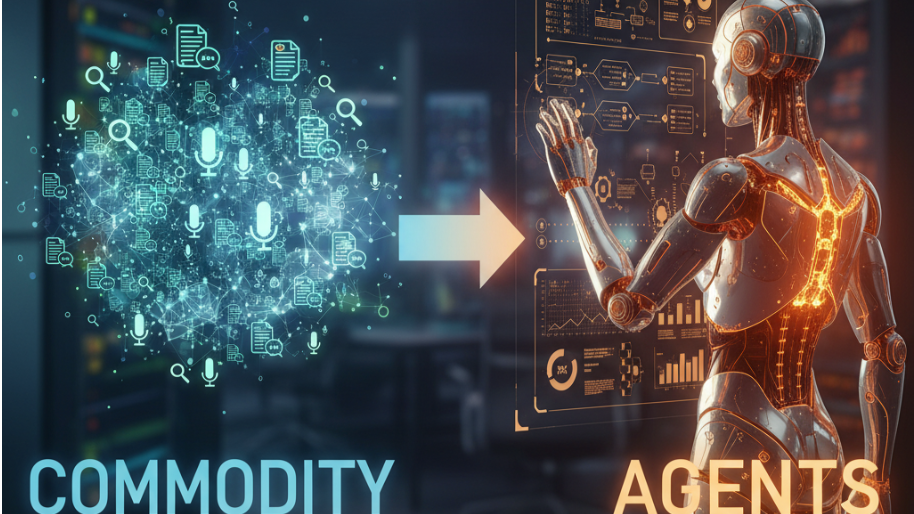
2. Agentic Systems
Claude may evolve into autonomous “AI agents” capable of executing multi-step workflows rather than just generating responses.
3. Regulatory Partnerships
Anthropic is likely to engage with policymakers to shape global AI governance.
4. Vertical-Specific Models
Industry-tuned Claude variants (finance-grade, healthcare-grade, education-grade) may become standard.
X. Strategic Risks and Opportunities
Opportunities
• Expansion into global enterprise markets
• Public sector contracts
• AI safety leadership credibility
• Integration with robotics and IoT systems
Risks
• Intensifying competition
• Hardware bottlenecks
• Ethical backlash
• Overhyped expectations
XI. Conclusion: Claude in the Anthropocene
Anthropic’s emergence reflects a broader transformation in the Anthropocene: humanity is now building systems that augment cognition at planetary scale. Claude represents a shift from static software tools to adaptive reasoning systems capable of assisting across industries.
Its value lies not only in automation, but in amplification—enhancing human productivity, reducing friction in knowledge work, and supporting complex decision-making. Yet with that amplification comes responsibility: ensuring fairness, transparency, safety, and equitable access.
If Anthropic succeeds in balancing capability growth with safety alignment, Claude may become not just a product—but a foundational infrastructure layer of modern knowledge economies.
The future of Anthropic will likely be shaped by its ability to maintain trust, innovate responsibly, and scale sustainably in a world increasingly defined by human-AI collaboration.
 6610
6610