
NewStori...First & Foremost A Quality News Outlet!

A nationwide strike in protest against possible pension reforms crippled air and rail traffic in Belgium on Monday and many schools remained shut.
Almost half of all flights at Brussels airport were cancelled as luggage handlers, security and other ground staff went on strike, while national train operator NMBS said it was running only a limited number of trains throughout the country.
Public transport in the capital Brussels was also heavily impacted.
Schools were shut with tens of thousands of teachers expected to join a national rally in Brussels to protest pension reforms that are being discussed by parties trying to form a new government following the June 2024 election.
Government formation talks have dragged on for months without any real progress, as the five parties at the table continue to disagree on government finances and the contested pension reforms.
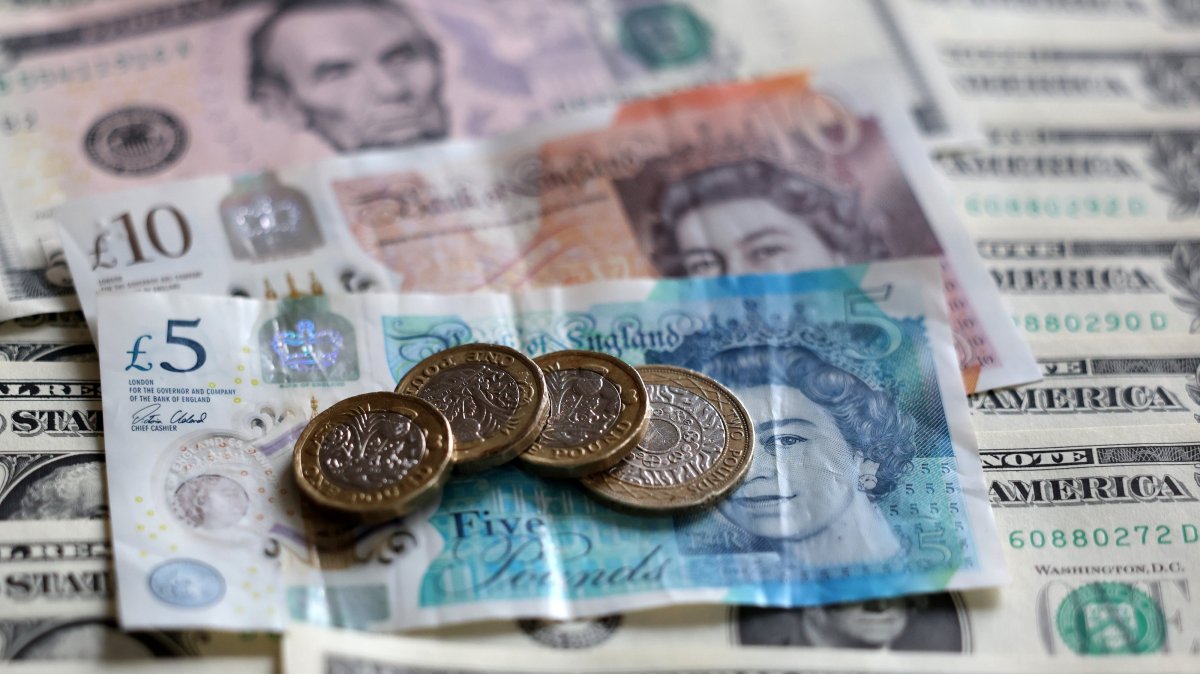
The U.K. faces blow after blow from Labour's missteps, economic decline, the rising China threat and ongoing rape scandals.
Before the elections in July, it was said that the gross domestic product (GDP) in the U.K. would grow by only 4.3% between 2007 and 2023, whereas it had grown by 46% in the previous 16 years and that the current growth rate was the lowest since 1826. In 1826, Robert Jenkinson, 2nd Earl of Liverpool, was the prime minister. No Englishman has surpassed his tenure as PM, which spanned from 1812 to 1827. Although the Napoleonic Wars were eventually won, the country faced severe economic and social problems in the period following the war. The famous Peterloo Massacre also occurred during that period.
The point the Tories have brought the economy to has made us think about even such old and serious events. In my article published in Daily Sabah on Sept. 25, 2023, I touched on it a bit and conveyed information such as “Britain’s net debt has exceeded 100% of its GDP for the first time since 1961.” But despite all this, when the Tories handed over power to Labour, the fastest-growing country in the G-7 was also the U.K.
But according to the latest figures, economic growth in the U.K. has almost died out and many experts expect a recession in 2025. The U.K. is now the second slowest growing economy in the G-7, after Italy by a narrow margin. GDP fell 0.1% in October. Reuters ran the headline “U.K. economy suffers first back-to-back declines since 2020” on Dec. 13. Liz McKeown, Director of Economic Statistics at the Office for National Statistics, said: “The economy was weaker in the second and third quarters of this year than our initial estimates...”
Therefore, it can be argued that the course is worse than expected and that, apart from the reasons from the past, Labour’s mistakes also played a part. So much so that in his article in late December, Harvey Jones of the Express arguably listed the “20 horror mistakes” that Rachel Reeves made in 2024. Not to mention broken promises such as not raising taxes...
On the other hand, it is difficult to say that this government can take a game-changing step regarding Brexit and the rise of China, which will effectively solve the problems in the economy. Many publications and analyses have been put forward to date that Brexit has done more harm than good to the British economy. Due to the disappointment that has occurred, it has been stated in polls for years that if a referendum were to be held again, the Remainers would win.
Chinese breaking blow
As for China ... Since the Chinese factor is generally not brought to mind when assessing the situation in the British economy, a few reminders may be useful. Economics Help published an analysis in 2014 that discussed China’s impact on the British economy. It noted that China’s growing demand for oil and raw materials had increased raw material prices and led to inflation. It also stated that China had accelerated the relative decline in the U.K.’s manufacturing sector, which began in the 1980s and that British firms were no longer able to compete with Chinese firms due to rising labor costs. Furthermore, it was determined that when the decline in manufacturing was combined with the increase in British imports from China, this also led to a current account deficit and a worsening of the trade balance.
Al Jazeera wrote before the 2024 elections that the poor performance of the British economy was primarily related to its dismal record in productivity growth. The House of Commons also published a report on July 16, 2024, signed by Daniel Harari, CEO of Lectra, titled “Low growth: The economy’s biggest challenge,” where the weakness in productivity growth was also emphasized. In short, it can be said that the leading problem in the British economy is related to manufacturing and China plays a role in this.
Almost exactly one year before this analysis, on July 14, 2023, we learned that “China has penetrated every sector of the U.K. economy” and that the U.K.’s response to the threat posed by China was “completely inadequate” at a parliamentary panel held in London. Three days earlier, the deputy prime minister at the time, Oliver Dowden, had told the BBC, “China is the top threat to U.K. economic security.”
It seems that the problems are deep-rooted. As of the end of 2024, there is a Labour government that has made things worse than they started and has quickly broken some of its promises. The threat from China is growing, and Keir Starmer doesn’t seem to be able to do much about it for now apart from “kowtowing.” At the end of our aforementioned article in 2023, we stated that Labour has many flaws and said, “Labour is not winning; the Tories are losing.” In just half a year, they have shown many of their flaws and that they are not really winners. According to a YouGov poll at the beginning of the year, just over half of the public think that they are an “incompetent” and “dishonest” government.
Shadow of rape scandals
As if that weren’t enough, another of the horrific rapist scandals that have been escalating in the U.K. for a long time has been occupying the agenda since December, increasing pessimism. The gang of rapists who operated between 1997 and 2013 and abused around 1400 girls, ranging from as young as 11, shocked people. Elon Musk also addressed the issue and wrote the following lines, directing the arrows to the U.K. prime minister: “In the U.K., serious crimes such as rape require the Crown Prosecution Service’s approval for the police to charge suspects. Who was the head of the CPS when rape gangs were allowed to exploit young girls without facing justice? Keir Starmer, 2008-2013.”
Keir Starmer has previously been criticized for not doing what was necessary in the case of Jimmy Savile, one of the most infamous pedophiles in Britain. On March 22, 2021, Andrew Pierce, a famous British journalist, implied that Starmer opposed an independent investigation into the VIP pedophile ring to protect Labour deputy leader Tom Watson from criticism. In its April 20, 2023 headline, the Daily Mail also claimed that Starmer opposed deporting rapists from the country.
According to Rape Crisis, "69,184 rapes were recorded by police between July 1, 2023 and June 30, 2024. And as of June 30, 2024, charges had been brought in just 2.7% of these cases." So the issue of rape and combating rapists is abysmal in the U.K. Add to that Starmer's dark past and the cases could seriously weigh against the government.
If the mistakes and minuses pile up rapidly and instead of the economy, the rape cases and the number of criminals who get away with it, along with the influence and gains of China, which the British see as enemy No. 1, continue to grow, Labour could suffer a heavy defeat in the next election. Indeed, claims that Starmer will not be able to complete 2025 as prime minister and that someone else is being sought within Labour to replace him are already making their way into the media. This is unlikely, at least for this year. But the fact that such a thing can be discussed in such a short time says a lot.