
NewStori...First & Foremost A Quality News Outlet!
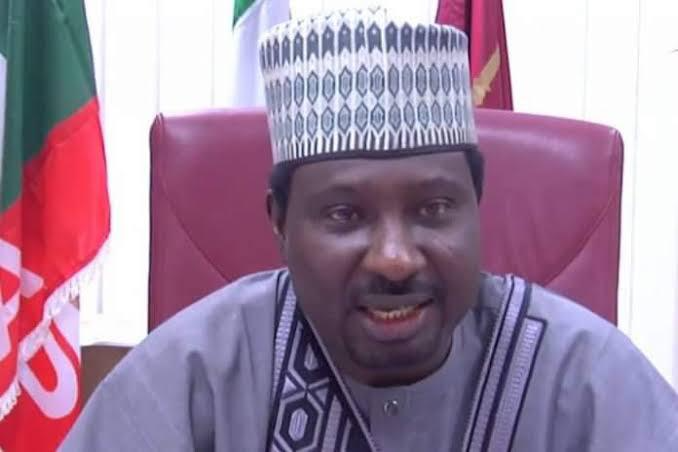
Deputy senate president, Senator Jubril Barau and the minister of Agriculture and Food Security, Senator Abubakar Kyari have declared that the reforms in the agriculture sector by President Bola Tinubu are producing the desired results.
The duo spoke at an agriculture and human capital development empowerment programme organised by the senator representing Kwara Central, Salihu Mustapha, in Ilorin, the Kwara State capital.
Barau said agriculture and human capital development are key areas for national development.
Senator Mustapha distributed empowerment tools and materials to over 2,500 constituents in Ilorin.
At the event tagged, “Alubarika 1.0 Agricultural and Human Capital Development Empowerment Programme” and held at the Lower Niger River Basin Development Authority’s premises in Ilorin, Barau said there is no need to waste much time talking about the importance of agriculture to every society. Agriculture is the sine qua non to survival of any society.
“It is the foundation of any society because without food, no life. No wonder, the Senate decided to pick Mustapha as its Agriculture Committee chair.
He is an outstanding person and a party leader that knows how to go about it.
“We have all decided to come here and share this moment with our brother, Senator Saliu Mustapha because of this great empowerment programme for constituents in the area of agriculture and human capital development.
“These are key areas that are very important to our national development “Because we don’t need to waste much time talking about the importance of agriculture in every society. Agriculture is sine qua non to the survival of every society because without food no life.
“And this is a cardinal programme of this administration and the renewed Hope of Mr President to provide food for all.
“No wonder the constituents decided to pick Saliu Mustapha, who is an outstanding person and party leader in this country.
“He is a very friendly human being, industrious and peaceful, who connects with everybody in the Senate. In fact, you’ve done the right thing by electing him.
“All the time he’s going to speak on the floor of the Senate, it’s about what is going to come to Kwara,” Barau said
In his address, Kyari said the ongoing reforms initiated by President Tinubu on food security were working.
He said, “We have seen that food is not only available, but the prices are gradually becoming affordable.
“That is to show that the president is working for the best interest of all Nigerians. I would commend my partners in the Federal Ministry of Agriculture and Food Security for doing well and being alive with the aspiration of the president.”
Earlier, Senator Mustapha said his empowerment scheme aligned with Tinubu’s Renewed Hope agenda, adding that, “we took time to train people interested in maintaining, repairing and restoring solar panels.”
Mustapha said the empowerment was meant to make the beneficiaries, who included market women, farmers, artisans and trade associations, to become self-reliant.
He said apart from the physical empowerment materials, the beneficiaries had been trained and certificated on how to use the tools and carry out their trade as entrepreneurs.
Mustapha said: “Today’s programme is just a symbolic one to flag off what we intend to do with most of our people we have trained.
“This time around, we decided that it is not only about giving out sewing machines or giving out things to people and they will not value it.
“We decided to put them through a series of programmes and training. In fact, we are missing out on one vital aspect. Everywhere you go now, you’ll see solar streetlights.
“We took time to train our indigenes who are interested in learning to maintain, to repair and to install solar panels.
“The most fascinating part was when I came during a training exercise and I saw a lot of women who were part of it and I asked, ‘in our community here that I thought was conservative for women to climb roof and poles?’
“I saw them in their overall, they are fully trained now on how to install, repair and maintain solar inverters. All of them are here too and they will get their working tools.
“Most of the people you see here under the canopies are not just political spectators, these are carefully chosen beneficiaries who have gotten through training. We are not holding a political rally or jamboree here.”
Apart from the prior entrepreneurial training and certification of the beneficiaries by the lawmaker, empowerment materials distributed during the event which was well attended by dignitaries and beneficiaries, included 250 deep freezers, tricycles, 100 live cows, 400 grinding machines, eight tractors for all the local governments in Kwara Central, vehicles, gas powered oven with cylinders, 400 irrigation machines, full university scholarship for 200 students, various food stuffs, fertilizers and farm inputs and power transformers among others.
Among the dignitaries at ceremony were the deputy senate leader, Senator Lola Ashiru (Kwara South); senate chief whip, Mohammed Monguno; chairman, Senate Committee on Banking, Insurance and Other Financial Institutions, Senator Adetokunbo Abiru; national secretary of the All Progressives Congress (APC), Senator Ajibola Basiru; Chief Imam of Ilorin, Muhammadu Bashir, Emir of Ilorin, Sulu Gambari, represented by Modibo Sulu Gambari and Senator Aminu Iyal Abass.
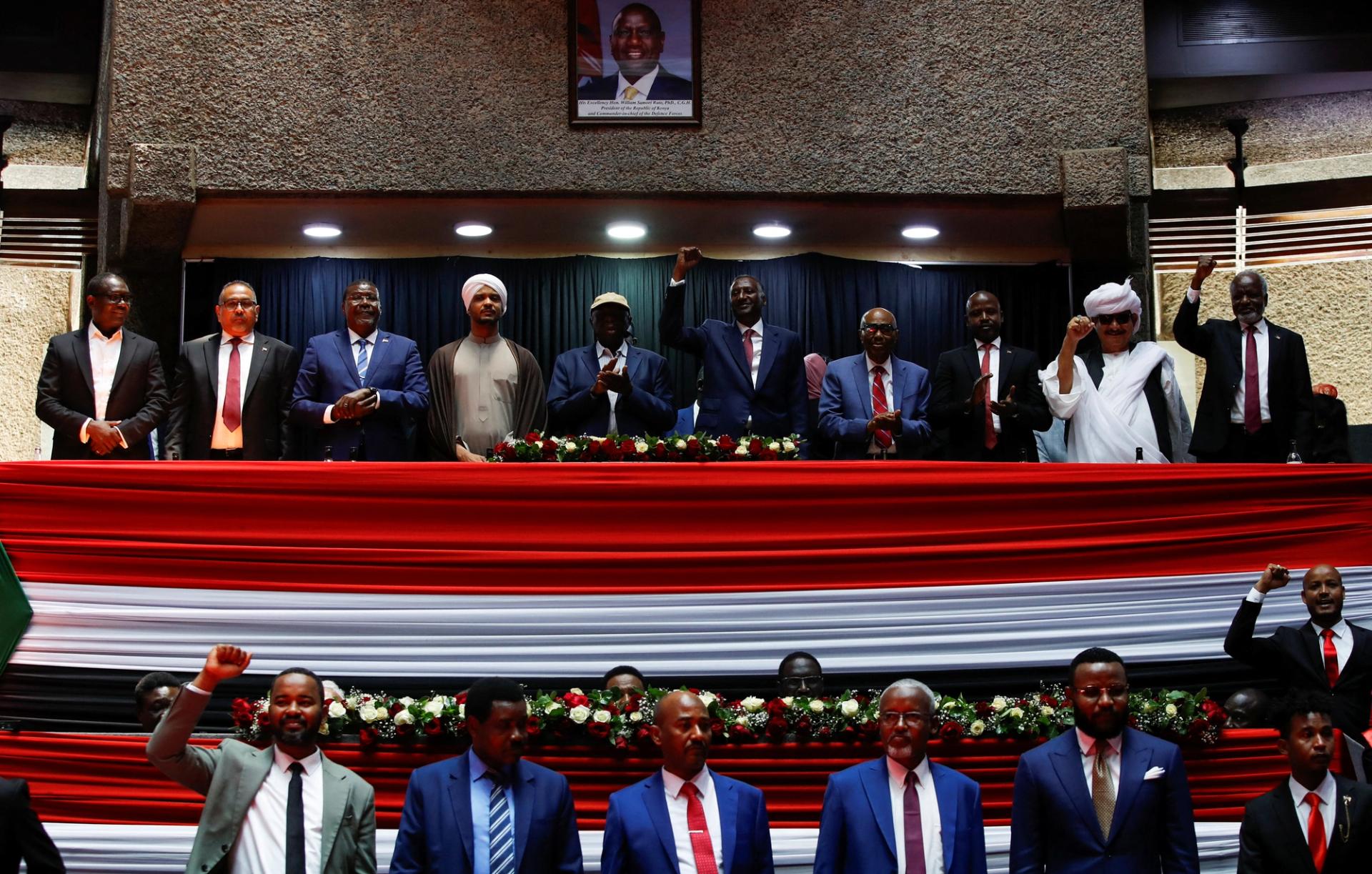
Kenya’s tea exporters voiced concern about potential blowback from Sudan, a key market for the country’s biggest commodity, after the Rapid Support Forces paramilitary held a symbolic political meeting in Nairobi this week.
The Sudanese government described Kenya’s hosting of RSF, the group which its forces have been fighting in a civil war since March 2023, as “an act of hostility against the Sudanese people,” vowing to take “all necessary measures to redress the balance.” On Thursday it recalled its ambassador to Kenya in protest.
In Kenya, the diplomatic spat has raised particular concern in the tea industry. Sudan ranks among the top 10 markets for Kenyan tea, Nairobi’s biggest export and leading foreign exchange earner. Sudan, at number seven, is the only African nation in a list topped by Pakistan, Egypt, and the UK. Several tea traders in the port city of Mombasa told Semafor that they feared a standoff could mean a decline in exports to Sudan, impacting trade that has already taken a major hit since the start of the war.
With tea exports accounting for around 23% of Kenya’s foreign exchange earnings, a significant decline could have a knock-on effect on the country’s economic growth. “Sudan is one of the biggest buyers of Kenyan tea, so a breakdown in relations could easily become an economic problem,” Ian Mwangi, a Nairobi-based trade consultant, told Semafor. He said it’s unlikely Sudan will impose import restrictions but thinks Kenya needs to protect the sector from any potential shock. “The war highlighted the need to unlock non-traditional markets, which the government has been working on…they’ll need to double down on this strategy to cushion the sector.”
The Kenyan trade ministry did not immediately respond to a request for comment.
The RSF had billed Tuesday’s event — attended by dozens of delegates including the group’s deputy commander, the brother of RSF leader Mohamed ‘Hemedti’ Dagalo — as a meeting to sign a charter establishing a parallel “government of peace and unity.” But the signing itself was called off at the last minute.
The meeting sparked sharp criticism domestically, with opposition Kenyan lawmakers warning of global repercussions. In January, the Biden administration accused the RSF of committing genocide and imposed sanctions on Hemedti.
But Kenya’s foreign affairs minister defended the decision to host RSF, saying it sought to provide “non-partisan platforms to conflict parties to seek resolution,” in line with its broader peacekeeping efforts. Kenya has traditionally been involved in regional peace missions and negotiations, including in DR Congo and South Sudan. Cameron Hudson, a senior fellow at the Washington-based Center for Strategic and International Studies think tank, however, told Semafor that its perceived backing of the RSF “undermines Kenya’s claim as a regional peacemaker.”
The diplomatic dispute between Sudan and Kenya came as fighting between the Sudanese Armed Forces and the RSF escalated in Sudan: At least 61,000 people have died so far, according to researchers, with a further 11.8 million displaced. The UN, which has described the war as the world’s “forgotten” conflict, this week asked donors for $6 million to ease the country’s growing hunger crisis.
Kenyan tea exports to Sudan fell by nearly 74% in the year to March 2024, pushing revenues down from $18.6 million the previous year to just $5 million. But in recent months Kenya had observed a “gradual recovery” in shipments to Sudan, according to the Tea Board of Kenya. Tea exports to Sudan in October last year stood at 1.6 million kg, compared to 1.3 million in the same month in 2023.
“We’re worried this turnaround in one of our key markets might not [now] be sustained,” John Mwashumbe, a trader at Mombasa-based trading firm Chai Poa, told Semafor, referring to the fallout over RSF.
Kenya’s hosting of the RSF at a government-owned convention centre is the latest in a series of moves that have heightened scrutiny of the country’s foreign policy. In November, Ugandan opposition leader Kizza Besigye was abducted in Nairobi, sparking widespread outrage from rights groups and citizens of both countries. A month earlier, four Turkish nationals were abducted and later repatriated to Turkey, with the UN among other organizations raising concerns. The hosting of M23 rebel group leaders in Nairobi in 2023 for the formation of a political military alliance also led to tensions with DR Congo.
In this case, it is tea farmers and traders who could feel the pinch. Tea is integral to Kenya’s economy: In the first 10 months of 2024 alone, the country earned about $1.2 billion from tea exports. The diplomatic row creates new uncertainty in a market that was already feeling the impact of Sudan’s civil war.
Said Ali, a broker at Mombasa-based tea trading firm Sharan Teas, thinks that any potential economic impact on the sector would be offset in the long run by growth in new export markets. As of February 2024, Kenya shipped tea to 58 export destinations, compared to 48 a year earlier. “It’s a concern, but we’ve been seeing strong growth in markets like Chad and South Sudan,” he said. “Even in traditional markets like the UK and India, demand for Kenyan tea has remained strong.”