
Why Nobody Gets Promoted for Simplicity
In theory, organizations admire simplicity. Executives talk about the importance of clear thinking, streamlined processes, and elegant solutions. Leaders often praise the idea that the best ideas are the simplest ones. Yet inside many companies, the opposite dynamic quietly dominates: complexity gets rewarded.
Employees who build complicated systems, produce dense presentations, and introduce elaborate processes often appear more valuable than those who simplify. Meanwhile, individuals who remove unnecessary steps, eliminate redundant features, or clarify confusing strategies may receive less recognition—even though their contributions often generate the greatest long-term value.
This paradox is sometimes summarized by a blunt observation: nobody gets promoted for simplicity.
The phrase reflects a deeper problem in modern organizations. While simplicity improves productivity, clarity, and user experience, the internal incentives of many institutions unintentionally reward complexity instead.
Understanding why this happens requires examining how organizations measure impact, how humans perceive effort, and how corporate incentives shape behavior.
The Visibility Problem
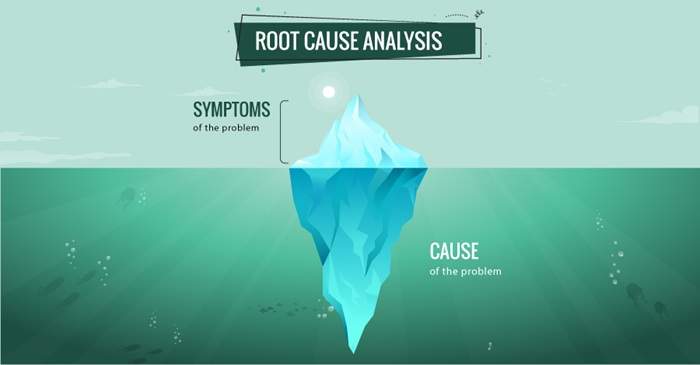
One of the biggest challenges facing simplicity is that it is often invisible.
When a team introduces a complex new system, the change is obvious. New tools appear, processes multiply, and employees spend time learning unfamiliar workflows. The effort involved in building and deploying the system is highly visible, making it easy for leaders to recognize the work that went into it.
Simplicity, by contrast, often looks like nothing happened at all.
Imagine a manager who reduces a ten-step approval process to three steps. The result is faster decision-making and less frustration for employees. But because the change removes work rather than adding it, the effort behind the improvement may be overlooked.
The outcome is paradoxical: the more effective the simplification, the less noticeable it becomes.
In environments where visibility influences promotions and recognition, employees may gravitate toward projects that create visible complexity rather than invisible simplicity.
Complexity as a Signal of Effort
Another reason complexity thrives in organizations is that it acts as a signal of effort and expertise.
People often associate complicated work with intelligence and diligence. Long reports, technical jargon, and intricate diagrams can create the impression that a problem has been analyzed deeply.
In reality, complexity does not always indicate deeper thinking. Sometimes it reflects the opposite: unclear reasoning expressed through convoluted explanations.
However, human psychology tends to reward signals that appear sophisticated. A complicated strategy may feel more impressive than a simple one, even when the simple approach is more effective.
This bias can influence how managers evaluate employees. Individuals who present complex analyses or introduce elaborate frameworks may appear more knowledgeable, even if their solutions ultimately make systems harder to use.
The Incentive Structures of Large Organizations
Organizational incentives also play a major role in encouraging complexity.
Many companies evaluate employees based on the scope and scale of the projects they manage. Launching new initiatives, introducing new tools, or expanding processes can demonstrate activity and ambition.
Simplifying existing systems often produces the opposite effect. It removes components, reduces processes, and shrinks the apparent size of a project.
From a career perspective, expansion can feel safer than reduction.
For example, adding new reporting requirements may create measurable outputs—more reports, more metrics, more dashboards. Eliminating those requirements may improve efficiency but produce fewer visible artifacts.
In performance reviews, the employee who built the reporting system may appear to have done more work than the one who removed it.
The “Complexity Bias” in Corporate Culture
Many organizations unintentionally cultivate what could be called complexity bias—a cultural preference for elaborate solutions over straightforward ones.
This bias appears in various forms:
• Overly complicated product roadmaps
• Excessive internal documentation
• Multi-layered approval processes
• Dense strategy presentations
• Expanding management structures
Over time, complexity accumulates. Each new process or tool may seem reasonable in isolation, but collectively they create friction across the organization.
Companies often discover this problem only after productivity declines or employees become overwhelmed by bureaucratic systems.
Ironically, the individuals who try to reduce this complexity may struggle to receive recognition because their work removes visible structures rather than building them.
The Career Risk of Simplification
Simplification can also be risky from a career standpoint.
Eliminating processes or reducing systems can create the perception that certain roles are no longer necessary. If a manager simplifies a workflow so dramatically that several steps disappear, colleagues may question why those steps—or the people managing them—were needed in the first place.
This creates an uncomfortable dynamic: simplifying systems may threaten existing power structures.
As a result, some employees avoid proposing simplifications that might disrupt organizational hierarchies or reduce the scope of certain teams.
Instead, complexity becomes a safer strategy. Adding new layers rarely threatens existing roles, while removing them might.
The Illusion of Control
Complex systems can also give leaders the illusion of greater control.
Detailed processes, extensive reporting, and multiple approval layers create the impression that risks are being managed carefully. Managers may feel reassured when they can monitor numerous metrics and checkpoints.
However, excessive complexity often produces the opposite effect. Too many controls slow down decision-making and obscure the most important information.
Simplified systems, by contrast, require trust and clarity. They depend on strong principles rather than endless procedures.
Because trust can feel riskier than control, organizations sometimes default to complexity as a protective mechanism—even when it reduces effectiveness.
Simplicity in Product Design
The tension between complexity and simplicity is especially visible in product development.
Many successful technology companies have built their reputations on simplicity.
Products that feel intuitive and elegant often achieve widespread adoption because users do not need extensive training to understand them.
For example, companies like Apple have long emphasized minimalism and clarity in product design. Devices and software are carefully crafted to remove unnecessary steps and reduce cognitive load for users.
However, achieving this level of simplicity requires enormous effort behind the scenes. Engineers and designers must solve complex technical challenges in ways that appear effortless to the user.
Inside organizations, the work required to achieve simplicity may not always be recognized because the final product appears so straightforward.
The Difficulty of True Simplicity
Part of the problem is that genuine simplicity is extremely difficult to achieve.
Removing complexity requires deep understanding of a system. To simplify effectively, a person must identify which components are essential and which can be eliminated without causing unintended consequences.
This process demands both technical expertise and strategic judgment.
As the physicist Albert Einstein famously suggested, everything should be made as simple as possible—but not simpler. Oversimplification can create its own problems.
Therefore, meaningful simplification requires careful thought, testing, and iteration.
It is not a shortcut; it is often the result of significant intellectual effort.
Unfortunately, because the outcome appears effortless, the effort itself can be overlooked.
Simplicity as a Leadership Skill
Despite these challenges, the ability to simplify complex systems is one of the most valuable leadership skills.
Leaders who clarify priorities, remove unnecessary processes, and communicate ideas in simple terms enable organizations to operate more effectively.
Clear strategies allow teams to focus their energy on what truly matters. Simplified workflows reduce friction and accelerate decision-making.
Some of the most respected business leaders are known for their ability to distill complicated problems into straightforward principles.
However, developing this skill requires resisting the temptation to equate complexity with sophistication.
Recognizing the Value of Simplicity
Organizations that wish to benefit from simplicity must adjust their internal incentives.
This may involve redefining how success is measured. Instead of rewarding only expansion and new initiatives, companies can also recognize improvements that remove inefficiencies.
Examples might include:
• Reducing the number of required approvals for decisions
• Eliminating redundant tools or software systems
• Streamlining communication channels
• Simplifying product features to focus on core value
By celebrating these achievements, organizations signal that simplification is not only acceptable but desirable.
The Role of Clear Communication
Simplicity also plays a crucial role in communication.
Leaders who express ideas clearly and concisely enable faster alignment across teams. When strategies are presented in simple language, employees can understand priorities more easily and act with greater confidence.
Complex communication often creates confusion. Long presentations filled with jargon may obscure the central message.
Clear communication requires discipline. It forces leaders to identify the essential idea behind their strategy and express it directly.
Although this approach may appear less impressive than elaborate presentations, it is often far more effective.
Technology and the Complexity Trap
Modern technology has made it easier than ever to introduce complexity into organizations.
New software tools, collaboration platforms, and data systems promise increased efficiency. However, when companies adopt too many tools without careful integration, employees may spend more time navigating systems than completing meaningful work.
Digital complexity can accumulate quickly, especially when different teams adopt separate solutions for similar problems.
Simplifying technology stacks—reducing the number of tools and improving integration—can significantly improve productivity.
Yet such efforts require organizational discipline and a willingness to challenge existing habits.
A Cultural Shift Toward Simplicity
Ultimately, creating a culture that values simplicity requires intentional leadership.
Organizations must recognize that complexity often arises naturally as companies grow. New teams, products, and processes gradually accumulate, creating layers of bureaucracy and confusion.
Simplification should therefore be viewed as an ongoing responsibility rather than a one-time project.
Leaders can encourage this mindset by regularly asking questions such as:
• Is this process truly necessary?
• Can this decision be made faster?
• Are we solving the right problem?
• What would happen if we removed this step?
By continuously challenging complexity, organizations can maintain clarity even as they expand.
Conclusion
The observation that “nobody gets promoted for simplicity” reflects a real tension within many organizations. Complexity often appears more visible, impressive, and politically safe than simplification, even when it reduces efficiency.
Psychological biases, organizational incentives, and cultural norms all contribute to this dynamic. As a result, systems and processes gradually become more complicated over time.
Yet the organizations that thrive in the long run are often those that embrace simplicity. Clear strategies, streamlined workflows, and intuitive products enable teams to move faster and focus on what truly matters.
Recognizing and rewarding simplification is therefore not merely a matter of fairness—it is a strategic necessity.
When companies begin to value the quiet work of removing friction, clarifying priorities, and eliminating unnecessary complexity, they unlock a powerful source of productivity and innovation.
In the end, simplicity may not always be the fastest path to promotion. But it remains one of the most powerful forces for building effective organizations and meaningful progress.
 5398
5398