
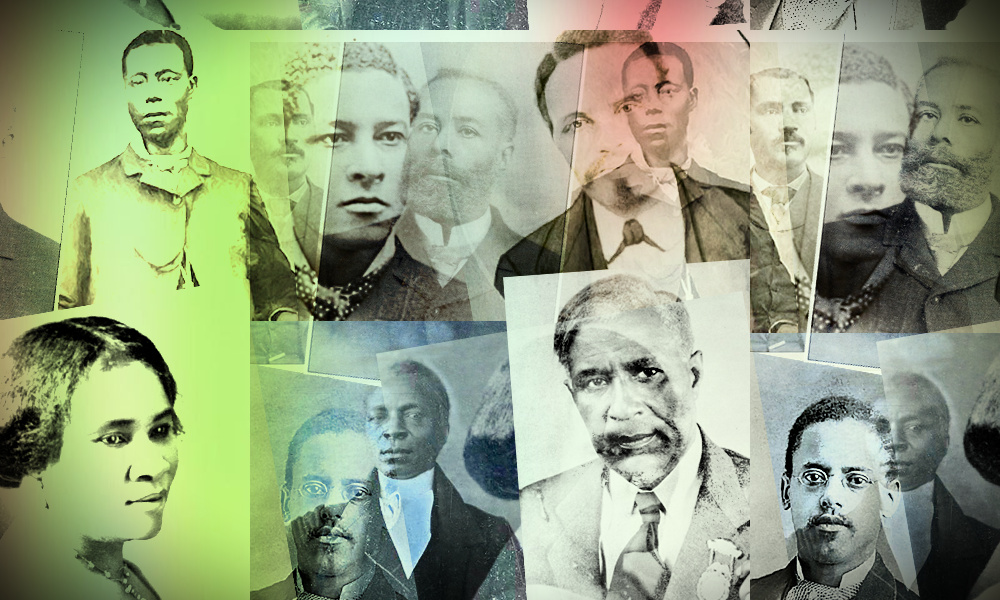
Why Representation in Business Matters—and Why the Path Must Broaden
For young people, seeing is often the first step toward believing. When youth encounter positive models of success—people who look like them building companies, leading teams, and shaping industries—it expands their sense of what is possible.
Representation does not guarantee success, but its absence can quietly limit imagination. In business especially, role models help young people connect effort to outcome and talent to opportunity. They show that success is not an abstract idea reserved for others, but a reachable destination.
This visibility matters for all youth, and it carries particular weight for Black Americans. For generations, Black excellence has been both extraordinary and constrained—celebrated in a narrow set of arenas while discouraged, ignored, or actively undermined in others. Sports, entertainment, and service pathways have produced remarkable achievements and economic mobility, and those accomplishments deserve respect. But when these paths become the only widely visible routes to success, they unintentionally suggest limits where none should exist.
Business ownership, innovation, manufacturing, logistics, technology, finance, agriculture, energy—these sectors shape how societies grow and who benefits from that growth. When Black youth rarely see Black leaders in these spaces, it sends a quiet message about who belongs at the center of economic power. The solution is not to devalue sports or entertainment, but to broaden the picture. Young people deserve to see Black Americans building supply chains, owning intellectual property, leading research teams, and creating enterprises that endure across generations.
History explains why this visibility has been so hard to sustain. Black entrepreneurship has often been met not just with competition, but with destruction. During the Red Summer of 1919, racial violence swept through American cities, targeting Black communities that were organizing, working, and advancing. Prosperous Black districts were attacked, businesses burned, and lives lost—not because of failure, but because of success that threatened an unequal status quo.
The pattern did not end there. Black excellence has repeatedly been erased, sometimes literally. Thriving communities were displaced or submerged when land was seized for development or flooded to create lakes and reservoirs, their histories left untold beneath the water. These were not just neighborhoods; they were ecosystems of Black-owned businesses, professionals, and institutions that could have served as enduring models for future generations. When those examples vanish, so does a roadmap.
This legacy helps explain a persistent, unspoken fear: that stepping too far outside prescribed lanes invites retaliation. That fear is rational, rooted in lived experience. But it cannot be allowed to define the future. If progress is to be sustainable, Black entrepreneurs must be supported in taking the less traveled paths—entering industries where representation has been scarce and barriers remain high.
Blazing those trails requires more than individual courage. It demands protection, policy, capital access, and community backing. It means celebrating Black entrepreneurs not only when they become celebrities, but when they build quiet, durable companies that employ people and solve real problems. It means teaching young people that ownership matters, that innovation is a form of leadership, and that their ideas belong in every room where decisions are made.
For youth, seeing these examples early can be transformative. It reframes ambition from “escape” to “creation.” Instead of believing success means leaving their community behind, they can imagine building within it—creating wealth that circulates and lasts.
Positive models reduce fear and replace it with strategy: how to navigate systems, protect assets, collaborate wisely, and persist.
The goal is not to deny history, but to learn from it without being trapped by it. Remembering the Red Summer and the buried communities is essential—not as warnings to stay small, but as evidence of why visibility, solidarity, and structural support matter. When Black excellence is seen, protected, and multiplied across industries, it becomes harder to erase.
Every generation needs proof that the future can be bigger than the past. For Black youth, seeing successful business leaders who look like them—especially in fields beyond the familiar—offers that proof. It says: your ideas are valid, your ambition is justified, and your success deserves to endure.
 5269
5269