Under the Canopy of Drone Nets Covering Ukraine’s Frontlines
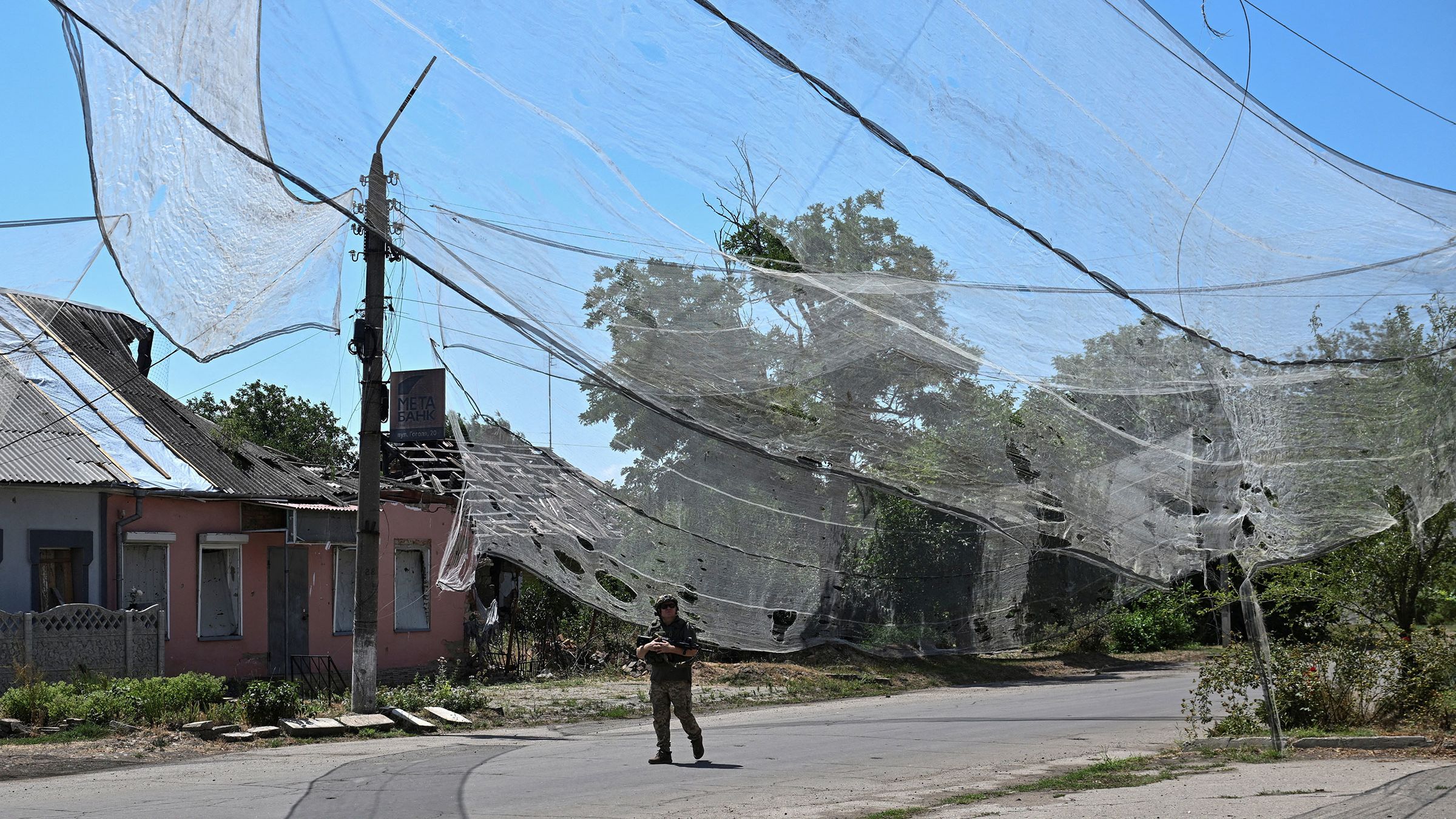
KOSTIANTYNIVKA & FRONTLINE EASTERN UKRAINE — January 12, 2026 — Across the embattled frontlines of eastern Ukraine, long stretches of roadways and strategic supply routes now lie beneath expansive anti-drone net canopies, a striking symbol of adaptation in a war increasingly dominated by unmanned aerial threats. What began as improvised defense has grown into a deliberate and expanding effort to protect both military logistics and civilian movement from the swarms of Russian drones that hover above the battlefield.
In towns like Kostiantynivka in Donetsk region, makeshift nets — often fashioned from dense mesh originally designed for fishing — have been suspended above main arteries by poles spaced tens of meters apart, forming shaded tunnels that stretch for miles. These nets are intended to entangle or deflect hostile drones, particularly small, speed-agile models like first-person-view and kamikaze UAVs that have become a persistent threat to vehicles, convoys and pedestrians traveling near the line of contact.
Low-Tech Innovation Meets High-Tech Warfare
Ukrainian engineers and frontline units have embraced this low-tech countermeasure because it addresses specific limitations of conventional air defenses. Many Russian drones now use fiber-optic guidance, making them difficult to jam electronically. In contrast, anti-drone nets mechanically interfere with a drone’s flight path or propellers, forcing it to crash or divert — a simple solution in a complex electronic battlefield.
The nets serve multiple purposes:
• Shielding supply convoys carrying ammunition, fuel, and food.
• Protecting evacuation routes for civilians fleeing shelling or fighting.
• Defending artillery positions and troop reinforcements.
Local civilian companies, such as Autostrada, have even begun constructing these protective structures, previously the domain of military engineers, rapidly installing hundreds of meters of netting each day to fortify key corridors.
Community and International Support
Ukraine’s anti-drone net deployments are not solely a military effort. Charitable initiatives from abroad — including shipments of fishing nets from French and Swedish fishing communities — have supplemented Ukrainian production and helped expand coverage where it’s most needed. These donated materials, once used for herring and cod, now form a vital line of defense against aerial threats.
Challenges and Limitations
Despite their benefits, drone nets are not foolproof. Gaps and damaged sections can create vulnerabilities, and nets must be constantly maintained or replaced, especially after heavy weather or enemy actions. Moreover, drivers and soldiers must adapt to the tunnels of netting overhead, which can complicate visibility and vehicle movement under certain conditions.
Strategic Impact
As the conflict persists into its fourth year, these net canopies illustrate how innovative ground-level solutions are shaping life and logistics on the front. They represent both a tactical adaptation to modern drone warfare and a poignant visual testament to a landscape forever changed by conflict — where everyday roads are transformed into corridors of protection beneath a canopy of defense.
 4777
4777