
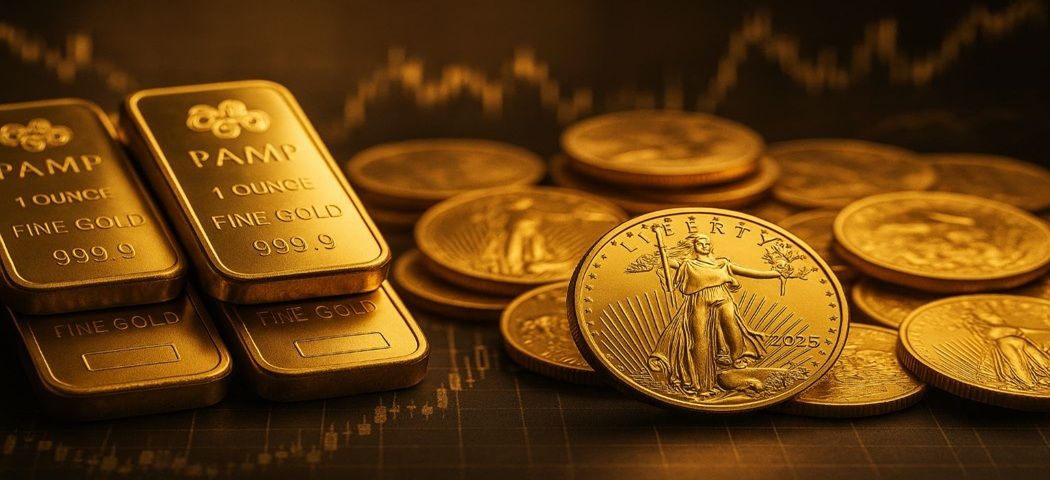
Investing in Gold Bullion & Coins: Understanding the Market and Recent Price Trends
Gold remains one of the world’s oldest and most trusted investment assets, prized for its ability to preserve value, hedge against inflation, and act as a safe haven during volatility. In 2025, investors in bullion and coins have witnessed remarkable price action and renewed interest — driven by macroeconomic forces that continue to shape global markets.
Why Investors Turn to Gold
Gold is widely regarded as a strategic component of diversified portfolios for several key reasons:
• Safe-haven appeal: Gold historically attracts capital during periods of economic uncertainty, geopolitical tensions, and financial market stress.
• Inflation protection: As fiat currencies lose purchasing power, gold often retains value and can outperform inflation.
• Diversification: It has a low correlation with stocks and bonds, helping smooth portfolio volatility over time.
These characteristics make bullion and coins attractive to both institutional and retail investors alike.
Bullion vs. Coins: What’s the Difference?
Gold Bullion
Gold bullion refers to bars or ingots that are valued primarily for their metal content, not for collectible or historical significance.
Pros of bullion:
• Lower premiums above spot price (typically 2–4%).
• Easier to buy/sell in large amounts.
• Ideal for long-term investors focused on metal value.
Gold Coins
Coins may be bullion (e.g., U.S. Eagles, Canadian Maple Leafs) or numismatic/collectible coins.
Pros and cons of coins:
• Pros: Legal tender status in some cases, portable wealth, collectible appeal.
• Cons: Often carry higher premiums, sometimes 5–8%+ over spot, due to minting and dealer mark-ups.
For those focused strictly on metal value and portfolio exposure, pure bullion bars often offer better cost efficiency than coins. Coins become more attractive when collectors’ value or specific legal/tax advantages (e.g., certain exemptions in some countries) are present.
Record Highs in Late 2025
As of mid-December 2025, gold prices have surged to multi-week highs above $4,300 per ounce, reflecting strong demand and supportive macroeconomic conditions. On December 15, gold’s spot price climbed as investors reacted to a softer U.S. dollar, lower Treasury yields, and anticipation around economic data — typical supportive forces for a non-yielding asset like gold.
Gold gains were also observed globally, such as in India where domestic bullion prices reached record highs, driven by both international price trends and local currency movements.
Drivers of the 2025 Rally
1. Monetary Policy & Interest Rates
The Federal Reserve’s shift toward rate cuts this year has reduced the opportunity cost of holding gold (which does not pay interest), boosting demand. Lower real rates and a weaker U.S. dollar make gold more attractive globally. (Natural Resource Stocks)
2. Safe-Haven Demand
Ongoing geopolitical and economic uncertainties — including trade tensions, regional conflicts, and concerns over inflation — have sustained investor interest in gold as a risk mitigation tool. This has been reflected in strong demand across regions. (AInvest)
3. Central Bank Accumulation
Central banks continue to buy gold at elevated levels, diversifying reserves away from traditional currency holdings and structurally supporting prices.
4. ETF and Retail Flows
Inflows into gold-linked exchange-traded funds (ETFs) and stronger retail buying of bullion (bars and coins) have also contributed to upward pressure on prices, indicating participation from both institutional and individual investors.
Bullion & Coin Investing: Practical Considerations
Storage and Security
Physical gold needs secure storage — from home safes to professional vaulting providers — which adds cost and complexity. Investors must balance physical possession with convenience and safety.
Premiums and Liquidity
Bullion bars usually trade closer to the spot market price than coins, which can carry higher premiums and sometimes narrower liquidity depending on the type and collector demand.
Portfolio Allocation
Financial advisors typically recommend allocating a modest percentage of a diversified portfolio to gold (often 5–10%), balancing risk and potential return. Gold may not offer the high returns of equities, but it can act as insurance against downturns.
Looking Ahead: Potential Trends for 2026
Analysts have projected a continued favorable backdrop for gold:
• Long-term structural demand from central banks and investors may keep prices elevated.
• If geopolitical or inflation pressures persist, gold’s safe-haven role could strengthen further.
• Some strategists forecast prices could climb even higher by late 2026 under sustained demand and weaker real yields. (Investing.com)
Conclusion
Gold bullion and coins remain compelling options for investors seeking capital preservation, diversification, and protection against economic uncertainty. The recent trend of record-high prices in 2025 underscores gold’s enduring appeal amid a complex macroeconomic landscape.
Whether you choose bullion for cost-effective exposure or coins for their collectibility and liquidity in certain markets, understanding price drivers, storage requirements, and market trends is essential to making informed decisions in today’s precious metals environment.
 5156
5156