NewStori...First & Foremost A Quality News Outlet!

One of the most practical lessons in business is deceptively simple: it is far easier to build something people already want than to convince them to want something entirely new. While innovation and originality are often celebrated, the reality of the marketplace is grounded in human behavior. People spend money most freely when their needs are immediate, their concerns are real, or their desires are clearly understood. Businesses that align themselves with these natural spending patterns tend to face less resistance, generate more consistent revenue, and scale more predictably.
At the core of this idea is a fundamental question: are you asking customers to change their behavior, or are you meeting them where they already are? The distinction matters more than most new entrepreneurs initially realize. When a business requires significant persuasion just to justify its existence, it faces an uphill battle. On the other hand, when a business satisfies a need tied to emergencies, safety, leisure, or necessities, the exchange of money becomes far more intuitive. People do not need to be convinced to act—they are already looking for a solution.
Emergencies represent one of the clearest examples of this principle. When something breaks, fails, or creates an urgent problem, the decision to spend money is often immediate and emotionally driven. Whether it is a plumbing issue, a medical need, or a critical repair, the customer’s priority is resolution, not deliberation. In these moments, price sensitivity decreases and speed, reliability, and trust become the dominant factors.
Businesses that operate in emergency-driven spaces benefit from this urgency, but they also carry a responsibility: they must deliver quickly and competently. Failure to do so not only loses a customer but damages reputation in a context where trust is everything.
Safety is another domain where people willingly spend money without extensive persuasion. This includes physical safety, financial security, and even digital protection. The motivation here is prevention rather than reaction. Customers are not always responding to an immediate crisis, but they are aware of potential risks and are willing to invest in minimizing them. Insurance, security systems, and compliance-related services all fall into this category. The key insight is that fear of loss often outweighs the desire for gain. Businesses that effectively address safety concerns tap into a powerful psychological driver that sustains demand over time.
Leisure, by contrast, operates on a different emotional axis. Here, spending is driven by enjoyment, relaxation, and personal fulfillment. While it may seem less essential than emergencies or safety, leisure is a massive and resilient market. People consistently allocate resources to experiences that enhance their quality of life, whether through entertainment, travel, hobbies, or dining. The critical factor in leisure-based businesses is differentiation. Unlike emergency or safety services, where urgency or necessity drives decisions, leisure choices are often influenced by preference, branding, and emotional connection. Competition exists, but it does not always reduce demand; instead, it fragments it across different tastes and experiences.
Necessities form the foundation of all economic activity. These are the goods and services people cannot reasonably do without—food, housing, transportation, and basic utilities. Businesses in this category benefit from consistent demand, but they also face intense competition and thinner margins. Because customers must make these purchases regularly, even small differences in price, convenience, or quality can influence decisions. Success in necessity-driven markets often depends on operational efficiency, reliability, and the ability to build long-term customer relationships.
When starting a business, aligning with one or more of these categories can significantly reduce friction in the early stages. However, alignment alone is not enough. It is equally important to understand the primary priority within each category. For emergency services, speed and availability often outweigh cost. For safety-related offerings, trust and credibility are paramount. In leisure, experience and emotional resonance dominate. In necessities, consistency and value take center stage. Misjudging these priorities can lead to a mismatch between what a business offers and what customers actually care about.
This is where many first-to-market ventures encounter difficulties. Being early or even first in a new space can provide advantages, but it also introduces challenges. When a product or service is unfamiliar, the business must invest heavily in education and persuasion. Customers need to understand not only how the offering works but why it matters to them. This process can be time-consuming and expensive, with no guarantee of success. In some cases, the market may not be ready, or the perceived need may not be strong enough to sustain demand.
A more pragmatic approach is to innovate within established categories rather than outside of them. Instead of creating entirely new demand, businesses can improve how existing needs are met. This might involve making a service faster, more affordable, more accessible, or more enjoyable. By anchoring innovation to familiar problems, entrepreneurs can reduce the burden of persuasion while still offering something distinctive. The goal is not to eliminate creativity but to channel it in a way that aligns with proven demand.
Competition plays a different role depending on the type of business. In some areas, particularly those tied to daily habits or preferences, competition does not necessarily diminish revenue. Instead, it reflects the diversity of customer choices. For example, multiple restaurants can thrive in the same area because people seek variety and have different tastes. In such cases, success is less about eliminating competitors and more about carving out a unique identity. Branding, customer experience, and consistency become critical differentiators.
In other areas, competition is more directly linked to market share. Necessity-driven businesses, for instance, often operate in environments where customers prioritize price and convenience. Here, competition can significantly impact margins and growth. Businesses must find ways to operate efficiently while still delivering value. This might involve optimizing supply chains, leveraging technology, or focusing on a specific niche within the broader market.
There is also a category of businesses where revenue is not repeat-based for individual customers but is sustained by a continuous influx of new ones. These are often tied to major life events or infrequent needs—real estate transactions, legal services, or certain types of medical procedures. In these cases, the challenge is not retaining the same customer but consistently reaching new ones at the right moment. Marketing, reputation, and timing become essential. A strong pipeline or funnel is critical, as each customer interaction represents a relatively rare opportunity.
Understanding the nature of your revenue—whether it is recurring, preference-driven, or event-based—shapes nearly every aspect of your business strategy. It influences how you acquire customers, how you price your offerings, and how you allocate resources. A recurring revenue model, for instance, allows for greater predictability and long-term planning. An event-based model requires constant attention to lead generation and conversion. Each approach has its own risks and advantages, and success depends on aligning your operations with the realities of your market.
Another important lesson is the role of trust. Regardless of the category, trust acts as a multiplier. In emergency and safety contexts, it is often the deciding factor. In leisure and necessity markets, it can differentiate a business in crowded spaces. Trust is built through consistency, transparency, and delivering on promises. It is also fragile. A single negative experience can outweigh multiple positive ones, particularly in high-stakes situations. Businesses that prioritize trust tend to build stronger relationships and more resilient brands.
Adaptability is equally critical. Markets evolve, customer preferences shift, and external conditions change. Businesses that succeed over the long term are those that can adjust without losing their core identity. This often involves revisiting assumptions, testing new approaches, and being willing to pivot when necessary. However, pivots should not be random or reactive. They should be informed by data, feedback, and a clear understanding of the business’s strengths and the market’s needs.
One of the more subtle lessons in business is the importance of timing. Even a well-designed product or service can struggle if introduced at the wrong moment. Economic conditions, technological readiness, and cultural trends all influence how an offering is received. While timing is not entirely controllable, awareness of these factors can improve decision-making. Entering a market when demand is rising, rather than trying to create demand from scratch, significantly increases the likelihood of success.
It is also worth noting that not all opportunities are equally scalable. Some businesses are inherently limited by geography, labor, or other constraints, while others can expand more easily. Understanding these limitations early on helps set realistic expectations and informs strategic choices. Growth for its own sake is not always the best objective. Sustainable growth—aligned with the business’s capabilities and market conditions—is far more valuable.
Finally, there is the lesson of focus. In the early stages, it can be tempting to pursue multiple ideas or serve a broad audience. However, spreading resources too thin often leads to mediocre results across the board. Concentrating on a specific problem, customer segment, or value proposition allows for deeper understanding and more effective execution. Once a strong foundation is established, expansion becomes more manageable.
In the end, successful businesses are rarely the result of a single insight or decision. They are built through a combination of understanding human behavior, aligning with natural spending patterns, executing consistently, and adapting over time. By focusing on areas where people are already willing to spend—emergencies, safety, leisure, and necessities—entrepreneurs can reduce friction and increase their chances of success. By recognizing the nuances within each category and aligning their strategies accordingly, they can build businesses that not only survive but thrive.
The marketplace is not a mystery as much as it is a reflection of human priorities. Those who take the time to understand these priorities, rather than attempting to override them, position themselves to create value in a way that feels natural and sustainable. And in business, as in many areas of life, working with the current is often far more effective than trying to swim against it.
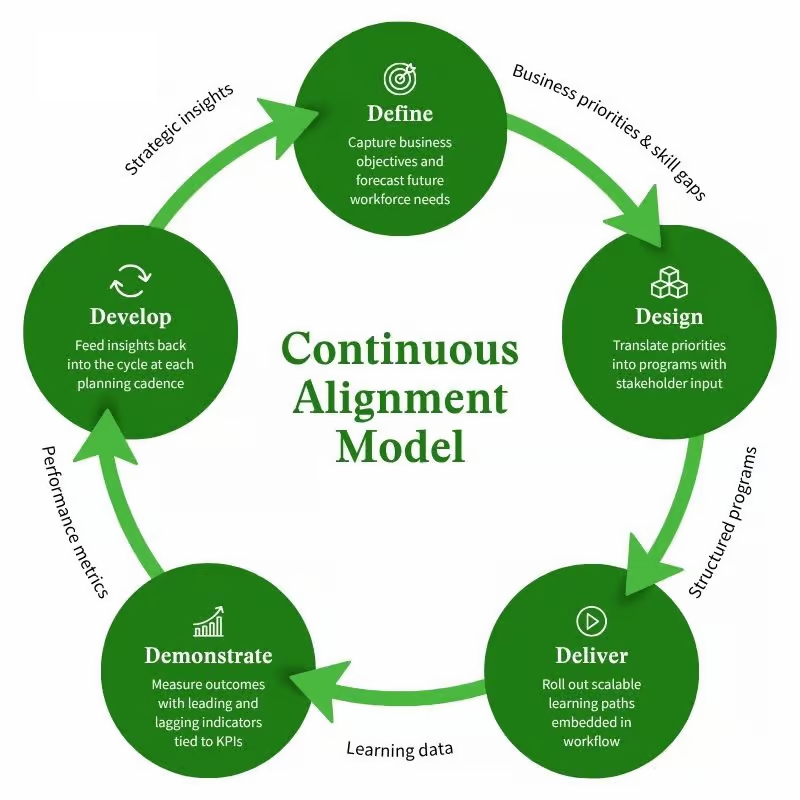
In today’s rapidly evolving business environment, Learning and Development (L&D) is undergoing a profound transformation. Once considered a support function focused primarily on compliance training and onboarding, L&D has become a strategic driver of organizational performance, innovation, and resilience. This shift is not happening in isolation; it is being fueled by changing business priorities, technological disruption, workforce expectations, and economic pressures. As organizations adapt to these forces, the L&D landscape is being fundamentally redefined.
The Shift from Support Function to Strategic Partner
Historically, L&D was often viewed as a cost center—responsible for delivering training programs but rarely tied directly to business outcomes. Today, that perception is changing. Organizations increasingly recognize that workforce capability is a critical determinant of success, particularly in a knowledge-driven economy.
Modern L&D teams are now expected to align closely with business strategy, ensuring that learning initiatives directly support organizational goals. This includes driving revenue growth, improving operational efficiency, and enhancing employee retention. According to recent insights, L&D has evolved into a “business-critical driver of growth, agility, and retention,” reflecting its expanded role in shaping organizational success.
This shift has elevated L&D professionals to strategic partners within the enterprise. They are no longer just facilitators of training but architects of capability-building ecosystems that enable organizations to compete in dynamic markets.
The Rise of Skills as the New Currency
One of the most significant shifts redefining L&D is the growing emphasis on skills. In a world where job roles are constantly evolving due to automation and digital transformation, traditional qualifications are no longer sufficient indicators of capability.
Organizations are increasingly adopting a skills-first approach, focusing on what employees can do rather than what credentials they hold. This shift requires L&D teams to design learning experiences that build measurable, job-relevant skills rather than simply delivering content.
Skill-based learning paths, competency frameworks, and continuous assessment mechanisms are becoming standard practice. This approach not only enhances individual performance but also enables organizations to respond more effectively to changing market demands.
At the same time, the urgency to close skill gaps is intensifying. Reports indicate that skill shortages and the pace of technological change are among the biggest challenges facing L&D leaders today, underscoring the need for continuous upskilling and reskilling initiatives.
Technology as a Catalyst for Transformation
Technology is playing a central role in reshaping the L&D landscape. Advances in artificial intelligence (AI), data analytics, and immersive technologies are enabling more personalized, scalable, and effective learning experiences.
AI, in particular, has moved from being a supplementary tool to a core component of L&D strategy. It is now used to personalize learning journeys, automate content creation, and provide real-time feedback. In many organizations, AI has become the infrastructure layer of learning, enabling adaptive and data-driven experiences.
In addition to AI, technologies such as virtual reality (VR) and augmented reality (AR) are transforming how employees learn by providing immersive, hands-on experiences. These technologies improve knowledge retention and allow learners to practice skills in realistic environments.
The growth of digital learning platforms has also been significant. The global eLearning market is expanding rapidly, driven by the demand for flexible, accessible learning solutions. Digital learning offers higher retention rates compared to traditional methods, further reinforcing its value in modern L&D strategies.
From Content Delivery to Performance Enablement
Another key shift in the L&D landscape is the move from content-centric approaches to performance-focused learning. Traditional training programs often emphasized knowledge acquisition, but organizations now require learning to translate into measurable performance improvements.
This has led to the adoption of performance enablement models, where learning is integrated into the flow of work. Instead of attending isolated training sessions, employees access learning resources at the point of need, enabling immediate application.
Microlearning, just-in-time learning, and workflow-integrated learning are becoming increasingly popular. These approaches ensure that learning is relevant, timely, and aligned with real-world tasks.
Moreover, organizations are placing greater emphasis on measuring the impact of learning. L&D teams are expected to demonstrate return on investment (ROI) by linking learning outcomes to business metrics such as productivity, revenue, and customer satisfaction. However, many organizations still struggle with this aspect, highlighting an ongoing challenge in the field.
Personalization and Learner-Centric Design
Modern learners expect personalized experiences that cater to their individual needs, preferences, and career goals. This expectation is reshaping how L&D programs are designed and delivered.
Personalization is now a cornerstone of effective L&D strategies. By leveraging data and AI, organizations can create tailored learning paths that adapt to each learner’s skill level, role, and learning style. This not only improves engagement but also enhances learning outcomes.
Learner-centric design also emphasizes flexibility and accessibility. With the rise of remote and hybrid work models, employees need learning solutions that can be accessed anytime, anywhere. Mobile learning, on-demand content, and self-directed learning platforms are becoming essential components of modern L&D ecosystems.
The Integration of Learning into Organizational Culture
As business priorities shift toward agility and innovation, learning is becoming embedded in organizational culture. Continuous learning is no longer optional; it is a necessity for staying competitive.
Organizations are fostering learning cultures that encourage curiosity, experimentation, and knowledge sharing. This involves creating environments where employees feel empowered to take ownership of their development and where learning is integrated into daily work activities.
Leadership plays a crucial role in this transformation. Managers are increasingly expected to act as coaches and facilitators of learning, supporting their teams in developing new skills and adapting to change.
This cultural shift also aligns with the broader trend of employee experience. Organizations recognize that providing meaningful development opportunities is key to attracting and retaining top talent. Employees are more likely to stay with organizations that invest in their growth and provide clear career pathways.
Data-Driven Decision Making in L&D
The increasing availability of data is enabling L&D teams to make more informed decisions. Learning analytics provide insights into learner behavior, program effectiveness, and skill development.
Data-driven L&D strategies allow organizations to identify skill gaps, optimize learning programs, and measure impact more effectively. This shift toward evidence-based decision making is critical for demonstrating the value of L&D to business stakeholders.
However, leveraging data effectively requires robust systems and capabilities. Many organizations are still in the early stages of developing advanced analytics capabilities, highlighting an area for future growth.
Agility and Adaptability as Core Priorities
In a rapidly changing business environment, agility has become a top priority for organizations. L&D plays a crucial role in enabling this agility by equipping employees with the skills needed to adapt to new challenges.
Agile learning approaches emphasize flexibility, iteration, and responsiveness. Instead of long, static training programs, L&D teams are adopting shorter, more dynamic learning cycles that can be quickly updated based on changing needs.
This approach aligns with the broader shift toward agile business practices, where organizations continuously adapt to market conditions and customer demands.
The Expanding Scope of L&D Responsibilities
As L&D becomes more strategic, its scope is expanding beyond traditional training functions. L&D teams are now involved in areas such as talent management, leadership development, and organizational transformation.
They are also playing a key role in supporting digital transformation initiatives by ensuring that employees have the skills needed to leverage new technologies effectively.
In addition, L&D is increasingly focused on fostering innovation and creativity within organizations. By encouraging continuous learning and experimentation, L&D helps create environments where new ideas can flourish.
Challenges and Opportunities Ahead
While the transformation of L&D presents significant opportunities, it also comes with challenges. Organizations must navigate issues such as limited resources, resistance to change, and the complexity of measuring impact.
The rapid pace of technological change also requires continuous adaptation. L&D teams must stay up to date with emerging technologies and trends to remain effective.
Despite these challenges, the future of L&D is full of potential. Organizations that successfully align L&D with business priorities will be better positioned to navigate uncertainty and achieve sustainable growth.
Conclusion
The L&D landscape is being reshaped by shifting business priorities, technological advancements, and evolving workforce expectations. What was once a support function has become a strategic imperative, central to organizational success.
As businesses continue to navigate an increasingly complex and dynamic environment, the role of L&D will only grow in importance. By focusing on skills development, leveraging technology, and aligning with business goals, L&D can drive meaningful impact and help organizations thrive in the future of work.
Ultimately, the redefinition of L&D is not just about improving learning outcomes—it is about enabling organizations to adapt, innovate, and succeed in a world where change is the only constant.