By April Lanux
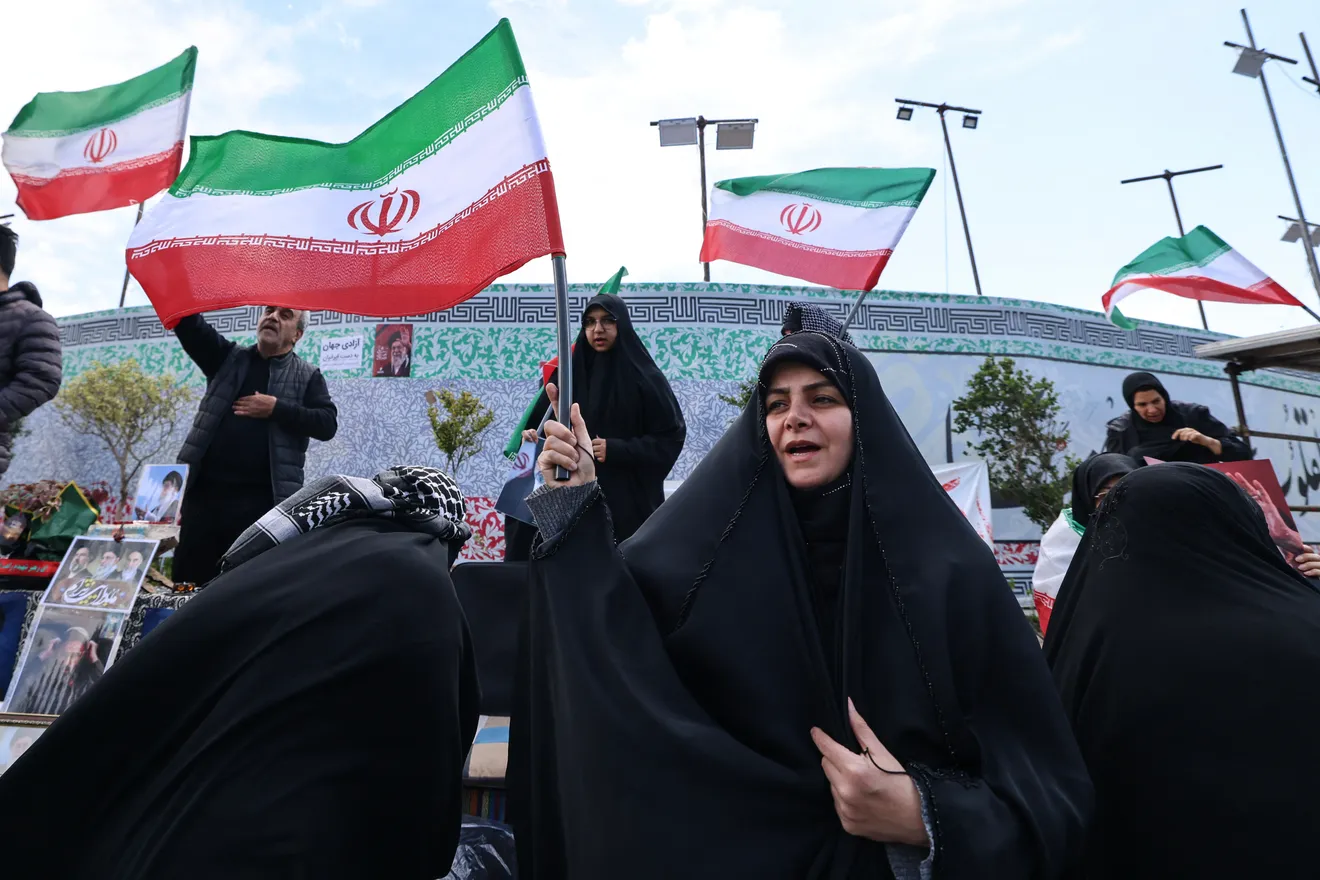
Iran’s Islamic Republic, weakened by airstrikes in June and huge popular unrest, warns that it will strike back hard if attacked by the United States. This time, Iran may mean it.
President Trump is turning his attention back to Iran, which he is threatening with more military strikes “with great power, enthusiasm and purpose.”
He suggested that the strikes would come if Iran did not agree to various demands, including a deal to end its nuclear enrichment program. “Time is running out” for Iran to negotiate such a deal, Mr. Trump warned on Wednesday.
Mr. Trump — and Israel — may be tempted to strike now with the larger aim of bringing down the faltering Iranian regime and perhaps changing the balance of power in the Middle East, experts and analysts say. But given the stakes for the regime in Iran, the risks of a regional conflagration are real, they say.
In the June strikes against Iran and in this month’s quick incursion into Venezuela to kidnap President Nicolás Maduro, Mr. Trump has shown that he likes military action to be short and limited. In both cases he avoided long military involvement or occupation, which would be anathema for his MAGA base.
“Trump likes low-cost, high-impact operations,” said Ali Vaez, Iran project director for the International Crisis Group. “On Iran, he could do high impact, but not at a low cost.” Mr. Trump, he suggested, is hesitating.
“He’s trying to use threats to coerce Iran into submission, but I don’t think this will work,” Mr. Vaez said. “This is a regime that is cornered and bound to act recklessly, whether against its own people or its enemies in the region.”
The Islamic Republic is at a weak but dangerous moment after suppressing widespread protests. It vows, if attacked, to respond with great force against the United States, Israel and American allies in the region. Iran said the death toll in the protests was 3,117, but human rights groups say that figure is vastly underestimated. They say that once internet blackouts are lifted, the numbers will most likely rise significantly.
Even after the June strikes, Iran is considered capable of hitting American and allied targets across the region, including in Israel, Saudi Arabia and the United Arab Emirates.
Iran’s armed forces are ready “with their fingers on the trigger” to “immediately and powerfully respond” to any aggression by land or sea, said Iran’s foreign minister, Abbas Araghchi. He called on Wednesday again for a renewal of stalled negotiations on the nuclear issue with the United States.
Iranian officials have sought help in recent days from diplomats in Saudi Arabia, Qatar and Egypt, trying to reopen talks with the United States and avoid military action. Arab states were influential in persuading Mr. Trump to hold off on military action three weeks ago, but after Venezuela, Mr. Trump now has more forces in the region and more military options.
Iran’s threats should be taken seriously, said Suzanne Maloney, an Iran expert who directs the foreign policy program at the Brookings Institution. “No one can assume Iran won’t respond and probably respond as they did on their own streets, and make it as ugly and violent as possible,” she said. Mr. Trump, she added, “does not want to get into a protracted conflict with Iran.”
At the same time, she said, Mr. Trump has created a dilemma for himself. By vowing to act in support of the Iranian protesters against the regime, he has created expectations and put his credibility on the line.
“With his social media incitement to the Iranian protesters and his sending of the armada into the region, there is almost an obligation to act,” Ms. Maloney said, referring to a recent buildup of American forces in the region.
Mr. Trump “is certainly under pressure to do something, especially when Iran, the age-old adversary, is weak,” agreed Sanam Vakil, director of the Middle East and North Africa program for Chatham House in London. “Many around Trump are hungry for this moment and think it would be strategically shortsighted to let it go, this chance to change the balance of power in the Mideast.”
Mr. Trump “smells weakness” in the regime, Ms. Vakil said, “and some fear that if he doesn’t go in now, through pressure or a military strike, he’ll miss a key moment.”
U.S. demands of Iran have, if anything, expanded. Washington is pressing for a permanent end to all enrichment of uranium and disposal of all of Iran’s current stockpiles; limits on the range and number of Iran’s ballistic missiles; and an end to all support for proxy groups in the Middle East, including Hamas, Hezbollah and the Houthis operating in Yemen.
The totality of these demands is likely to prove unacceptable, Mr. Vaez said: “I think Iran is more willing to show flexibility on the nuclear front, but if the U.S. wants to humiliate them by dismantling the entire nuclear program, that will prove a poison pill, as in the past.”
Demands for Iran to end its support for allies in the region “would be seen as capitulation, which the regime thinks is more perilous than a military confrontation with the U.S.,” he added.
A war with America would at least bring about more popular patriotic cohesion, even if the government itself is reviled.
Hakan Fidan, foreign minister of Turkey, has urged Washington to divorce the nuclear issue from the other demands, which he believes Iran could not accept.
Ms. Vakil expects Mr. Trump to take action. She suggested there could be various scenarios — to try to kill the leadership of the regime; to kill the leadership and its power structure, including hard hits at the Islamic Revolutionary Guards Corps, which defends the regime; strikes that also try to hit Iran’s energy infrastructure, to further strangle the government economically.
Any strike, she suggested, would include significant efforts to destroy Iran’s weakened air defenses, ballistic missile production facilities and launchers to try to prevent a large retaliation.
Mr. Trump might be able to get Iran to agree to a quick deal on the nuclear program alone and then de-escalate without a major military operation. As every analyst pointed out, Iran has not been able to enrich uranium since the June airstrikes, so it might be possible to come to a simpler deal on stopping enrichment altogether. That would embarrass the Iranian leadership but keep it in place, much as the Maduro regime remains in place in Venezuela.
If the regime fell, what would happen in Iran is a serious question, the analysts agree. There is no guarantee the result will be a peaceful democracy, they say, but there is a strong chance of a fiercer, younger leadership taking charge with the intent of going for a nuclear weapon as the ultimate deterrent against another strike.
Secretary of State Marco Rubio on Wednesday told lawmakers that the buildup around Iran was largely defensive because tens of thousands of American troops in the region were “within the reach of Iranian one-way drones and ballistic missiles.” He said it was “wise and prudent” to increase the U.S. presence but that the American force could also “pre-emptively act” against Iran.
What would happen if the regime did fall, Mr. Rubio said, was “an open question.”
“I mean, no one knows who would take over,” he said.
Little more than 19 months after the bloodless coup that brought an end to more than five decades of rule by the Bongo family, the people of Gabon are about to head to the polls to choose a new head of state - bucking a trend that has seen military leaders elsewhere in Africa cling on to power.
The overwhelming favourite in the race on Saturday is the man who led that peaceful putsch and has dominated the political scene ever since, Brice Clotaire Oligui Nguema.
Having abandoned his soldier's fatigues and military status in favour of a politician's suit, this highly articulate former commander of the elite Republican Guard faces seven other candidates.
Basking in popularity among a population relieved to be rid of dynastic rule - and assisted by electoral regulations that disqualified some key challengers - the 50-year-old appears almost certain to secure an outright majority in the first ballot.
His campaign slogan - using his initials "C'BON" - is a play on the French words "c'est bon", meaning "it's good".
His chances of avoiding a second round run-off are bolstered by the fact that his main challenger - one of the rare senior political or civil society figures not to have rallied to his cause - is the old regime's last prime minister, Alain-Claude Bilie-By-Nze, known by his initials ACBBN.
Victory will bring a seven-year mandate and the resources to implement development and modernising reform at a pace that the rulers of crisis-beset African countries could not even dream of.
With only 2.5 million people, Gabon is an established oil producer and the world's second-largest exporter of manganese.
Its territory, which sits astride the equator, encompasses some of the most biodiverse tracts of the Congo Basin rainforest.
And other than a harsh post-election crackdown in the capital, Libreville, in 2016, the country has enjoyed a mostly calm recent history that contrasts with the conflicts and instability that have afflicted many regional neighbours.
Oligui Nguema and his Republican Guards met no resistance when they seized power on 30 August 2023, just hours after the electoral authorities had taken to the airwaves in the middle of the night to proclaim that the incumbent President, Ali Bongo Ondimba, had secured a third seven-year term with a crushing 64% of the vote.
It was hard to see this official result as credible. Ali Bongo, who succeeded his father Omar in 2009, had only squeaked a narrow and much disputed victory in the previous poll, in 2016.
When he suffered a stroke while visiting Saudi Arabia two years later and embarked on a painstaking gradual recovery there had been widespread popular sympathy.
But the mood shifted after he decided to stand for a third term, despite his visibly frail state of health - this fuelled widespread resentment at the supposed behind-the-throne influence and ambitions of his French-born wife Sylvia and his son Nourredin Bongo Valentin.
The military's peaceful intervention to forestall a continuation of the regime, arresting Sylvia and Nourredin and confining Ali in enforced retirement in his private villa, triggered spontaneous celebrations among the many Gabonese who had grown weary of this apparently immovable dynasty.
And the coup was greeted with relief even by most of the administrative, political and civil society elite.
Oligui Nguema took shrewd advantage, reaching out to build a broad base of support for his transitional regime. He brought former government figures, opponents and prominent hitherto critical civil society voices into the power structure or institutions such as the appointed senate.
Political detainees were freed, though Ali Bongo's wife and son remain in detention awaiting trial on corruption charges.
He did not resort to the sort of crackdowns on dissent or media freedom that have become a routine tool of Francophone Africa's other military leaders, in Mali, Guinea, Burkina Faso and Niger.
On the diplomatic front, in marked contrast to the assertively anti-Western posture adopted by the regimes in West Africa, Oligui Nguema despatched senior figures to cultivate international goodwill and reassure Gabon's traditional partners of his determination to restore civilian constitutional government within a tightly limited timeframe.
Relations with France, the former colonial power and previously a close ally of the Bongo regime, are warm.
The two governments recently agreed to transform Camp de Gaulle, the longstanding French base in Gabon, into a new training centre that they will operate jointly.
Displaying a deft popular and political touch, Oligui Nguema has responded to public hunger for change with an acceleration of public works and delayed projects.
And at a time of rising popular support across Francophone Africa for a more visibly assertive defence of national interests, his government has acquired the Gabonese assets of several foreign oil companies, including the UK's Tullow.
To ease constraints on government finances, he has borrowed on the regional money market, but has also shrewdly sought to reassure international partners.
Much of the $520m (£461m) raised through a Eurobond in February has been used to pay off old debt, and the government has also set aside funds to clear some arrears owed to the World Bank.
But if, and almost certainly when, he is elected as Gabon's head of state on Saturday, Oligui Nguema will face significant challenges.
Such was the public's hunger for change that, in many ways, the transition has been the easy part. There has been little public pressure constraining his freedom of manoeuvre.
There was broad consensus over incorporating a ban on dynastic succession in the new constitution.
When Oligui Nguema brushed off some parliamentarians' concern about the concentration of executive power in the presidency by abolishing the post of prime minister, there was little fuss.
But this does mean that, going forward, the full weight of responsibility for meeting public expectations will fall on his shoulders alone.
Prominent political and civil society figures, such as veteran opponent Alexandre Barro-Chambrier and rainforest campaigner Marc Ona Essangui, have joined his transitional administration or political machine, the Rassemblement des Bâtisseurs (RDB), and could well occupy important roles post-election.
Nonetheless the focus will be on Oligui Nguema himself. And he will face complex challenges.
Gabon has long positioned itself as a leader in conserving the rainforest and its enormously diverse flora and fauna, attracting international praise for its astute use of climate finance tools - in 2023 it became the first sub-Saharan country to complete a debt-for-nature swap.
But this strategic approach has to be reconciled with the economic pressure to make full use of other natural resources, particularly minerals and oil, and with the needs of rural communities seeking to protect their hunting and farming rights.
Urban populations, particularly in Libreville - home to almost half the country's population - need more jobs and better services, in a country whose social development record has been disappointing, given its relative affluence.
Trade unionist Jean Rémy Yama, excluded from the presidential race because he could not produce his father's birth certificate, a nomination requirement, is one figure with a considerable following who could give voice to popular frustrations.
For Oligui Nguema, the hardest work is about to begin.
12 CST | March 5
12 CST | March 5
18 CST | March 4
Get The Latest News From Us Sent To Your Inbox.